Migratory Crisis in Ceuta Sparks European Debate
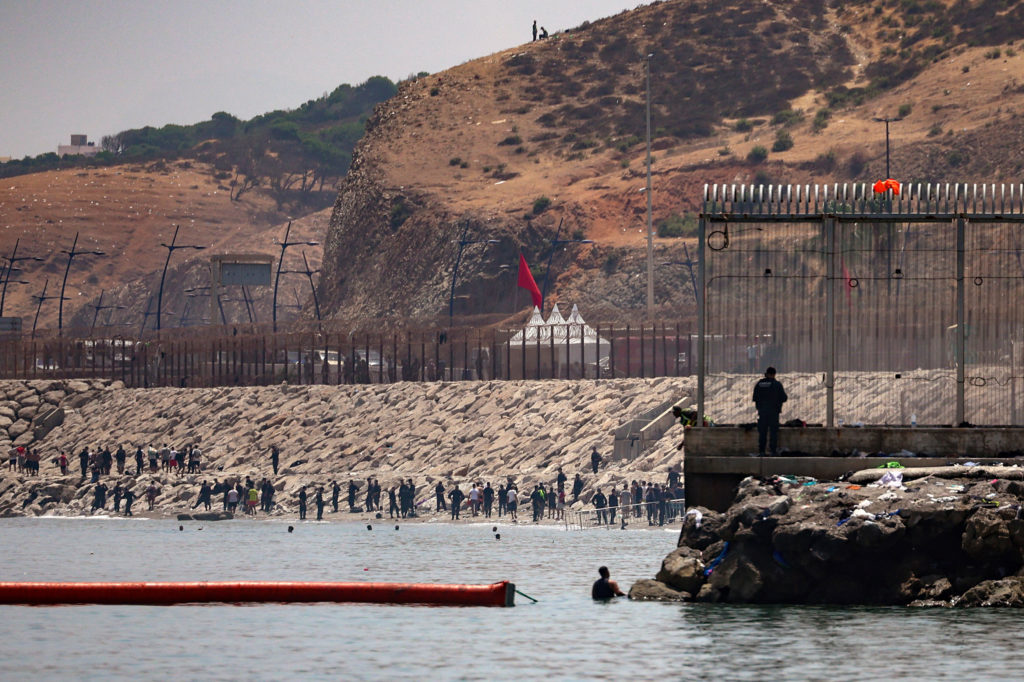
CEUTA, Spain — Recently, Spain implemented a 500-meter barrier on the sea border between Ceuta and Morocco. This followed a massive influx of migrants breaching the frontier, creating a humanitarian crisis. At least 67 migrants lost their lives during the attempt, some drowning and others killed in a stampede trying to cross a breakwater barrier.
Between Thursday and Friday, Ceuta saw the sudden arrival of 50,000 to 60,000 migrants. This event reignited immigration debates across Europe. Although many migrants returned to Morocco, political tensions remain strong.
Critics of Spain’s socialist government, particularly right-wing politicians, criticized the images of migrants entering Ceuta, which has been part of Spain since 1580. On the Strait of Gibraltar, Ceuta is strategically significant.
Spain’s current migration policy focuses on granting legal status to unauthorized workers to support economic growth. This approach contrasts with the deportation policies seen in parts of the EU and U.S.
Spain’s Prime Minister Pedro Sánchez condemned EU leaders’ reactions, especially calls to suspend Spain from the Schengen Zone. He attributed these reactions to prejudice, fake news, ignorance, or political interest.
Despite this crisis, Spain has managed fewer illegal migrant incidents than Italy and Greece in recent years.
On August 1, 2026, migrants continued crossing into Ceuta via foot and sea, with many returning to Morocco voluntarily. Some who reached Ceuta’s Tarajal beach were met by soldiers who escorted them back over the border.
Spanish Interior Minister Fernando Grande-Marlaska stated that they maintain strict enforcement against lawbreakers. Although heavily secured, the breach occurred and required reassessment, requiring coordination with Morocco.
Marlaska emphasized that Morocco remains a reliable partner, not a threat, implying that cooperation allowed quick resolution.
European Union countries have called for coordinated talks on the Ceuta situation. A letter drafted by Denmark’s Prime Minister urged EU officials to prevent uncontrolled mass crossings, warning against illegal entry perceptions.
Several EU leaders signed the letter, urging dialogue amongst interior ministers for shared responsibility of external border security, heightened by Italy’s border control re-impositions.
Most migrants are returning to Morocco, facing difficult conditions, with some injured and hungry. Ouail Lamzeiz shared his return choice, revealing harsh conditions in Ceuta.
Migrants faced shelter challenges, slept in forests, and encountered food shortages. Othmane El Merzoug asked for help contacting his family for funds to return home.
Locals at Tarajal beach, such as Mohamed Abdelatif, noted disruptions in their city due to the migrant influx. Spanish forces mobilized to manage the situation as Morocco deployed security measures including water cannons and tear gas.
The road from Fnideq to the border showed turmoil with burned-out vehicles and lingering smoke. Ceuta President Juan Jesús Vivas spoke of ongoing return arrangements that still need completion.
Some migrants still choose to remain in Ceuta despite difficulties. Mohamed Hatri expressed determination to stay regardless of conditions, even with closed facilities to encourage migration out.
Oubachir reported from Fnideq, Morocco. Renata Brito in Barcelona, Spain and Elena Becatoros in Athens, Greece contributed.