New DOJ Program for Gun Rights Restoration
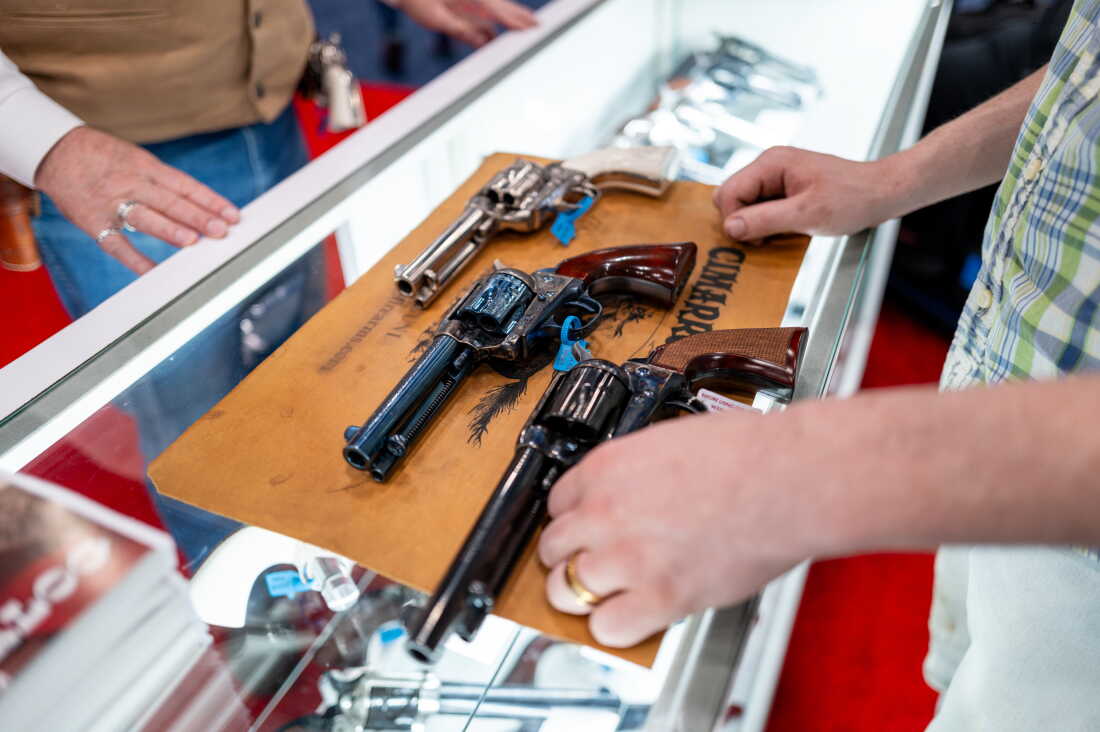
The National Rifle Association conference displayed revolvers on a countertop in Houston on April 18. Historically, individuals convicted of felonies lose several rights, one being the right to own firearms. Regaining these rights typically requires a presidential pardon, say clemency experts. The Justice Department is now reviving a path for gun rights restoration through its Office of the Pardon Attorney. This initiative is the first since the 1990s when a similar program by the Bureau of Alcohol, Tobacco, Firearms and Explosives ended.
“We’re ecstatic that for the first time since 1992, federal firearms relief will be available to nonviolent offenders,” says Adam Kraut, Executive Director of the Second Amendment Foundation. His comment aligns with the aftermath of a critical report from a gun safety group that found an overburdened agency and instances where restored individuals committed violent crimes. Kraut estimates millions lost their chance to regain firearm ownership after this report.
Program Eligibility and Process
According to the DOJ, individuals involved in violent offenses like rape or kidnapping will not qualify. Those still in prison or awaiting sentencing are also excluded. Applicants must disclose crime details, provide character references, and submit fingerprints. Eventually, a fee of $30 is required. The DOJ expects around 330,000 annual applicants. Staff and attorneys will review them. The final rule states the DOJ prefers an adaptive decision-making process rather than a rigid methodology.
This week, applications will open for a selected group of candidates who expressed interest. About 1,500 received invitations recently. Starting November 4, up to 5,000 general public applications will be accepted. In January, another round for 500 applicants will occur. Successful candidates’ names will be published in the Federal Register as federal law mandates.
An important consideration is state laws. Federal restoration may not align with state restrictions. The DOJ advises consulting regional authorities to determine eligibility under local laws.
Public Safety Concerns
A report by the Violence Policy Center in 1992 contributed to the end of the ATF program. It analyzed cases and found 69 rearrests among over 2,000 restored gun rights cases from 1985 to 1992. Crimes included attempted murder and first-degree sexual assault. This led Congress to cut ATF’s federal funding for gun rights restorations, ending the program.
Kristen Rand from the Violence Policy Center expresses concern, labeling the new initiative as potentially dangerous. She argues that taxpayer-funded programs assisting felons in regaining gun rights should be permanently discontinued. However, clemency experts support the program, noting that it offers those who have served their time a second chance. Rachel Barkow of New York University finds the recidivism rate for such pardoned individuals is typically low.
DOJ Preparedness
The 1992 report also highlighted the strain on ATF resources. “[ATF is] the smallest major federal law enforcement agency,” says Tom Chittum, a retired ATF agent. He noted the resource diversion from critical investigations. The DOJ suggests there are 25 million potential applicants for gun rights restoration.
Former DOJ pardon attorneys mention the office currently handles increased clemency requests amidst staffing challenges. The former head, Ed Martin, departed to form a new gun rights group. Liz Oyer, former U.S. pardon attorney, worries about the office’s capacity to manage the applicant surge. “This is a massive undertaking,” she noted, suggesting applications could overwhelm the office’s resources.
The DOH aims to handle approximately 16,000 case requests as reported by the Biden administration. The DOJ’s budget requests to Congress include $16.5 million to add 50 positions, including 23 attorneys. Of this, $4.8 million will support the rights restoration effort.