New Insights into the Sudarium of Oviedo and the Shroud of Turin
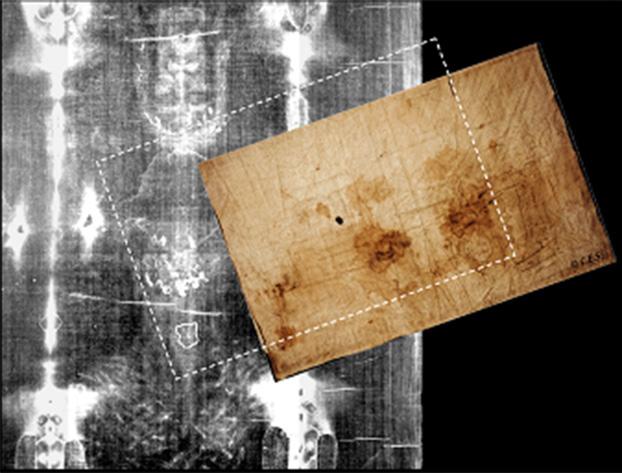
Researchers from Spain have made claims that the Sudarium of Oviedo and the Shroud of Turin both covered Jesus’ body after crucifixion. Their findings offer fresh insights into an enduring mystery within Christianity. These insights were detailed in a study published in the Journal of Cultural Heritage.
Investigating the Sudarium of Oviedo
The study was led by the University of Oviedo, focusing on the Sudarium of Oviedo. This 33×21-inch cloth is traditionally linked to the separate head covering mentioned in the Gospel account of Jesus’ empty tomb. A detailed experiment was conducted using a model head, dressings, and warmed artificial blood. The researchers observed that changing head positions produced patterns similar to the bloodstains on the Sudarium. This suggests that body fluids amassed based on head position and the pressure of bandages.
The research included a nine-hour examination of the original Sudarium on July 2, utilizing 3D scanning, X-rays, and advanced inspection methods. Lead author Pedro Peinado explained that the wrinkle patterns aligned with their hypothesis that external pressures like bandages secured the Sudarium to the victim’s head.
Comparative Analysis with the Shroud of Turin
Peinado is comparing the marks on the Sudarium with wounds shown on the Shroud of Turin. The Shroud is believed to have covered Jesus and displays both front and back images of a man. Initial analyses propose some Sudarium stains correspond with wounds on the Shroud, implying both may have covered the same person.
Conversely, variations in stain patterns might be due to differing body positions. Peinado’s hypothesis involves the deceased being moved upright and then laid face-up under the shroud. Although confirmation is pending, this relationship is compelling when all evidence is considered collectively.
Challenges and Considerations
However, radiocarbon dating in 1988 dated the Shroud to between 1260 and 1390 AD. The Sudarium’s evidence places it as late as the 8th century, both periods after Jesus’ time. Past research, including a 2015 study that identified similar limestone deposits on the Sudarium and Shroud, could not verify the origin or relationship to Jerusalem’s crucifixion site.
If Peinado’s hypothesis were valid, it would indicate both cloths covered the same person, but not definitively Jesus. Nevertheless, Peinado holds that Jesus is the most plausible candidate, supported by apparent injuries, parallels to burial customs, and the Gospel narrative.
“Science alone cannot conclude that this body was that of Jesus,” Peinado told the Daily Mail.
Notably, theologians have entertained more speculative ideas. Bible scholar Jeremiah Johnston, unaffiliated with the studies, suggested the Shroud’s intact blood clots indicate Jesus’ body might have vanished without unwrapping.
“This challenges the skeptic,” Johnston noted. “Removing a cloth from a wounded body would cause tearing and smearing, which did not occur here.”