North Korea’s Nuclear Status and Changing Global Reactions
South Korea is adjusting its approach to North Korea’s nuclear program. President Lee Jae Myung stated that the country is now prioritizing a freeze on North Korea’s nuclear activities over immediate disarmament. The focus has shifted to halting production and advancement without dismantling existing arsenals immediately.
This policy change comes as North Korea strengthens its ties with Russia and China. Ukraine’s President Volodymyr Zelenskyy announced Russia plans to integrate 30,000 North Korean troops into its forces against Ukraine. Meanwhile, international pressure on North Korea seems fragmented. U.S. policy on North Korea under President Trump has notably softened, with North Korea recognized rhetorically as a ‘nuclear power.’ However, the U.S. has not formally acknowledged it as a nuclear weapons state. China’s President Xi Jinping, during a June visit to Pyongyang, made no mention of denuclearization.
Kim Jong Un’s sister, Kim Yo Jong, described nuclear armament as an ‘irreversible final conclusion’ for North Korea.
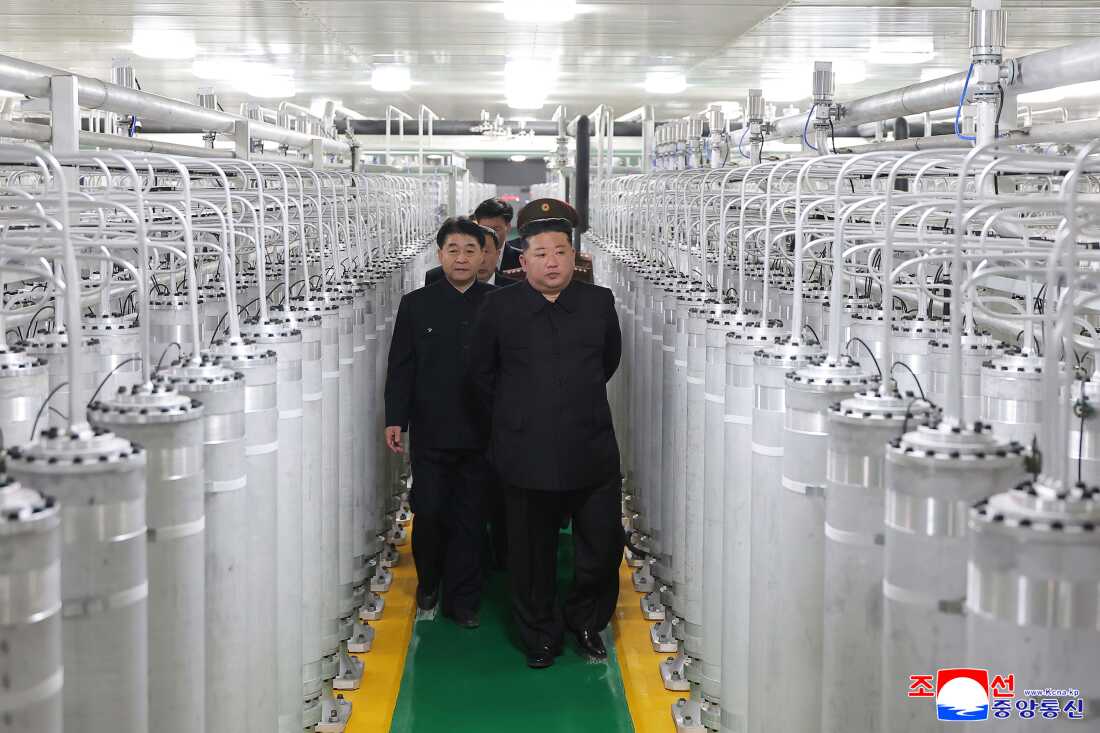
North Korea is perceived as unwilling to reverse its nuclear path. Codifying its nuclear status in the constitution signifies Kim Jong Un’s determination to distinguish his leadership. Reducing nuclear costs has become easier, as China and Russia allegedly offer support contrary to UN sanctions. Pyongyang’s nuclear capabilities have expanded, with production capacity reportedly more than doubling in five years. South Korea’s Korea Institute for Defense Analyses estimates North Korea holds 60 nuclear warheads and sufficient fissile material for at least 30 more.
Despite South Korea’s policy shift, negotiations are uncertain. Some experts consider the shift rhetorical. North Korea’s growing relationship with Moscow further emboldens its stance. Russian support explicitly backs North Korea’s nuclear force as legitimate, with Russia’s Foreign Minister Sergey Lavrov articulating that denuclearization is ‘off the table.’
Temporary coexistence may be South Korea’s realistic goal. Yet, the strategic advantage North Korea finds from its alliances suggests peace talks remain unlikely in the near term.