Operation Midway Blitz: One Year Later
Local Police Responses to Federal Immigration Operations
In June, a police officer from Schaumburg responded to a 911 call from a federal immigration agent who reported being followed. Upon request, the officer turned off his body camera while interacting with the agent. Similarly, in July, a parking enforcement employee in Forest Park moved a federal agent’s vehicle. The agent was allowed to exit through the back of the local police station, avoiding an activist’s camera. The Evanston police commander defended his officers’ actions to the mayor in October after federal immigration agents departed from a violent incident with residents in a nearby street.
These instances highlight ongoing chaotic encounters involving immigration authorities and local police in Chicago and surrounding areas. President Donald Trump’s Operation Midway Blitz, initiated a year ago, still impacts the public and officials, who are seeking clarity and accountability.
Operation Midway Blitz Overview
Operation Midway Blitz was executed as a small-scale military-like crackdown in Chicago and its suburbs. Local officials faced difficulties resolving how to address the situation. Through extensive interviews and document reviews, it is evident that the operation was the most significant test of how Illinois rules direct local law enforcement to respond to federal immigration agents. Unfortunately, these rules remain unclear.
Illinois Accountability Commission and Criticisms
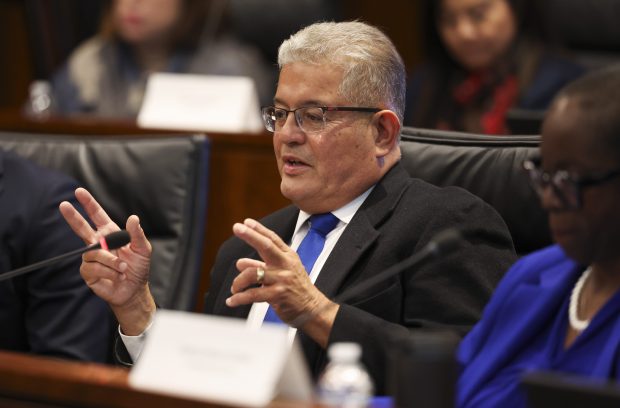
Rubén Castillo, Chair of the Illinois Accountability Commission, appointed by Governor JB Pritzker, remarked on the unpreparedness of local officials for the operation’s military-style action.
Despite accusations of misconduct during the operation, Trump and Department of Homeland Security officials have defended federal agents’ actions. The conflicts with Trump’s administration underscored Illinois politicians’ limited ability to enact laws that effectively restrict federal authorities.
Cases against federal agents remain rare, leading to criticism, particularly aimed at Cook County State’s Attorney Eileen O’Neill Burke. Castillo calls the lack of prosecution an invitation for federal overreach.
The State’s Attorney’s office insists charges will be pursued if supported by law and evidence. The hope remains that political changes in Congress might offer accountability, as many Illinois Democrats anticipate.
Police Engagements and Public Reactions
Local police have often been scrutinized for their interactions during raids and arrests. Accusations suggest police assistance to federal agents in neighborhoods and confrontations with protesters.
Larry Snelling, former Chicago Police Superintendent, stated the necessity of police presence to maintain public safety during these confrontations. He emphasized that without police, scenarios could have been more violent.
Public safety experts like Chuck Wexler note the difficulty police face balancing non-involvement in immigration enforcement with their duty to ensure public safety. Former Superintendent Eddie Johnson believed police were caught in a political struggle.
The TRUST Act and Its Limitations
Conflicts between action by federal agents and local law enforcement often revolve around the Illinois TRUST Act, signed into law in 2017. The Act prohibits state and local police from engaging in civil immigration enforcement while permitting enforcement of criminal laws and public safety protection.
However, confrontation during the operation showed a gap between the Act and reality. For instance, after a federal complaint led to a police report, an investigation revealed inconsistencies among local responders and highlighted complexities within the state law.
Experts acknowledge the Act accounts for local police’s public safety obligations, entailing a difficult situation for officers when agents clash with civilians.
Handling Violent Incidents in Evanston and Accountability Challenges
A video captured a violent clash in Evanston during Operation Midway Blitz, where a federal agent was seen kneeling and potentially hitting an individual while residents protested. This incident was marked by aggressive tactics and significant public outcry.
Despite Evanston Mayor Daniel Biss condemning the agents’ actions, city officials struggled with how to address the situation legally. Discussions among city officials debated potential criminal charges against federal agents.
Evanston police Chief Schenita Stewart and others ultimately determined the matter was a civil rights issue, sending information to appropriate authorities. Instead, local accountability remained elusive, often focusing on Cook County State’s Attorney Eileen O’Neill Burke.
Public and Political Pressures for Legal Accountability
O’Neill Burke has been pressed to address potential criminal charges against agents, experiencing criticism for hesitant responses to accountability challenges. Legal barriers and inter-agency complexities have complicated the effort.
Governor JB Pritzker expressed frustration over the lack of accountability from state attorneys, urging action against federal legal breaches. However, O’Neill Burke maintains that law enforcement agencies are responsible for investigating criminal conduct allegations.
Efforts for accountability seem stalled, as political changes in November elections lead many to hope for further Congressional adjustments.
Federal Court Challenges and Litigation
Federal courts have weakened some of agents’ aggressive tactics, notably narrowing deployments of federal forces. Legal actions by Illinois Attorney General Kwame Raoul successfully prevented a quasi-military operation from escalating into a larger threat.
Illinois’ legal success showcased potential for judicial reinforcement against aggressive federal policies, illustrating resistance to rapid military-like deployments by President Trump.
State Legislation and Community Activism in Response
State lawmakers attempted to enact protections against aggressive federal actions, including measures to prevent arrests near courthouses and facilitating civil redress for rights violations during immigration enforcement.
These measures face ongoing challenges, as federal agencies continue encounters within judicial settings, testing legislative effectiveness.
Democratic legislators remain committed to advocating protections against invasive federal actions, urging lawful due diligence amid ongoing encounters.