Payton McNabb’s Advocacy for Women’s Sports
Long before Indiana Fever guard Sophie Cunningham drew attention to women’s sports, Payton McNabb experienced its challenges firsthand. A single high school volleyball match altered McNabb’s life. Now, she observes Cunningham addressing a similar battle, one that has led her to Capitol Hill.
Payton McNabb’s Journey
McNabb suffered a traumatic brain injury and partial paralysis on her right side due to a ball spiked by a biological male opponent. This incident compelled her to transition her fight from a North Carolina volleyball court to Washington, where she has testified before lawmakers to defend women’s sports and Title IX.
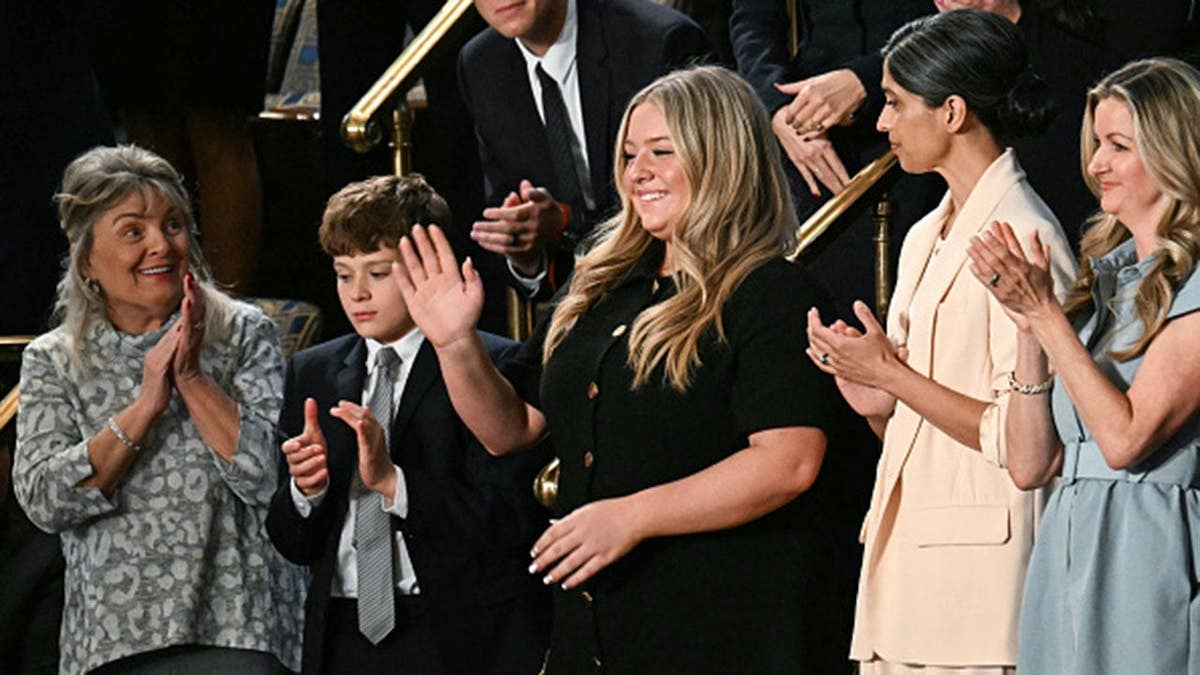
Payton McNabb, a former high school athlete, was acknowledged by President Donald Trump during a joint session of Congress at the U.S. Capitol in Washington, D.C., on March 4, 2025. Now 21, McNabb views her ongoing battle as one that has reached the WNBA, exposing what she perceives as a double standard in the league’s stance.
Sophie Cunningham’s Bold Stand
Speaking with OutKick, McNabb expressed admiration for Cunningham’s courage in confronting this issue. She criticized Minnesota Lynx head coach Cheryl Reeve for her support of transgender inclusion in sports, highlighting Caitlin Clark’s potential influence on the next generation.
“I started speaking out when I was 18,” McNabb shared with OutKick. “Now 21, I question why I’ve had to explain before Congress that biological differences exist between men and women.” She commended Cunningham for her bravery in speaking out, despite the risks.
McNabb noted the backlash Cunningham faces as evidence of these risks. “She’s vilified for voicing what many already think, but fear to admit,” McNabb stated. “Without Title IX, figures like Sophie Cunningham and Cheryl Reeve might not exist in the sports world.”
Debate on Transgender Inclusion in Sports
While McNabb holds Cunningham in high regard, her opinions about Reeve are starkly different. Reeve’s advocacy for transgender participation in sports, signified by her “Trans Kids Belong” shirt during a game, drew McNabb’s ire.
McNabb criticized the contradiction of championing female empowerment while allowing biological males to compete. She believes sports policies will change quickly if a biological male joins the WNBA. McNabb referred to Julie Tétart, a 6-foot-3 biological male succeeding in a French women’s league, who expressed interest in the WNBA.
“I suspect the policy might change if a male player like Tétart were to compete here,” McNabb opined. Her stance is not fueled by a desire to see the WNBA struggle but to see deserved protections for athletes.
Calls for Inclusion and Recognition
McNabb advocates for broader representation, suggesting even coaching positions be open to transgender individuals. “If high school sports accept it, the WNBA should too,” she asserted.
She sees Caitlin Clark, despite her reticence on the issue, as a crucial voice. “Clark’s influence is undeniable,” McNabb remarked. “Her support could inspire young athletes.”
A Personal Battle and Recovery
Though years have passed since her injury, McNabb’s health shows significant improvement. “Doctors had uncertain expectations, but I’ve recovered remarkably after three years,” she shared.
Despite once fearing public speaking, McNabb now champions awareness to prevent similar incidents for other female athletes. “I never intended to enter politics,” she concluded. “But my story is genuine, affecting real people, and that drives my advocacy.”