Political Uncertainty Follows Sweden’s Tight Election
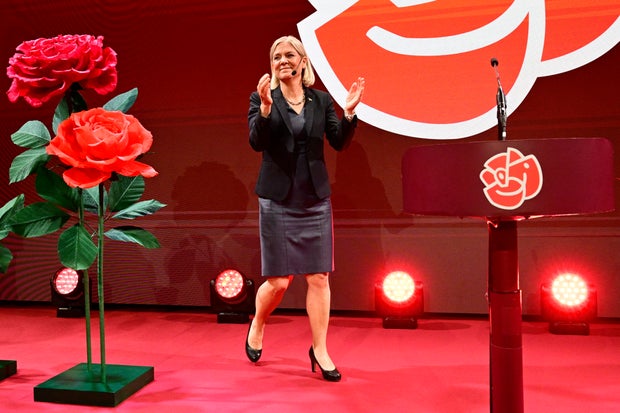
Sweden is navigating political uncertainty after a closely contested election left the left-wing opposition with a slim lead. Votes are still being counted, and the result has complicated the political landscape.
Sunday’s election proved challenging for the far-right Sweden Democrats, marking their first loss of parliamentary ground in 16 years. Magdalena Andersson, the leader of the Social Democrats, and the outgoing conservative Prime Minister Ulf Kristersson are each exploring coalition options to secure power, necessitating substantial concessions for a parliamentary majority.
Complex Coalition Talks Ahead
The left-wing bloc holds a narrow lead but will face difficult negotiations to form a government. Experts anticipate prolonged discussions, similar to the post-2022 election scenario, where it took 37 days to establish a government. This period, however, was shorter compared to the 134 days required in 2018.
With 95% of votes counted, the opposition parties occupy a three-seat majority over Prime Minister Kristersson’s right-wing alliance, which includes the anti-immigration far right. Observers caution that results may shift as some votes remain to be counted by Wednesday.
Stalemate and Potential Snap Election
Mats Knutson, a political analyst with SVT, stated that the current setup could lead to a stalemate, potentially culminating in a snap election. He suggested parties might need to abandon key positions to avoid this outcome.
The public response has been mixed, with citizens acknowledging the increased polarization in Sweden’s political climate. “It’s going to be a tough situation for each side to form a government,” stated Mikko Duvaldt, a construction worker.
Challenges of Forming a Government
Should the left-wing majority hold, Andersson will try to build a government with the Greens, the Left, and the Center parties. However, ideological divides within the bloc present challenges. The Center Party has expressed reluctance to support any government including the Left, while the Left insists on being part of any supportive government arrangement.
Kristersson plans to reach out to the Center Party, historically part of the right-wing bloc until 2019, to forge a majority. Yet, political analyst Annika Freden argues this outreach may prove futile due to the Center’s opposition to alliances involving the far-right.
Freden predicts parties will work to avoid a new election. “Negotiations on the left will focus on how much they can achieve while determining if and when hardline positions are softened,” she explained. Sweden’s culture of negotiation often prevails over quick election calls.
The Far-Right Setback
The Sweden Democrats saw their share drop to 17.6% from over 20% four years ago, ranking them third behind the Social Democrats and the Moderates. This party, historically from Sweden’s extreme-right fringe, has gradually entered mainstream politics since 2010. In 2022, they became the second-largest party and supported Kristersson’s minority government.
Observers attribute their diminished influence to the normalization of stringent migration and crime policies by mainstream parties. “Migration issues peaked during 2015-2016; now, many parties favor restrictive policies,” Freden commented, observing the Sweden Democrats’ struggle to capitalize on other issues.