Renewed Focus on Prioritizing Lake Mead Amid Record Low Reservoirs
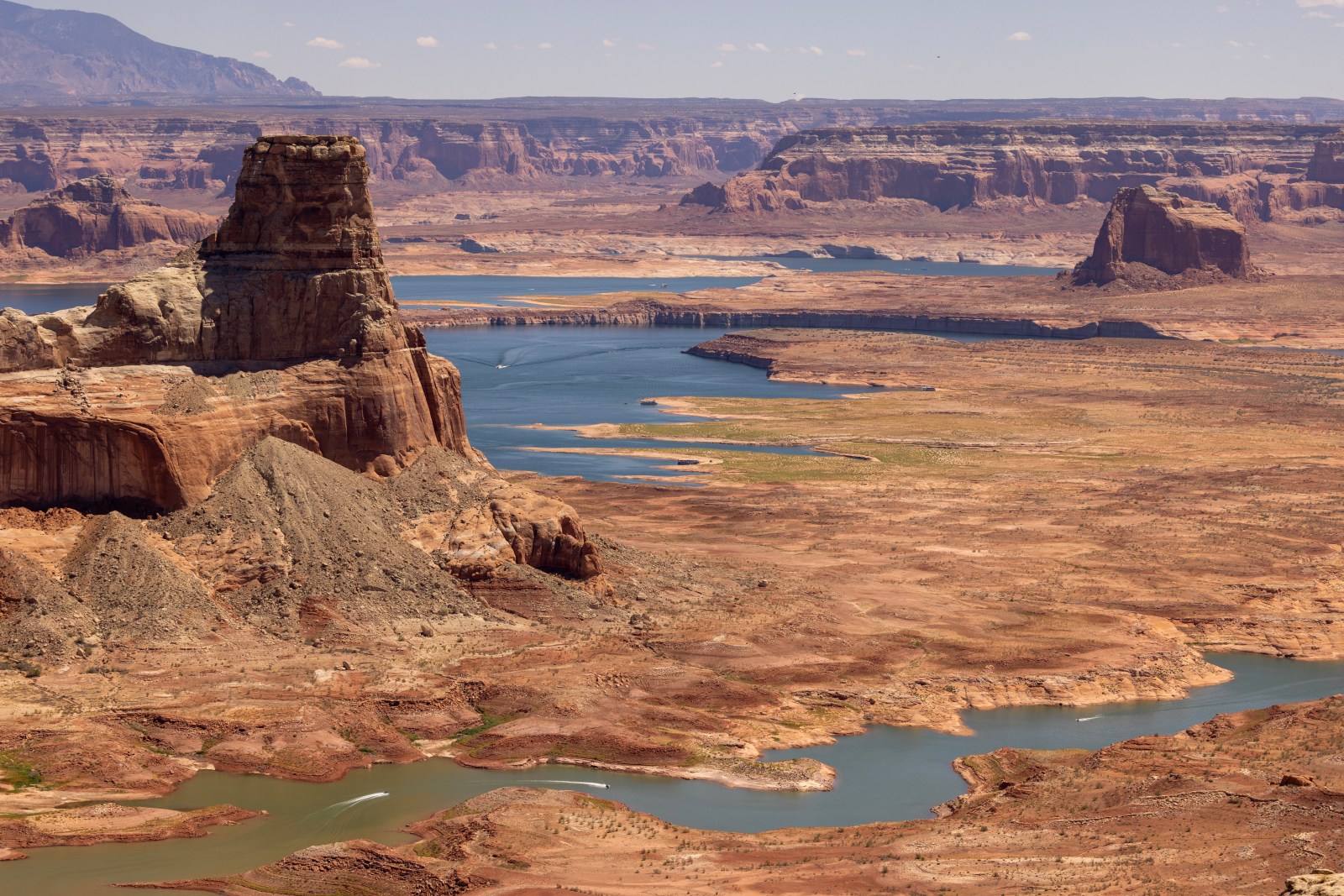
A proposal to prioritize Lake Mead over Lake Powell is gaining renewed attention. Both reservoirs have reached record lows, and negotiations about the Colorado River’s long-term management failed to yield an agreement among the seven dependent states.
Understanding the Importance of the Colorado River
The country’s two largest reservoirs, Lake Mead and Lake Powell, hit record lows this year due to a prolonged drought across the Colorado River Basin and notably low snowpack during the winter of 2025-26. As of Wednesday, data from the Bureau of Reclamation indicated that the lakes were each only 27 percent full. These reservoirs provide crucial water and power to millions across Arizona, California, Colorado, Nevada, New Mexico, Utah, and Wyoming.
Experts have long warned about the threat to these deliveries due to declining water levels. The U.S. Energy Information Administration reported that Southwest hydropower generation reached a record low this summer. At the end of September, Lake Powell stood just 28 feet above the minimum power pool, the level necessary for electricity generation at Glen Canyon Dam.
Considering the “Fill Mead First” Proposal
The “Fill Mead First” proposal suggests making Lake Mead the primary storage reservoir, using Lake Powell only when Mead is full. According to the Glen Canyon Institute, this plan would necessitate new tunnels to route the Colorado River around the Glen Canyon Dam.
Eric Balken, executive director of the institute, explained that using Mead as the main facility would help save the reservoir. However, unless water usage decreases to match the river’s supply, overall storage will continue to decline. “Moving the water currently in Powell to Mead could effectively double Mead’s storage. Yet, if supply and demand remain unbalanced, Mead stays at risk,” Balken conveyed.
Risks and Strategic Considerations
David Rosenberg, from Utah State University, highlighted risks in prioritizing one reservoir. He noted that both Lake Powell and Lake Mead are at low elevations. Favoring storage in one might increase risk for the other. A strategy he recommended involves identifying catastrophic water levels for each reservoir and maintaining buffer volumes to mitigate risks.
Rosenberg emphasized maintaining buffer levels above catastrophic elevations as beneficial for hydropower and water delivery. He added that releasing buffer water would result in its one-time consumption by downstream users.
The proposal also poses complex environmental consequences downstream of the Glen Canyon Dam. Jack Schmidt from Utah State University noted unpredictable effects on river ecosystems if Lake Powell were drained.
Potential Ecological Impact
Schmidt warned of significant river fluctuations, increased sediment, and turbidity if such actions were taken. While acknowledging the unpredictable ecological impacts, Balken reiterated the ongoing aridification of the Southwest is already transforming ecosystems.
By consolidating water in Lake Mead, Balken believes there is potential to save the reservoir and restore the Colorado River through Glen Canyon and Grand Canyon. This could offer new economic and environmental opportunities versus managing two massive reservoirs near their dead pool levels.