States Face Penalties for Food Stamp Overspending
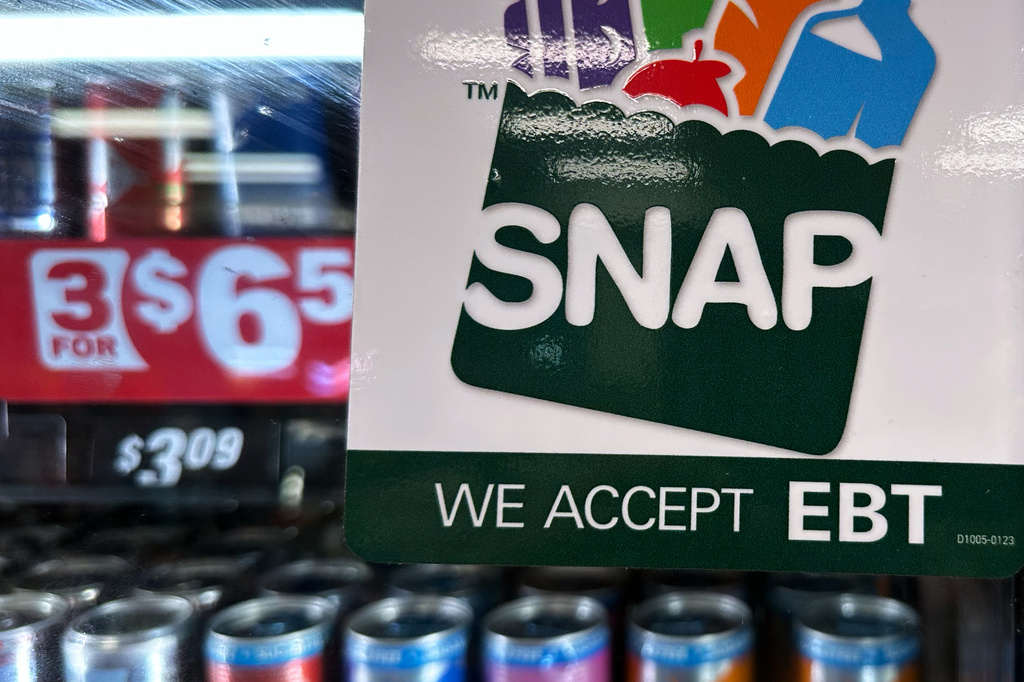
A sign displaying SNAP EBT information at a gas station in Riverwoods, Illinois, highlights an ongoing issue. In 2025, New Mexico’s state official in charge of food stamps acknowledged the lack of plans to address widespread waste, fraud, and abuse in the low-income nutrition program. Niki Kozlowski, the director of the Income Support Division at New Mexico’s Health Care Authority, revealed a significant loophole that states are exploiting to sidestep an essential welfare reform enacted by President Trump.
The One Big Beautiful Bill Act introduced a critical change to food stamps. Historically, states could overlook limitless misspending since they manage their own food-stamp rolls while the federal government covers the entire $100 billion-per-year cost. However, starting in fiscal 2028, states that significantly misspend food-stamp benefits will bear up to 15% of the costs, contingent on their error rates. This reform provides a strong incentive for states to minimize waste, fraud, and abuse.
If states do not reduce misspending, they will face substantial financial burdens. There is a loophole: states with more than 13.34% food stamp spending lost to waste, fraud, abuse, and error will not incur penalties. Above this threshold, states receive additional time to reduce their error rates. This exemption, secured by Sen. Lisa Murkowski (R-Alaska), was necessary due to Alaska’s alarming 60.4% error rate in 2023. By preventing Alaska from facing financial consequences, she inadvertently encouraged other states to maintain or increase their error rates.
New Mexico exemplifies this issue. In fiscal 2024, its error rate was 14.6%, beyond the penalty threshold. Kozlowski mentioned a ‘balancing act’ to reduce it, something she aims to manage without facing accountability. But in fiscal 2025, New Mexico’s error rate increased to 16.8%, indicating a lack of urgency to address the problem.
Other states are in a similar predicament. Before the legislative change, Alaska, Georgia, Oregon, and Washington, D.C. had error rates exceeding 13.3%. They continue to face challenges without notable improvements. Furthermore, Delaware and Illinois saw significant increases in misspending from 2024 to 2025, with Illinois rising from 12.3% to 16%, and Delaware from 11.5% to 14.6%.
Some states have shown progress. For example, New Jersey reduced its error rate from 14.3% to 6.8% and may fall below the financial penalty threshold soon. Other states like New York, Maryland, Massachusetts, and Florida dropped below the loophole level in 2025, although their error rates are still dangerously close to the penalty-avoiding threshold.
Many states, even those aiming to curb misspending, prefer a delay or elimination of financial penalties. In response to Democratic pressures, the Senate’s draft farm bill suggests postponing the penalties by a year. This delay may cause states to procrastinate in their fraud reduction efforts.
Republicans are urged not to concede. The loophole should be closed completely. They should resist Democratic demands weakening this reform and pressure states for tangible changes. States should not be compensated for their prolonged tolerance of waste, fraud, and abuse. As shown by New Mexico and others, accountability is overdue.
The author of this analysis, Hayden Dublois, is the data and analytics director at the Foundation for Government Accountability.