States Implement Measures to Address Rising Fuel Prices Amid Political Developments
Easing the Gasoline and Diesel Price Burden
States are responding to escalating fuel costs, taking action as President Donald Trump assured Monday that the resolution of the Iran conflict would bring reduced fuel prices. Trump declared that Iran would not develop a nuclear weapon, predicting a swift victory and suggesting subsequent relief in fuel expenses.
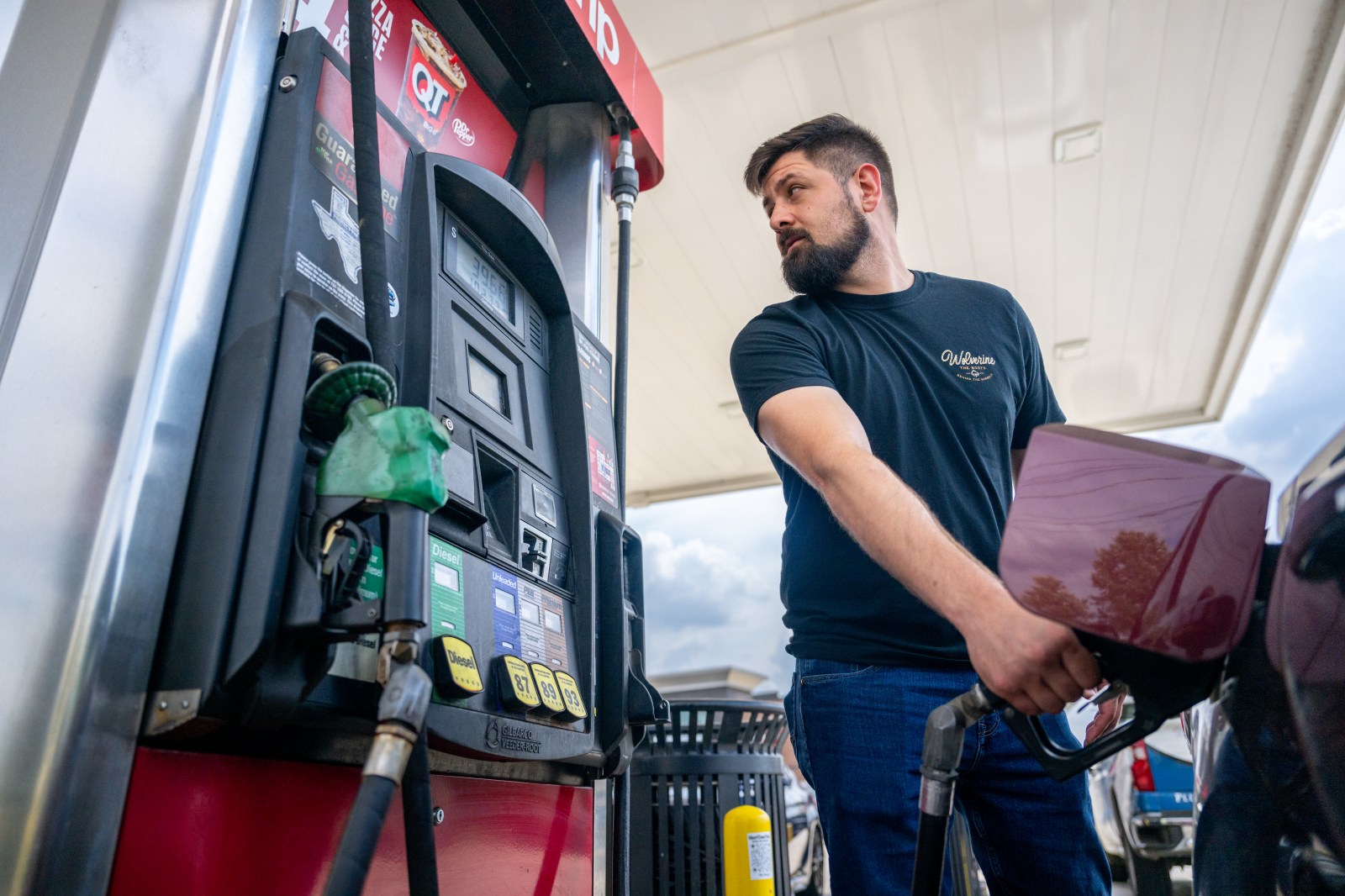
Across the United States, drivers are facing high prices at the pump, with averages reaching $4.48 per gallon for regular gas and $6.45 for diesel, according to AAA. In California, prices soar with regular gas at $6.37 and diesel at $8.40. In response, California and Georgia leaders unveiled measures to help alleviate these costs, joining several other states in similar efforts.
State-Specific Actions
California Governor Gavin Newsom issued an order suspending the summer-blend gasoline requirement, permitting immediate production and sale of the winter blend. This action shifts away from the environmentally favorable yet costly summer variant.
“Families are paying more to fill their cars, farmers more to grow our food, and truckers more to get it to market,” Newsom stated.
In Georgia, Governor Brian Kemp declared a state of emergency and suspended the motor-fuel tax for 30 days, erasing the state’s 33.3-cent gasoline tax and 37.3-cent diesel tax. Kemp’s order also lifted commercial vehicle weight restrictions, aiming to reduce transportation costs impacting everyday goods.
Massachusetts Governor Maura Healey is pursuing relief by proposing a temporary gas tax suspension. This initiative awaits legislative approval.
Additional states, including Texas, Alabama, Louisiana, and Nebraska, have adjusted policies on tax-exempt dyed diesel, typically reserved for off-road purposes.
South Dakota addressed harvest season needs, easing hauling restrictions for farmers to carry commodities beyond normal weight limits.
Recent measures in Illinois, Indiana, Kentucky, and Utah have included reductions or freezes on gas taxes.
AAA Observations and Potential Federal Action
AAA revealed September’s rising trend in fuel prices, influenced by instability in the Strait of Hormuz and crude oil’s high costs. The Trump administration is considering halting U.S. diesel exports to cut costs domestically. Such a ban, if possible, would hopefully decrease pump prices.
“While a domestic diesel supply surplus might temporarily lower U.S. fuel costs, this effect is short-lived,” noted Mark Williams, finance lecturer at Boston University.
Williams suggests that restricting diesel exports might disturb global markets, ultimately increasing U.S. consumer expenses.
Earlier this month, Trump expressed optimism for falling gas prices post-November midterm elections, predicting rates potentially below $2 per gallon.
For details and updates on this story, contact Newsweek editors, including Edward T. Cummins.