Survivors Rebuild After Devastating Floods in Nepal
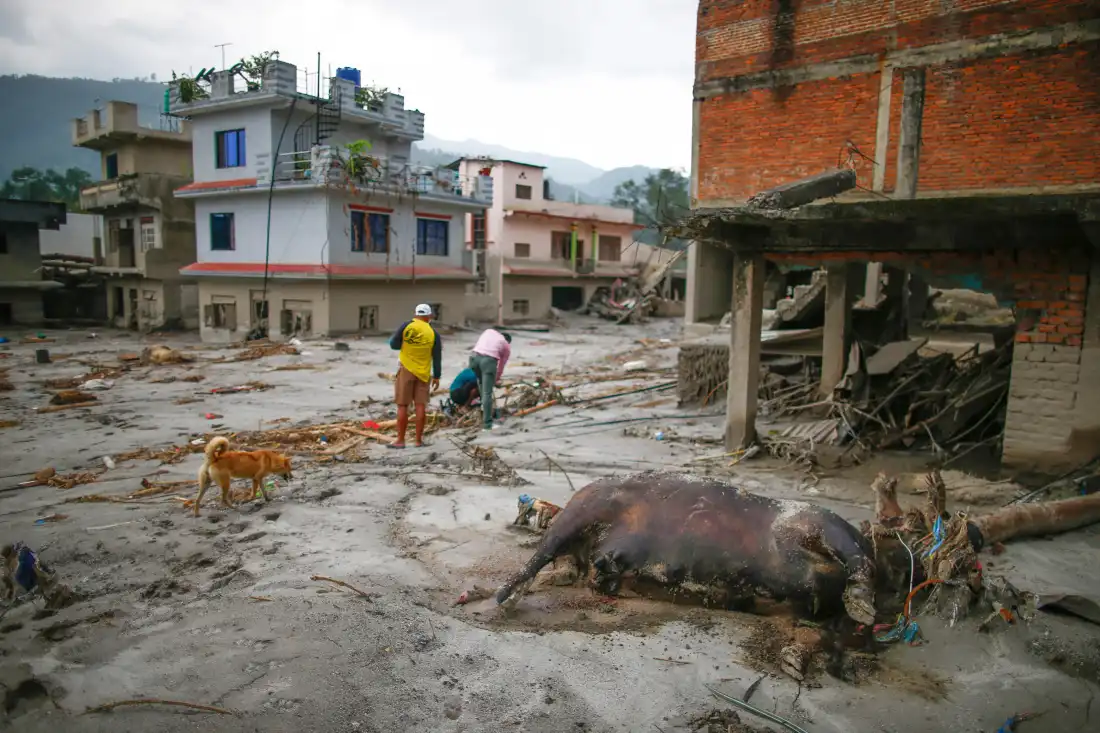
People in the flood-stricken area of Devighat in Bidur Municipality, Nuwakot district gather their belongings amid ongoing rescue and relief efforts. These flash floods and mudslides, triggered by a glacial collapse and debris flow along the Trishuli River, resulted in hundreds of deaths and numerous disappearances.
‘I thought I wouldn’t survive,’ says Januka Dhital. She was preparing snacks for her catering service in Uttargaya, Nepal when a man on a scooter warned of the impending flood. She immediately whisked her young son to safety on the scooter. Her husband and daughter were at work and school, leaving her unsure of their safety.
Hours later, Dhital’s family reunited. Her husband, injured and covered in blood, had survived. The catastrophic event left their home in ruins. Despite the loss, Dhital chose to help others as an aid worker.
Dhital’s family is part of the more than 100,000 people affected by floods intensified by climate change. Over 1,500 lives have been lost, and more than 5,000 remain missing. Thousands are in temporary shelters, with significant infrastructure damage reported, according to the United Nations.
Shyam Pathak of UNICEF remarked on the immense devastation, noting that many aid workers are dealing with personal loss while helping communities recover. Dhital moved into a temporary center before settling with a relative. Seeking work, she joined aid efforts by Helen Keller Intl, focusing on rebuilding her community, especially supporting postpartum mothers, pregnant women, and young children.
Preliminary studies indicate a spike in malnutrition, exacerbating the crisis. Many have to rely on dried foods due to lost gardens and farms. Poor sanitation and a lack of clean drinking water contribute to the hardship. Aid workers, like Dhital, distribute supplies and cash, but damaged bridges complicate the delivery to isolated areas.
Pushmaya Tamang, another aid worker, navigates makeshift bridges to reach affected communities. She mourns the loss of her village and sister, as many families remain in grief. Mental health support is a significant need, compounded by personal traumas among health workers.
Winter adds to the challenges for those still in temporary shelters. Responders are working to winterize tents and improve living conditions. Longer-term reconstruction plans remain unclear, with substantial funding necessary for rebuilding.
Despite daily trials, the resolve to assist and rebuild persists. Aid organizations focus on immediate needs, as Tamang finds solace in her work amid the tragedy.