Swing Voters Show Openness to Socialist Ideals Amid Economic Concerns
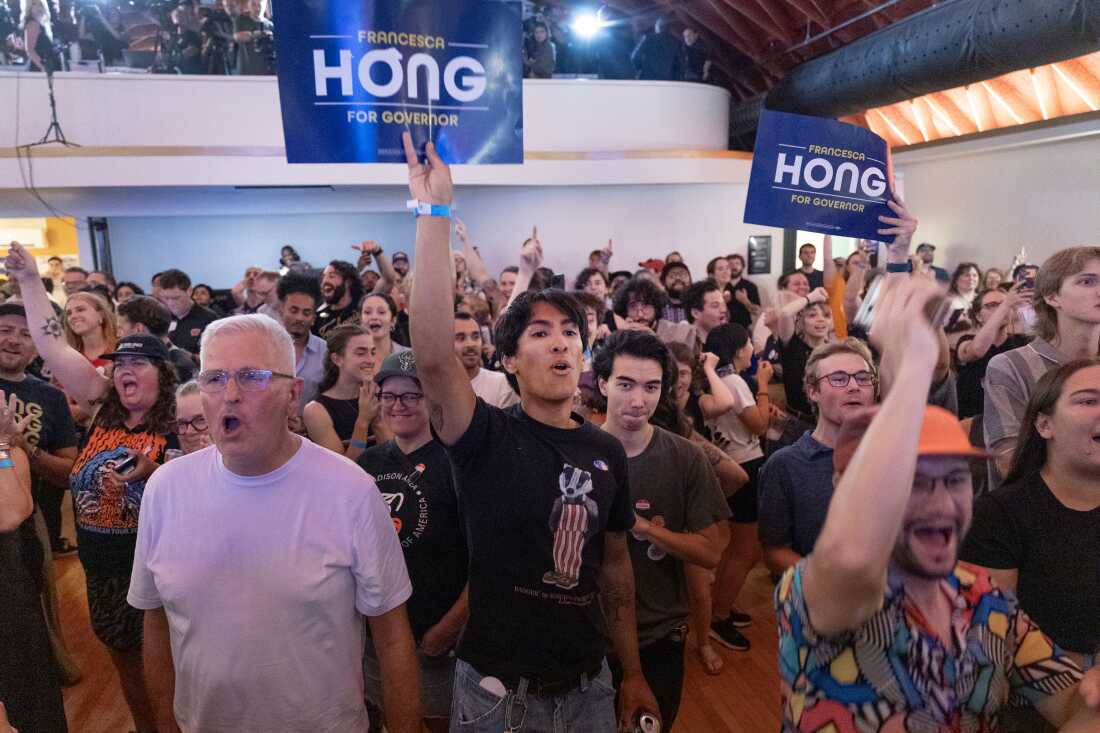
Supporters of Francesca Hong, a Democratic gubernatorial candidate in Wisconsin, celebrated during her election night gathering in Madison. Hong, who identifies as a democratic socialist, experienced a narrow defeat in the primary.
NPR conducted observations on two online focus groups of Nevada voters, discovering that 10 out of 12 participants did not automatically hold negative views of politicians with left-wing ideologies. These voters had a variety of political backgrounds, having supported Joe Biden in 2020 and then Donald Trump in 2024. The group comprised six independents, four Republicans, and two Democrats.
“I need to know them completely before making a judgment,” said Jasmine, an independent voter.
Melody, another independent, expressed willingness to understand the motivations behind socialist policies, emphasizing concerns for rights, housing, and employment.
The discussions took place during the Wisconsin Democratic gubernatorial primary, in which a democratic socialist narrowly missed victory. Within the Democratic Party, debate continues over the impact of democratic socialist victories on centrist voters. A Pew Research Center survey found about one-third of Democratic voters have a positive view of democratic socialist leaders, while a plurality of Americans remain indifferent.
The focus groups, although not scientifically significant like polls, offer valuable insights. Engagious and Nelson Recruiting facilitated these discussions, partnering with NPR for their Swing Voter Project. Rich Thau, president of Engagious, noted the surprising openness of swing voters to democratic socialism. These voters typically lean towards centrist positions.
“I was struck by their receptivity,” Thau mentioned regarding democratic socialism’s acceptance.
Participants also examined the distinction between Democrats and democratic socialists. Marianne, an independent voter, believes traditional Democrats focus more on corporate interests than socialists who prioritize community-based solutions.
Some struggled to define socialism but agreed that democratic socialists align less with business interests. Justin, another independent voter, echoed that democrats support business interests, while socialists aim to assist people through programs.
Economic anxiety emerged as a potential reason for increased openness to socialist ideas. Many voters expressed feeling more economically anxious than before, with several carrying higher debt.
Katrina, an independent, reported financial stress due to stagnant economic conditions.
“I feel anxious that nothing has changed,” she stated.
Thau linked this economic distress to the growing openness towards socialism, comparing it to seeking any refuge during a financial storm.
Participants like Marianne shared concerns about rising consumer debt due to increasing living costs. Corrina, a Republican, cited rising home insurance and tax expenses as sources of her financial burden.
Despite openness to socialism, participants clearly separated their views on communism, with many harboring negative associations from the past.
“I’m giving contempt prior to investigation with communism,” Justin admitted.
Such distinctions reflect broader political narratives, with figures like Donald Trump using terms like “communist” in political rhetoric against opponents.