Tensions Rise in Middle East Amid Houthi Attacks and Iran’s Demands
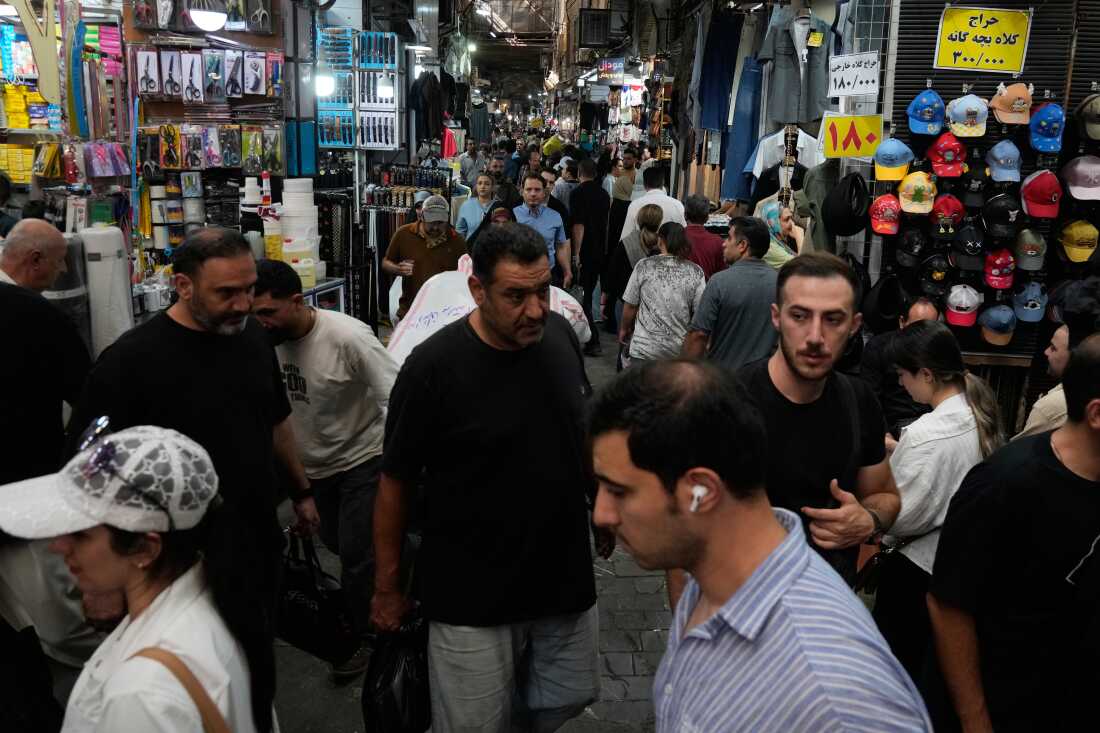
A crowd moves through Tehran’s traditional main bazaar in Iran as regional tensions escalate. On Saturday, a military spokesperson for Yemen’s Houthi rebels announced an attack on an oil facility in southwestern Saudi Arabia. This incident is one of the latest strikes by the Iranian-backed group.
Houthi Drone Attack on Saudi Arabia
Yahya Saree, the Houthi military spokesperson, reported a drone strike targeting an Aramco refinery in Jazan. This was a response to Saudi drones allegedly entering Yemeni airspace over Hajjah and Saada provinces. While the Saudi Energy Ministry confirmed a fire at an Aramco facility early Sunday, they reported no casualties. The fire was extinguished, though its cause was not detailed.
In a related incident, the Houthis assaulted a key port in the Red Sea. The Yemeni government’s Assistant Undersecretary for Information, Fayed al-Noman, stated that missiles and drones targeted the Mocha port. This port has been crucial for Yemen’s internationally recognized government due to renovations allowing shipping without using Houthi-controlled ports in Hodeida.
The escalation risks reigniting Yemen’s civil war, halted more than four years ago by a truce in 2022.
Iran’s Stance on Negotiations and the Strait of Hormuz
Iranian Foreign Minister Abbas Araghchi, in a press briefing in Tehran, emphasized that talks with the U.S. are not feasible until previous agreements are honored by the United States. He noted ongoing discussions with Oman concerning new maritime routes through the Strait of Hormuz, though reopening them depends on satisfying several conditions communicated through intermediaries.
The Supreme National Security Council of Iran echoed this position. In a statement, they made reopening the Strait of Hormuz contingent upon the U.S. amending its actions in the region. The demands include ending threats against Iran, stopping regional hostilities, lifting the naval blockade of Iranian ports, withdrawing military presence, compensating for war damages, lifting sanctions, and releasing frozen assets.
Pentagon’s Response and Weapon Production
The Pentagon is urging an increase in the production of munitions. Spokesman Sean Parnell highlighted the necessity to supply weapons swiftly, considering the pace of current threats. The ongoing conflict with Iran has strained U.S. military stockpiles, especially missile interceptors.
The push for faster delivery ties into a broader modernization program, initiated before this conflict.
Potential Iran-Oman Agreement and Strait Navigation
The strategic Strait of Hormuz, imperative to global oil and gas supplies, previously functioned as an international waterway. Negotiations between Iran and Oman are in the final stages for a provisional agreement to reopen the strait. Ships would enter via Iran’s route and exit near Oman, pathing without fees or tolls during the interim.
This arrangement aims to reinstate prior agreements between the U.S. and Iran, kick-starting a 60-day negotiation window on Iran’s nuclear program. Sources indicate endorsement from Gulf Cooperation Council members, with a joint announcement expected from Iran, Oman, the U.S., and the United Nations’ International Maritime Organization. However, terms are subject to change before finalization.