The Changing Dynamics of Political Visits to Israel
For 50 years, a journey to Israel became a key step in the path to the White House. The routine included laying a wreath at Yad Vashem, shaking hands with the prime minister, and affirming the strong bond between the U.S. and Israel. In 2008, Barack Obama visited the rocket-hit Sderot, Israel, expressing his concerns as a father. In 2012, Mitt Romney left a note at the Western Wall. These visits were designed to signal support to Jewish and evangelical voters. They also offered U.S. politicians without foreign policy credentials a chance to appear diplomatic. In 1998, then-Governor of Texas, George W. Bush, flew over Israel in a helicopter, returning with a presidential aura. Israel, amid its challenges, offered real alliances without too much risk of creating political gaffes.
There was an exception when Reverend Jesse Jackson hugged Yasser Arafat in Lebanon in 1979. That image became a lasting hindrance in his presidential campaigns, adversely affecting his Jewish support even before his controversial comments later on.
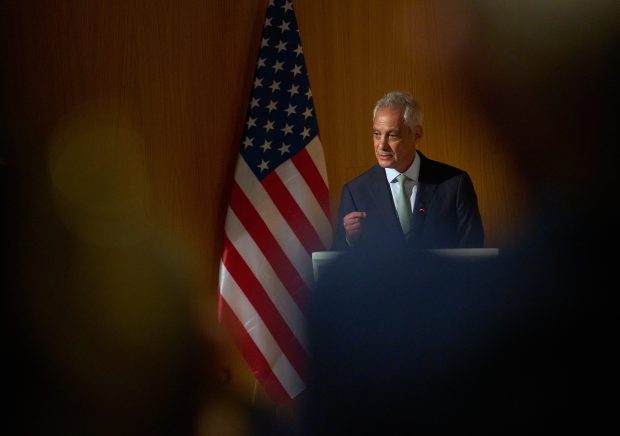
This example now seems to influence political strategies. On July 8, amid Iranian missiles targeting U.S. sites, Rahm Emanuel, at Tel Aviv University, criticized the Israeli government. Concurrently, U.S. Representative Ro Khanna entered a proscribed West Bank military area, later alleging detainment by settlers. He announced this incident days later, with prepared media and a fundraising pitch ready.
Khanna claimed coordination with the U.S. Embassy, though denied by the ambassador. His visit skipped typical destinations like Jerusalem. He returned stating the visit spurred his presidential ambitions.
The contradictions deepen. Just months earlier in Khanna’s district, two Israeli Americans faced assault upon being heard speaking Hebrew. Local leaders connected this to rhetoric Khanna had supported, linking it to a rise in antisemitic incidents. Despite significant Israeli contributions to local employment, Khanna spent significant time inspecting the West Bank instead.
Emanuel’s speech, though critical, came from someone whose family ties to Israel are deep-rooted. Khanna, however, is portrayed as an outlier forcing his place in political narratives.
Despite prominence, major Democratic contenders avoided Israel in 2020. But on October 7, 2023, Israel emerged as a significant issue within Democratic politics. Republican candidates have varied responses, influenced by their party’s Israel-skeptical segment.
Emanuel and Khanna notably stayed clear of Israeli government meetings. Their visits targeted American audiences, symbolizing critical distance amid Democratic primaries. Israel’s stage offered Democrats a platform to appear progressive without alienating Jewish voters face-to-face.
While criticisms against Israel arise domestically, true engagement requires more than using Israel for political theater. The U.S.-Israel alliance is bolstered by shared responsibilities and benefits, evident in collaborations like the Iron Dome. Such relationships withstand criticism but suffer when reduced to spectacle.
The article proposes that 2028 candidates from all parties should broaden their scope when visiting Israel. Engaging with both Israeli and Palestinian communities, academic institutions, and initiatives fostering cooperation, they should focus on genuine dialogue over scripted declarations. Listening, instead of staging, should take precedence.