The Changing Dynamics of Russian Influence and Trump’s Foreign Policy Impact
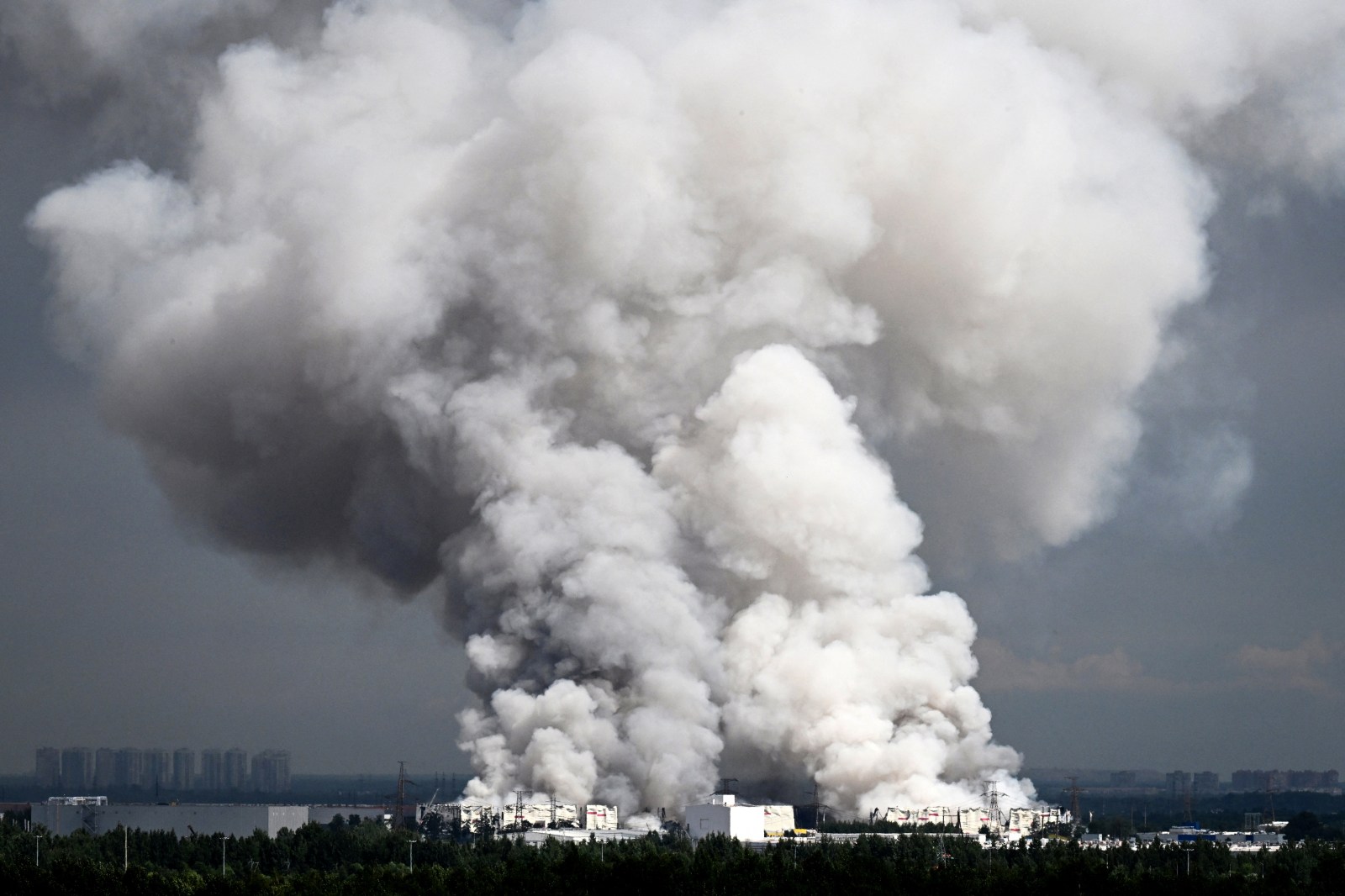
Wildberries, dubbed the Russian equivalent of Amazon, has recently emerged into the global spotlight, though largely unknown outside the former Soviet territories. A series of Ukrainian drone attacks destroyed eight of the company’s logistics hubs. These incidents occurred near Moscow, St. Petersburg, Krasnodar, and Simferopol, resulting in the loss of over ten percent of Wildberries’ warehouse capacity. Rebuilding these facilities comes with an estimated cost of $460 million, excluding the billions more required to replace incinerated merchandise, much of which belonged to small Russian vendors.
Additionally, Ukrainian strikes have taken a significant toll on Russia’s refining capabilities, effectively disabling a quarter of it. This disruption has led to fuel rationing in over half of Russia’s regions, creating a paradox where one of the world’s largest energy exporters struggles to meet domestic demand.
Throughout these developments, Donald Trump held the U.S. presidency. Often labeled by critics as a Russian asset, his approach to Russia marks a stark contrast to his predecessors’. Notably, during Trump’s tenure, Russia did not acquire any new territories. This is a shift from previous administrations: George W. Bush experienced the partial annexation of Georgia by Russia; Barack Obama faced the annexation of Crimea, along with the conflict in the Donbas; and Joe Biden saw the onset of Russia’s full-scale invasion of Ukraine.
Trump’s perspective on Russia was not born from superior insight. Like previous American presidents, Trump began with the belief that his approach to Moscow would surpass that of his predecessor. For instance, George W. Bush found soul-searching potential in Vladimir Putin’s eyes, Barack Obama aimed to reset relations, and Joe Biden sought stability. Trump, however, claimed he would resolve the ongoing conflict within 24 hours. The pattern is rooted in American diplomacy, not party lines, yet Trump differed by his rapid course correction.
The second term of Trump’s presidency began with setbacks. An initial tilt towards isolationism aligned with JD Vance’s ideals proved detrimental. Early policies reflected concessions favorable to Kremlin interests. However, quickly recognizing the infeasibility of appeasing Moscow, Trump recalibrated his strategy.
His revised approach was structured around two main principles. Firstly, granting Ukraine autonomy. This strategy involved Europe bearing the costs, Washington providing support, and Kyiv directing its military tactics. Under Biden, the U.S. had exercised a more cautious stance, assuming Russia’s reckless use of nuclear capabilities necessitated a tempered response from America. Consequently, the transfer of armaments like ATACMS took two years, with additional delays in granting permission for strategic strikes. Trump, by removing these constraints, enabled refinements and warehouses in Russia to be targeted.
The second key aspect of Trump’s strategy was capitalizing on opportunities within the post-Soviet space as Russia concentrated on its conflict with Ukraine. In the South Caucasus, Trump was instrumental in facilitating peace between Armenia’s Nikol Pashinyan and Azerbaijan’s Ilham Aliyev. Previously, Russia had leveraged regional conflicts as a means of exerting control. Now, with a peace accord in place, the region may experience diminishing Russian influence.
In Central Asia, Trump made unprecedented progress by engaging all five regional heads of state in Washington. His efforts in Kazakhstan culminated in significant economic agreements, including a $1.1 billion venture with Cove Capital and plans for additional investments. Uzbekistan also pledged significant future investments in the United States. Diplomatic channels, once non-existent, have now been established.
The motivation behind these strategic realignments stems from the post-Soviet republics’ prolonged experiences under Russian hegemony. Armenia, Azerbaijan, and Kazakhstan, having been subjected to decades of Moscow’s dominance, are now looking towards alternative partnerships. For these countries, Ukraine’s resilience serves as an assurance of their potential sovereignty.
The current geopolitical landscape is not solely the product of Trump’s actions. The invasion, along with the entrenched corruption that preceded it, were orchestrations by Putin himself. What stands out in Trump’s tenure is his ability to recognize and act upon these developments without cushioning the implications for Russia.
As a weakened Russia navigates its contemporary challenges, neighboring nations anticipate that this vulnerability will persist. These developments highlight a foreign policy record that contrasts with longstanding accusations.