The Debate on Protecting Women’s Sports: Athlete Perspectives and Cultural Reactions
Recently, fans attending a WNBA game faced harassment for supporting Sophie Cunningham, a player who spoke about the importance of protecting young girls in locker rooms and opposing competition against biological men. The reactions, including actions from the Seattle Storm’s co-owner, reflect cultural dynamics surrounding this issue more than the actions of those fans.
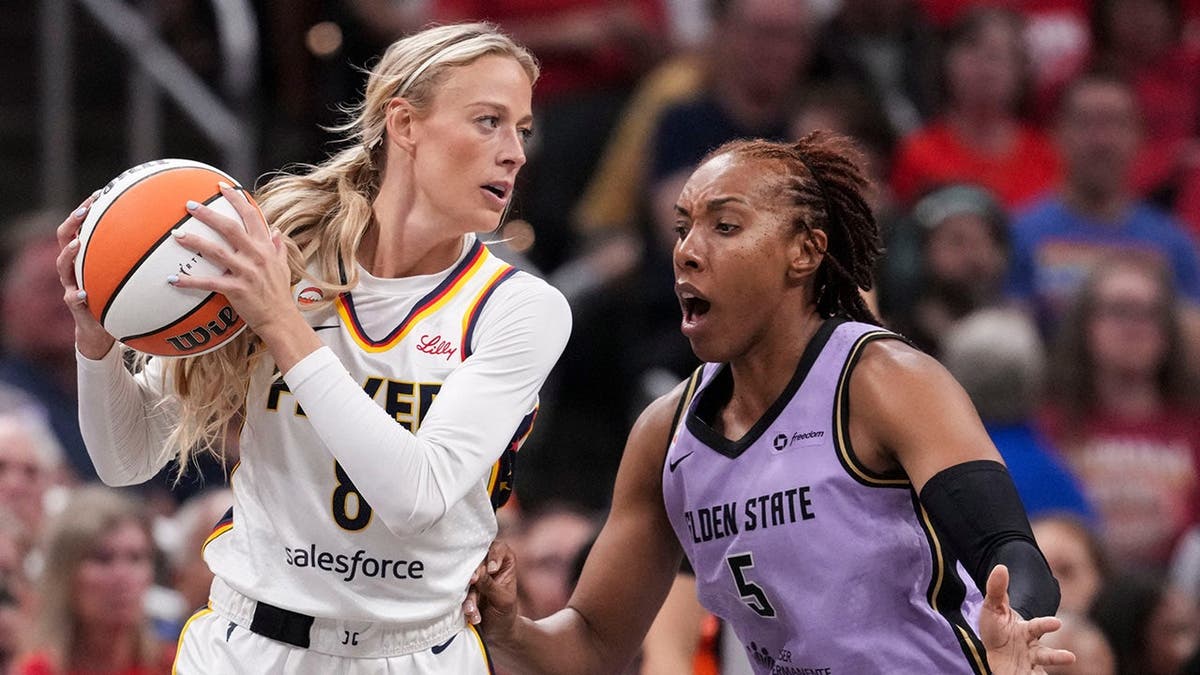
Golden State Valkyries forward Kayla Thornton guarded Indiana Fever guard Sophie Cunningham on July 15, 2026, during a game at Gainbridge Fieldhouse in Indianapolis. Support for women in sports is shifting, and debates about inclusion and women’s rights have intensified. Many argue against allowing men in women’s sports, claiming it undermines efforts dedicated to advancing women’s athletics.
Megan Rapinoe dismissed concerns about men in women’s sports as a fabricated issue, questioning what dangers exist for female athletes. I can answer that: I suffered a career-ending brain injury at 17 after being hit by a spike from a male athlete on a girls’ team. The focus on inclusion overlooked the risks to girls like me, and the refusal to protect women in sports has direct consequences.
Fans supported Cunningham during a game between the Seattle Storm and Indiana Fever on July 28, 2026. Despite not being a political figure, Cunningham advocated for women and girls, standing by her comments regarding the importance of protecting children in sports. Her stance challenges the activist approach of pressuring individuals to conform and apologize.
Congressman Seth Moulton once expressed concerns about male athletes competing in women’s sports but apologized after activist pressure. Cunningham, lacking institutional power, refused to relent, diminishing the influence of activists attempting to control women’s sports.
In the past, supporting women was applauded, especially during the #MeToo era. Now, expressing that biological males shouldn’t compete in women’s sports can lead to ridicule or removal from events. The same voices claiming to support women dismiss concerns about ignoring biological realities.
Former athlete Payton McNabb, injured by a transgender opponent, shared her experience during a governmental hearing on “Unfair Play” in Washington, D.C. She highlights the mixed messages sent to young girls about speaking up and facing discomfort in sports and locker rooms.
Current athletes like Sophie Cunningham and Aryna Sabalenka are speaking out, advocating for the protection of women and girls in sports, despite pressures. They emphasize the intent of Title IX for equitable opportunities while accepting trans athletes on sex-corresponding teams.
Athletes like Cunningham stand firm, aiming to ensure future generations have opportunities akin to their own. Protecting female-only sports remains essential, allowing women to pursue dreams and compete fairly, irrespective of political affiliations.
Payton McNabb is a sports ambassador for Independent Women, transforming her story after a tragic injury into advocacy for female athletes’ rights.