The Future of Brain-Computer Interfaces: Connecting Minds and Technology
A robotic arm creates an opening in the skull to implant a device on the brain. From this implant, 64 tiny wires extend, each equipped with electrodes to capture brain signals. These signals are sent to a phone or tablet, enabling users to interact with digital devices without physical actions. Neuralink, a company led by Elon Musk, developed this technology, called the N1 implant. It aims to integrate brain activity with digital communication, offering possibilities such as texting or gaming hands-free.
Presently, 26 individuals with severe disabilities are testing the N1 implant. Musk’s vision for Neuralink, established in 2016, surpasses aiding the disabled. He argued that linking human brains with technology is critical to keeping up with artificial intelligence. By 2025, Neuralink’s valuation reached $9.7 billion, yet no brain implants are market-ready in the U.S. Its eventual approval would mark a significant milestone, impacting both the tech industry and human interaction with devices.
“We are rapidly heading toward a world of brain transparency, where entities can explore our minds at will.” – Nita Farahany, Duke University Professor
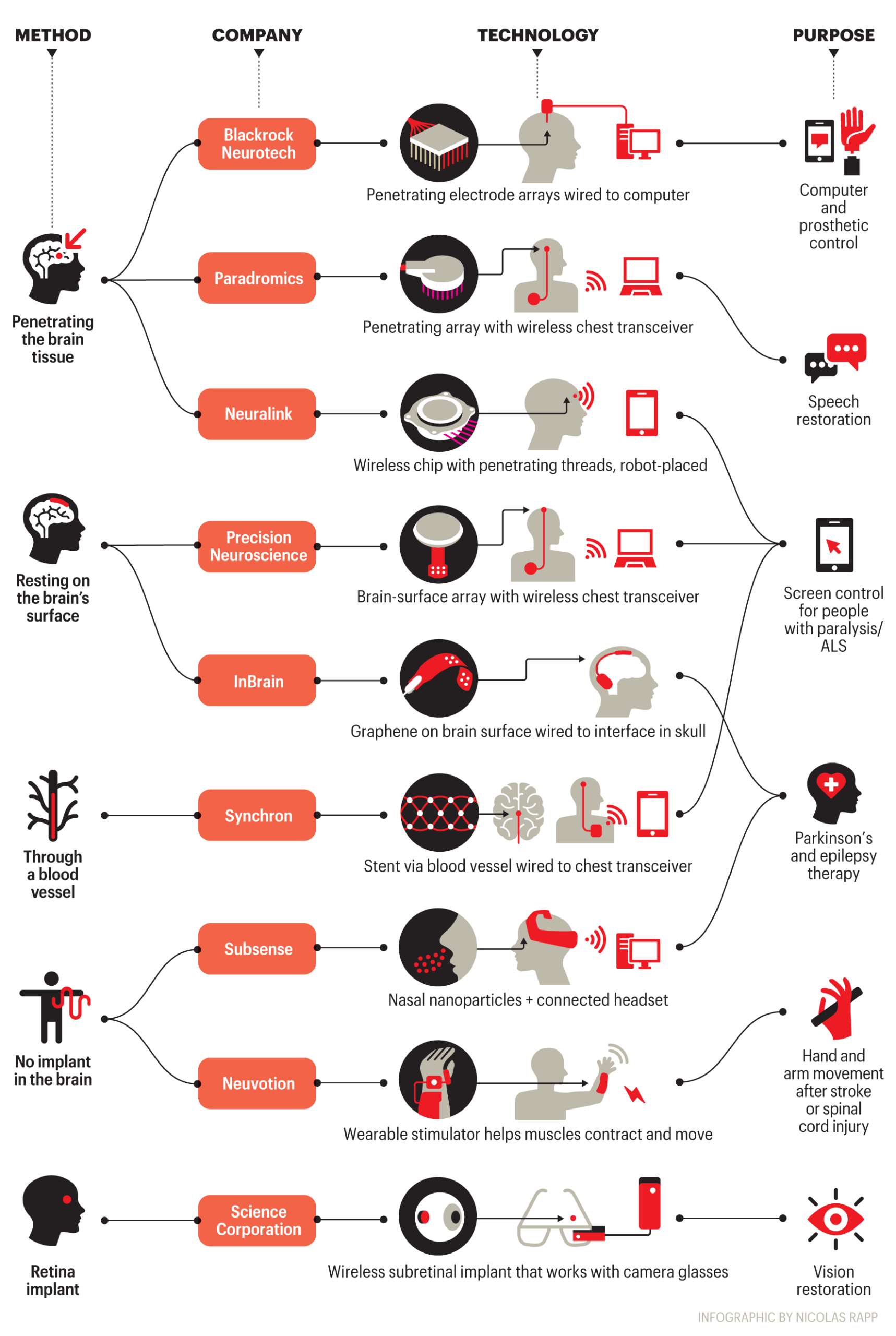
Several companies, like Paradromics and Precision Neuroscience, are racing for FDA approval to commercialize brain-computer interfaces (BCIs). These companies aim to restore abilities like speech or help the paralyzed. Chad Bouton from Neuvotion hopes for forthcoming FDA clearances, given the intense competition. Neuralink holds a significant funding advantage, but rivals like Synchron are close behind.
Synchron’s less invasive approach might lead to quicker market entry. Their device requires no extensive craniotomy, making it appealing. Meanwhile, AI’s growth boosts BCIs, potentially enhancing their ability to interpret thoughts. Future AI-enhanced BCIs could control digital entities or even predict user needs, such as ordering food.
For workplaces, BCIs suggest better productivity tracking. BCIs might help employees work faster but raise privacy concerns. Employers might monitor cognitive activity, pushing boundaries on acceptable oversight.
Human-device integration is not new. In 2025, OpenAI research found AI often aids decision-making, pushing the view of devices as extensions of ourselves. Sam Altman of OpenAI pointed out how pervasive devices dictate actions and influence feelings.
FDA approval for the first brain implant involves rigorous steps, from animal tests to human studies. Companies must build production systems to scale operations. The FDA’s final approval permits sales to patients with specific conditions, which insurance might cover.
Currently, BCIs provide groundbreaking solutions. A patient, Noland Arbaugh, uses Neuralink for games and writing projects, illustrating life-altering effects even amidst physical limitations. Synchron’s product also interfaces with existing technology, yet takes a conservative approach compared to Neuralink.
Each development hints at BCI’s broader potential, addressing cognitive challenges and augmenting mental faculties. Invasiveness varies, with Synchron planning a more comprehensive yet non-invasive model, targeting various brain areas.
Globally, the BCI field evolves dynamically. China approved its first BCI this year, challenging U.S. dominance. Companies in Europe, like Spain’s InBrain, focus on medical applications, gaining footing in niche fields.
Efforts for global BCI standards are underway. In 2025, UNESCO advocated for ethical neurotechnology progress, highlighting safeguards and individual autonomy. Farahany engages in these discussions, suggesting a voluntary ethics index to guide industry practices.
“The concerns are profound and large… where does the AI end, and where does the human begin?” – Nita Farahany