The Rise and Fall of Horse Racing in the Chicago Area
The Demise of Chicago Horse Racing
Horse racing in the Chicago area ended unexpectedly in July with the closure of Hawthorne Race Course. The timing was ironic, coming 40 years after Arlington Park hosted an unprecedented event in Illinois racing history. The event, known as the International Festival of Racing, ran from August 19 to September 1, 1986. It featured graded races, including six Grade I, four Grade II, and three Grade III races, alongside four races restricted to Illinois-breds.
Financial mismanagement and fiscal irresponsibility led to the decline of horse racing in Chicagoland. The Festival’s total purses exceeded $5 million, averaging around $385,000 per day, a record in Illinois that remained unmatched until the 2002 Breeders’ Cup at Arlington. Nick Clark, president of the International Racing Bureau, emphasized the uniqueness of the Festival, comparing it favorably to Royal Ascot’s Group I race and similar events in Melbourne and Tokyo.
The Miracle Million Inspires the Festival
Inspired by the success of “the Miracle Million” held a year earlier, Arlington’s owner, Dick Duchossois, modeled the 1986 festival after short racing festivals in England and France. Duchossois aspired to maintain Arlington’s prominence internationally. He argued that a world-class track in the Midwest was essential, given Arlington’s top-notch grass course.
The Arlington Million, initially launched in 1981, was a highlight of the Festival. Estrapade, a mare, secured a remarkable victory in 1986, setting a record for the largest winning margin that still stands. Jockey Fernando Toro guided Estrapade to triumph while training under Charlie Whittingham.
Milestone Events and Successful Outcomes
The Tribune’s extensive coverage mirrored the attention typically reserved for major sports events, emphasizing the Festival’s importance. Trainers, jockeys, and notable athletes from both coasts, Canada, and Europe participated. One memorable win involved a long-shot victory by Sumptuous, yielding $73.20 on opening day.
Duchossois celebrated, witnessing Explosive Darling, an Illinois-bred, win the Stars and Stripes Handicap. Leading figures like Pat Day and Sandy Hawley tied for the jockey championship, with Carl Nafzger emerging as the top trainer.
A Legacy Remembered
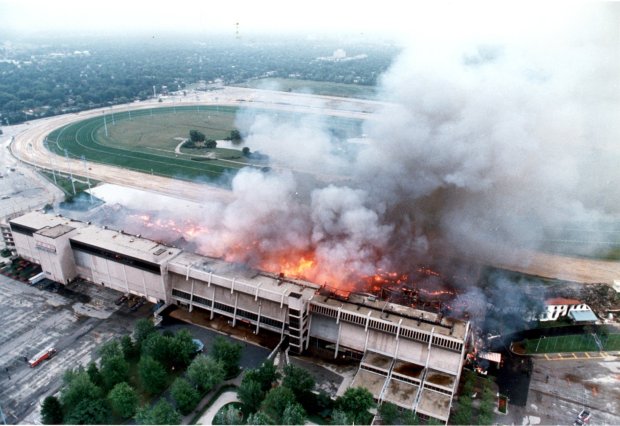
The success of the Festival spurred a 91-day conventional meeting request granted by the Illinois Racing Board in 1987. Duchossois envisioned expanding Arlington, which underwent reconstruction and reopening by June 1989. Architectural Digest praised the new track as a masterpiece.
Despite challenges, Duchossois merged with Churchill Downs, Inc. (CDI) in the early 2000s, briefly benefiting Arlington with the 2002 Breeders’ Cup. However, CDI’s focus shifted in 2019 when they acquired Rivers Casino. They sold Arlington to the Bears, prohibiting casino gambling, horse racing, or sports betting on-site.
Arlington closed permanently in 2021, with CDI renaming the Million the Mr. D. Stakes, a poorly received gesture. International races have since eclipsed the Million’s purse value, such as The Everest in Sydney offering $20 million. Nonetheless, Duchossois’ pioneering efforts in international racing left an enduring legacy in the industry.
Neil Milbert, a freelance writer for the Chicago Tribune, reflects on Duchossois’ contributions to horse racing, lamenting Illinois’ fall from its former prestige.