Tragedy and Climate Change: The Impact of Deadly Floods on Himalayan Pilgrimage
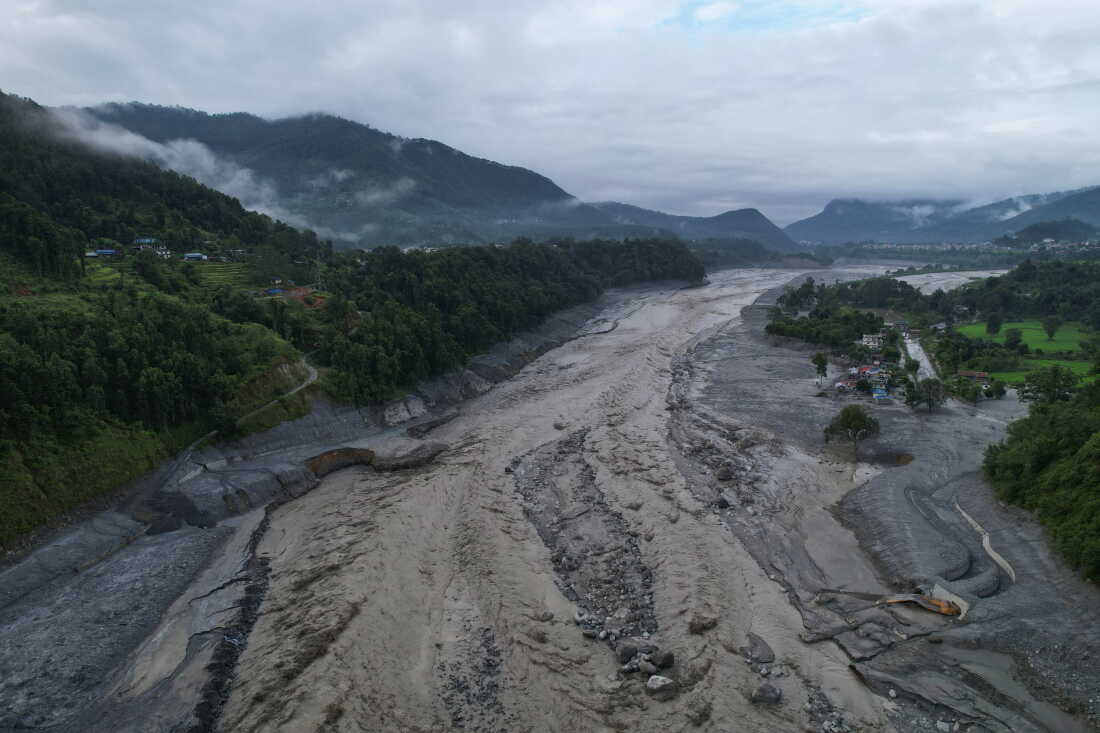
A drone image captured a significant stretch of the Pasang Lhamu highway washed away by the swollen Trishuli river due to recent flash floods. This disaster has cut off the Rasuwa district from the Nuwakot area in Nepal on Monday, August 31, 2026. The floods have left a trail of devastation, touching not only geographical landscapes but also affecting lives untold.
In Socorro, India, two sisters, stunned and seated on chairs, share their painful story through an Instagram post. Varnika, one of the sisters, revealed, “Our parents Shubhakshi and Sumit were in Nepal when the floods hit.” Since the catastrophic floods hit Nepal last Wednesday, social media platforms have been flooded with pleas from people desperately searching for their missing loved ones. Many of these posts contain photographs and contact information for those who are seeking further details.
Most of these missing people were on a spiritual pilgrimage to Mount Kailash, a revered Himalayan peak located in Chinese-held Tibet. This journey was severely impacted by the floods, exacerbating the tragedy. While deadly incidents at pilgrimages are not new, floods sweeping away worshippers in the Himalayas is rare. Climate change contributed, in part, to the floods, signaling a dire warning for future pilgrimages in the region.
The exact number of pilgrims still unaccounted for by local authorities remains unknown, yet reports suggest a large group is among the 853 foreigners missing, as reported by both China and Nepal. Social media and journalist interviews reveal that they likely include many of the 287 missing Indian nationals and the 80 U.S. citizens, as reported by the Indian government on August 29. Among them is Vivek Srivastav, according to his brother-in-law Guarav Khare, who shared Srivastav’s story on social media.
Srivastav, who settled in Atlanta and became an American citizen five years prior, was known for his belief in serving others. His family has been tirelessly searching for him since the floods erupted. Srivastav’s pilgrimage to Mt. Kailash alongside 10 others highlights the mountain’s sacred significance to various religions, including Hinduism, Buddhism, Jainism, and indigenous Tibetan faiths.
Visiting Mt. Kailash is considered a pivotal spiritual duty for the faithful, particularly as they reach the twilight years of life.
According to Hindol Sengupta, a historian of religion, Hindus associate Mt. Kailash with Lord Shiva, a deity symbolizing power and destruction. In Hindu mythology, the mountain is so sacred that climbing it is forbidden; instead, pilgrims walk 33 miles around its base, a journey made more challenging by extreme altitude and physical exertion.
Shubham Kumar, whose parents-in-law Sanghamitra and Debarshi Banerjee are missing, had advised against their arduous journey. Unfortunately, their last communication occurred as they reached a border crossing between Nepal and Tibet. The disaster began with a glacier fragment crashing into the river valley below, creating a torrent that devastated the Gyirong Port Immigration Office in the border area.
The Isha Foundation, a spiritual group led by Jagadish Vasudev (known as Sadhguru), had lost contact with guides and pilgrims from 19 countries, including the U.S., Canada, and various European nations. Vasudev lamented the loss of a valuable concrete building and expressed grief at losing followers. He emphasized the need for rescue, relief, and reconstruction efforts.
Recognizing the role of human activity in causing such devastation, Vasudev urged countries across the Himalayas to protect the mountain range. The ICIMOD, an environmental organization, has noted the rapid loss of glacier ice due to global warming in the past 25 years, warning of cultural and civilization impacts.
Sengupta explained that an increased number of well-off Hindus now seek to visit these shrines, necessitating improved infrastructure like roads and larger vehicles. Despite infrastructure popularity, Sengupta warns of ecological damage from over-tourism and urges better management of pilgrim numbers to preserve the fragile mountain ecosystem.