President Trump is dealing with the fallout from a hastily organized cease-fire agreement with Iran. This deal, assembled quickly, seems to be failing as key issues remain unresolved. Less than a month after it was declared, the cease-fire is now over, according to Trump’s announcement.
Two weeks ago, speaking at the Great American State Fair, Trump proclaimed a historic peace in the Middle East. However, the fragility of the peace deal was evident from the start due to its superficial 14-paragraph memorandum. The memorandum avoided addressing major conflicts, allowing Trump to claim a diplomatic victory.
Trump’s inexperience in diplomacy may have led to assuming Iran would prioritize economic gains over its long-standing revolutionary ideology since 1979. This miscalculation now leaves him confronting tough choices. The core issues include Iran’s nuclear program, missile development, and its support for terrorist activities. Additionally, there are concerns over Iran’s domestic actions against its citizens.
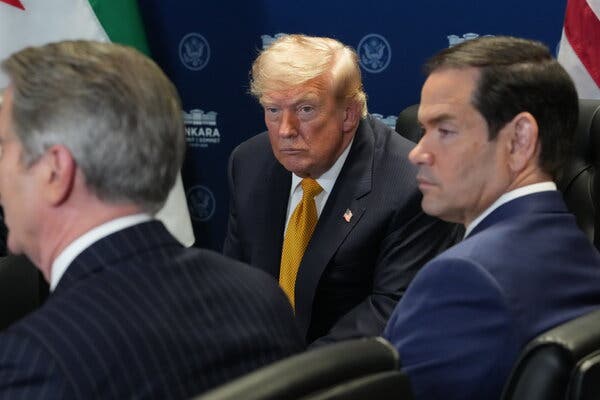
During the NATO summit in Ankara, Trump responded to recent military exchanges by threatening new military actions. His threats involved seizing an Iranian oil-processing site and targeting infrastructure such as desalination plants. Such actions risk being labeled war crimes. Yet, Trump expressed reluctance to target desalination facilities.
Despite his threats, Trump has held back from escalating into full-scale war. With the midterm elections approaching, his domestic support for military action is weak. Some Republicans caution against economic and political ramifications.
Another option involves reinstating an American blockade of Iranian ports, aiming to cut off economic resources. However, this approach requires sustained military presence. Previous blockades didn’t lead to Iran’s economic collapse as expected.