Trump’s Approval Rating and Its Impact on Midterm Elections
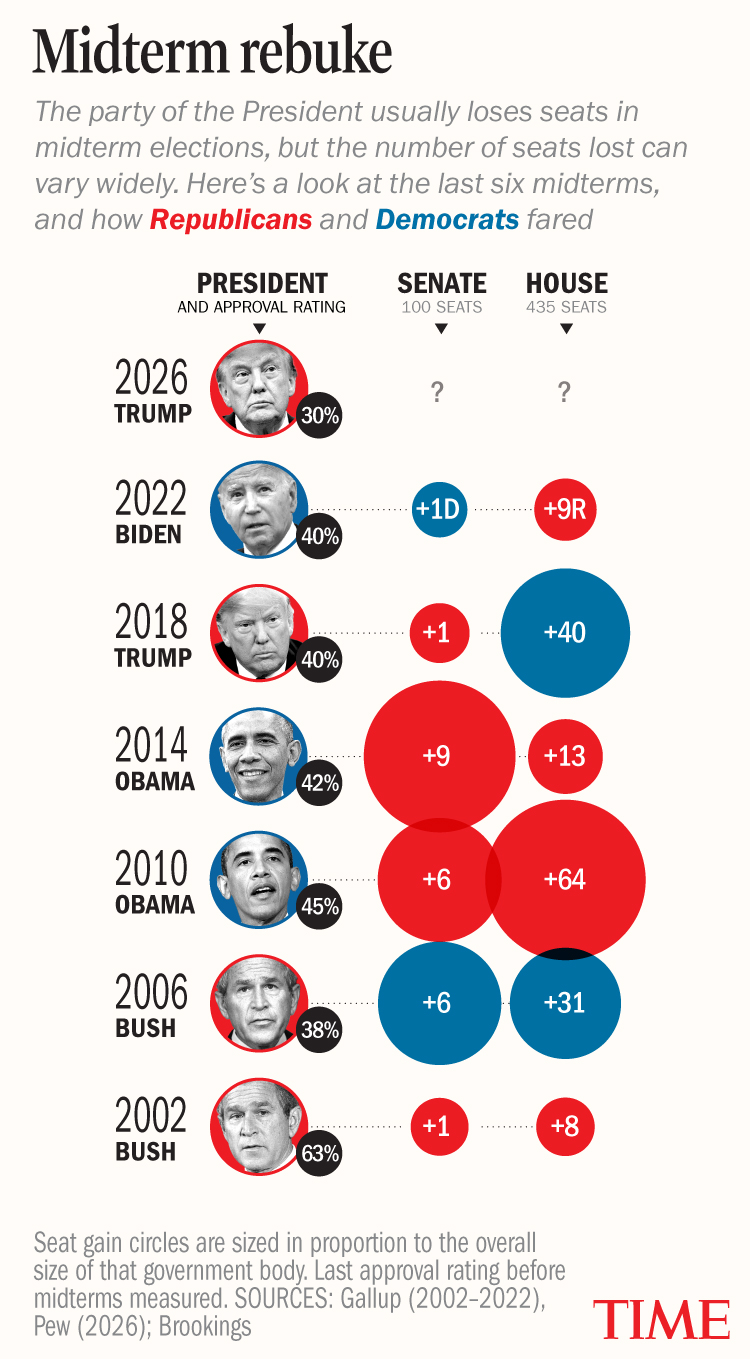
With November elections approaching, President Donald Trump’s approval rating fell to the lowest point of his second term. In early October, it reached 30%, according to the Pew Research Center. Historically, no president has had such a low rating before midterms since Harry Truman in 1946.
‘This is historically low approval ratings for a President,’ says Peter Enns, a professor at Cornell University and co-founder of Verasight.
Polling indicates a significant portion of Americans’ dissatisfaction stems from economic concerns. A survey from the Associated Press-NORC Center for Public Affairs Research shows only 26% of U.S. adults support Trump’s economic handling. Additionally, just 17% approve how he addresses the cost of living. The war in Iran is another contentious issue, with only 28% expressing support.
Enns states that Trump’s unpopular policies, like the Iran conflict linked to high gas prices, contribute to low approval ratings. He notes, ‘It’s unusual for a President to position himself on the side of so many unpopular positions.’
These issues could be pivotal for voters as the Pew Research Center found 84% of registered voters say the economy is a ‘very important issue’ for midterms. Meanwhile, 57% consider foreign policy important for the elections.
Midterm Challenges for the President’s Party
Midterm elections typically challenge the sitting president’s party. The party in the White House often loses congressional seats. Enns describes it as a ‘well-known phenomenon’ influenced by supporters’ and opponents’ frustrations.
Costas Panagopoulos, a professor at Northeastern University, attributes this trend to voters seeking ‘partisan balance in Washington.’ Dissatisfaction leads voters to support the opposition, especially when one party controls both Congress chambers.
Exceptions include the 2002 midterms where President George W. Bush’s party gained seats due to his high approval post-9/11. The GOP success contrasted historical trends.
Impact of Approval Ratings
A President’s approval rating significantly influences midterm elections. Michele Swers likens midterms to ‘a referendum on how things are going with the presidency’. She emphasizes the president’s role as party leader affecting election outcomes.
Panagopoulos considers approval ratings ‘among the best predictors of outcomes’ as they reflect voter sentiments. Lower ratings often correlate with greater congressional seat losses.
Republicans Facing Challenges
The current political climate complicates Republicans’ prospects. Generic ballot polls show Democrats leading and more enthusiastic about the elections, according to a PBS News/NPR/Marist poll.
Panagopoulos anticipates Republicans facing an uphill battle, likely losing seats in both House and Senate. He warns that flipping the majority in both chambers poses challenges.
Enns notes that polling represents a ‘snapshot in time’ and doesn’t guarantee election results. Actual voter turnout remains uncertain until Election Day.