Trump’s Potential Decision to Halt Military Drills with South Korea Raises Concerns
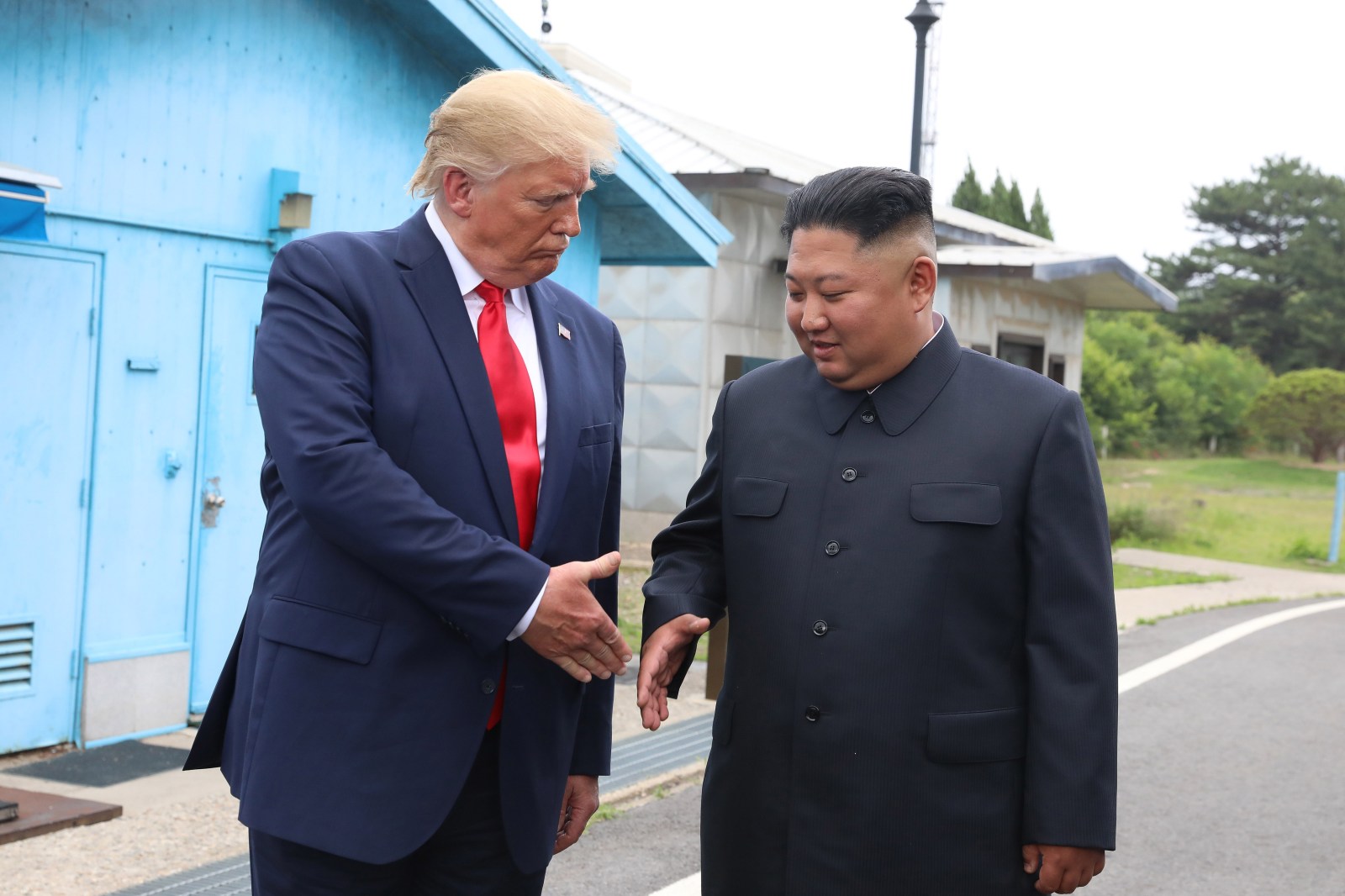
President Donald Trump has indicated plans to discontinue military exercises with South Korea, a move that analysts believe could weaken U.S. alliances in Asia. Trump’s comments on Truth Social, where he expressed dissatisfaction with the cost of these drills, have caused concern among South Korean experts. They argue that the U.S. stands to gain little while eroding trust in allies such as South Korea.
The Implications of Halting Military Drills
Trump stated he instructed Secretary of War Pete Hegseth to cut back on these exercises, emphasizing his strong ties with North Korean leader Kim Jong Un. He also noted South Korea’s refusal to assist the U.S. in its attempt to denuclearize Iran. During Trump’s previous term, he met with Kim three times in an effort to curb North Korea’s nuclear and missile programs. Trump remains open to further discussions.
Perceived Concessions to North Korea
The announcement coincides with the start of Ulchi Freedom Shield, a 10-day military exercise between U.S. and South Korean forces aimed at preparing for potential conflict with North Korea. North Korea views this exercise as a rehearsal for war. Meanwhile, Kim’s regime is strengthening its military capabilities, as it tests advanced intercontinental ballistic missiles and develops nuclear infrastructure.
Trump’s decision has sparked concerns that the U.S. is seen as an “unreliable” partner, according to Sean King, an Asia scholar. He suggests this move gives leverage to Kim Jong Un and Chinese President Xi Jinping, both of whom might believe they can sway Trump with minimal effort. King also warned that Iran and North Korea maintain close relations, sharing missile technology over the years.
Conflicting Signals and Regional Security
This development has led critics to accuse Trump of aligning with authoritarian leaders like Kim, Putin, and Xi, while failing to support European allies. This comes as the USS George Washington heads to the Middle East, leaving a temporary gap in the Western Pacific’s aircraft carrier presence. While Pentagon official Elbridge Colby reassured allies of U.S. commitment to regional security, mixed signals may undermine that message.
Kuyoun Chung, a political science professor, expressed concern over these conflicting signals amid a shift in military focus to the Middle East. Japan, South Korea, Taiwan, and the Philippines may question whether Pentagon assurances can limit presidential action.
North Korea’s Reaction
Experts in South Korea suggest Trump’s actions signal Kim Jong Un that pressure is effective against the U.S. presidency. Kim’s expectations for concessions from the U.S. without any reciprocal gestures could delay negotiations. This perceived openness to such arrangements might encourage Kim to hold out for additional concessions before returning to talks.
Ban Kil Joo, a professor at the Institute of Foreign Affairs and National Security, cautioned that Trump’s move could motivate North Korea and its allies, Russia and China, to make miscalculations, thereby increasing security threats globally.