Utah Judge Orders Release of Death Row Inmate After New DNA Evidence Emerges
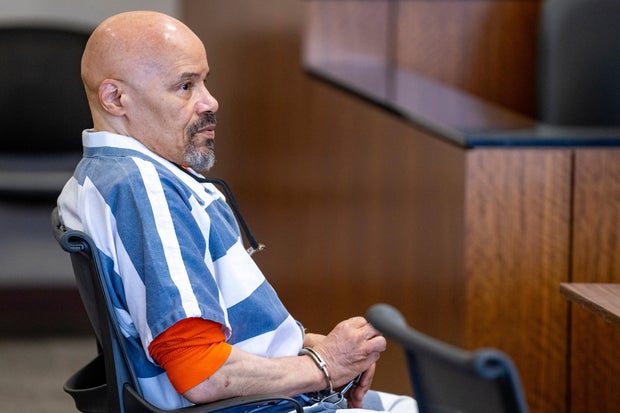
A Utah judge has ordered the release of Douglas Stewart Carter, a man who spent decades on death row for a 1985 murder, after new DNA evidence failed to implicate him. This decision comes amidst objections from the victim’s family.
In 1985, Carter was convicted of murdering Eva Olesen, related to Provo’s police chief at the time. He was sentenced to death based on his confession and testimonies from two witnesses, both of whom later withdrew their statements. The confession, Carter claims, was coerced.
There was no physical evidence linking Carter, who is Black, to the crime scene where Olesen, who was White, was killed. The Utah Supreme Court ordered a new trial last year, pointing to investigative misconduct. Recent DNA analysis further challenges the original verdict.
“It’s complicated because he is being released after facing trauma for 41 years,” said defense attorney Neal Hamilton. “The impact on Carter’s life is significant.”
Judge Derek Pullan mandated that Carter wear a GPS tracker and have no contact with the victim’s family upon release. He will stay near his son’s family and undergo therapy to address trauma from incarceration.
A new trial is set for 2027. However, prosecutors dropped the death penalty notice, citing the exclusion of Carter as a DNA match to crucial evidence from the crime scene. The DNA was checked against the FBI database, where Carter’s profile has resided since 1995. Yet, no matches were found.
Carter was initially living with his mother in Utah during the time of the 1985 murder. Documents explain that after being suspected of a different crime, he left Utah and was arrested in Tennessee, where he signed his confession under pressure.
Attorney Hamilton shared that Carter witnessed another arrest during his own two-day detainment, which played a role in his coerced confession. He stressed that Carter’s confession resulted from threats aimed at protecting a friend.
The case was reopened when two original trial witnesses recanted in 2011. They claimed that police bribed them with money and gifts and threatened them with deportation if they didn’t testify against Carter. This led to a Utah Supreme Court decision last year noting deliberate police and prosecutorial misconduct.
Though the Utah prosecutors haven’t disclosed plans to use DNA to locate other potential suspects, the defense hinted at other possibilities. Witnesses reportedly saw a White man fleeing the crime scene, and it was suggested that the victim’s husband, Orla Olesen, was a potential suspect until further police investigation shifted focus onto Carter.
Orla Olesen, who passed away in 2009, had reported finding his wife deceased. The Provo police had earlier halted prosecution efforts against him. Carter’s defense maintains that multiple roads in the investigation were left unexplored.
At the bond hearing, Eva Olesen’s daughter-in-law expressed concerns over Carter’s release. “We want justice for Eva,” she stated. “The DNA results don’t confirm his innocence completely.”