Venezuela’s Changing Stance in International Affairs
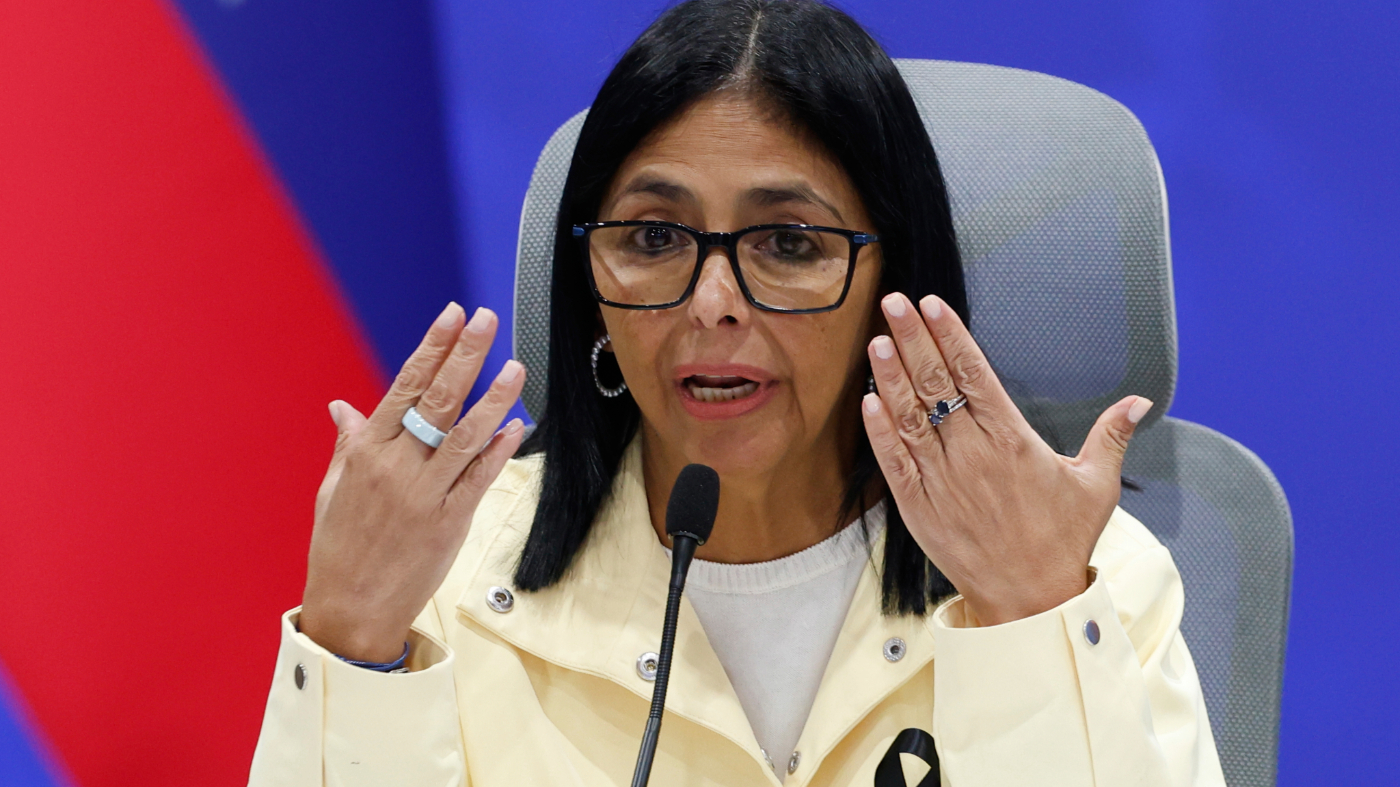
Delcy Rodríguez, Venezuela’s acting President, recently addressed the government’s response to the earthquakes in Caracas during a press conference. Meanwhile, the nation’s foreign policy is undergoing significant transformations.
Back in June 2010, then-President Hugo Chavez vehemently condemned Israel, calling it a terrorist state. Such rhetoric reflected the nation’s communist ideology, a belief system shared by the current interim president, Delcy Rodríguez. However, recent political shifts show Venezuela moving toward rapprochement with Israel.
The political change began after the removal of Nicolas Maduro in January. In less than six months, the regime shifted from supporting Iran’s revolution to acknowledging Jewish cultural events. In April, Rodríguez sent wishes to Israel for Passover, stating that freedom of religion and peace should prevail in Venezuela. This new approach is vastly different from Venezuela’s strong alliance with Iran over the past two decades.
“My call from Venezuela is for peace. My call from Venezuela is that all religions, in a country where there is freedom of worship, freedom of religion, all religions come together to foster understanding, coexistence in our homeland, and contribute to peace,” she said.
The Venezuelan government showed its changing stance by ignoring the funeral of Ayatollah Ali Khamenei, an act perceived as a diplomatic snub to Iran. They further displayed this shift by capturing Ali Zaki Jalil, a Hezbollah agent linked to terrorism, and extraditing him to Panama. In addition, Alex Saab, a close associate of the old regime, was arrested and extradited to the U.S. for money laundering.
These actions have distanced Venezuela from its past cooperation with Iran. Saab’s previous dealings provided passports and financial support to Iranian-backed entities. Furthermore, Venezuela handed over highly enriched uranium, eliminating a security threat to both the Americas and Israel. The U.S., UK, and the International Atomic Energy Agency facilitated its removal.
In light of the recent earthquakes, Venezuela invited Israeli military and humanitarian experts to aid recovery efforts. Rodríguez welcomed the team, whose arrival was coordinated by Venezuela’s Jewish community. The IDF’s engineering units are conducting assessments to accelerate rehabilitation efforts, particularly for high-rise buildings.
“We have received a highly professional and skilled team from Israel. They arrived through contact established by the Jewish community in Venezuela,” Rodríguez stated.
Israeli Prime Minister Benjamin Netanyahu praised the restoration efforts, linking them to both physical reconstruction and renewed bilateral ties. However, Venezuela’s adaptability in its diplomatic narrative aims more for strategic gains than ideological shifts.
The interim government, including National Assembly President Jorge Rodríguez and Minister Diosdado Cabello, maintains a facade to gain international favor. Yet, the nation’s fundamental issues, such as the release of political prisoners, the return of exiled citizens like María Corina Machado, and calls for transparent elections, remain unaddressed.
Arturo McFields, a former journalist and Nicaraguan ambassador, comments on these developments, stressing that Venezuela’s future depends on establishing solid democratic principles.