Wave of Bomb Threats Causes Chaos Across Europe
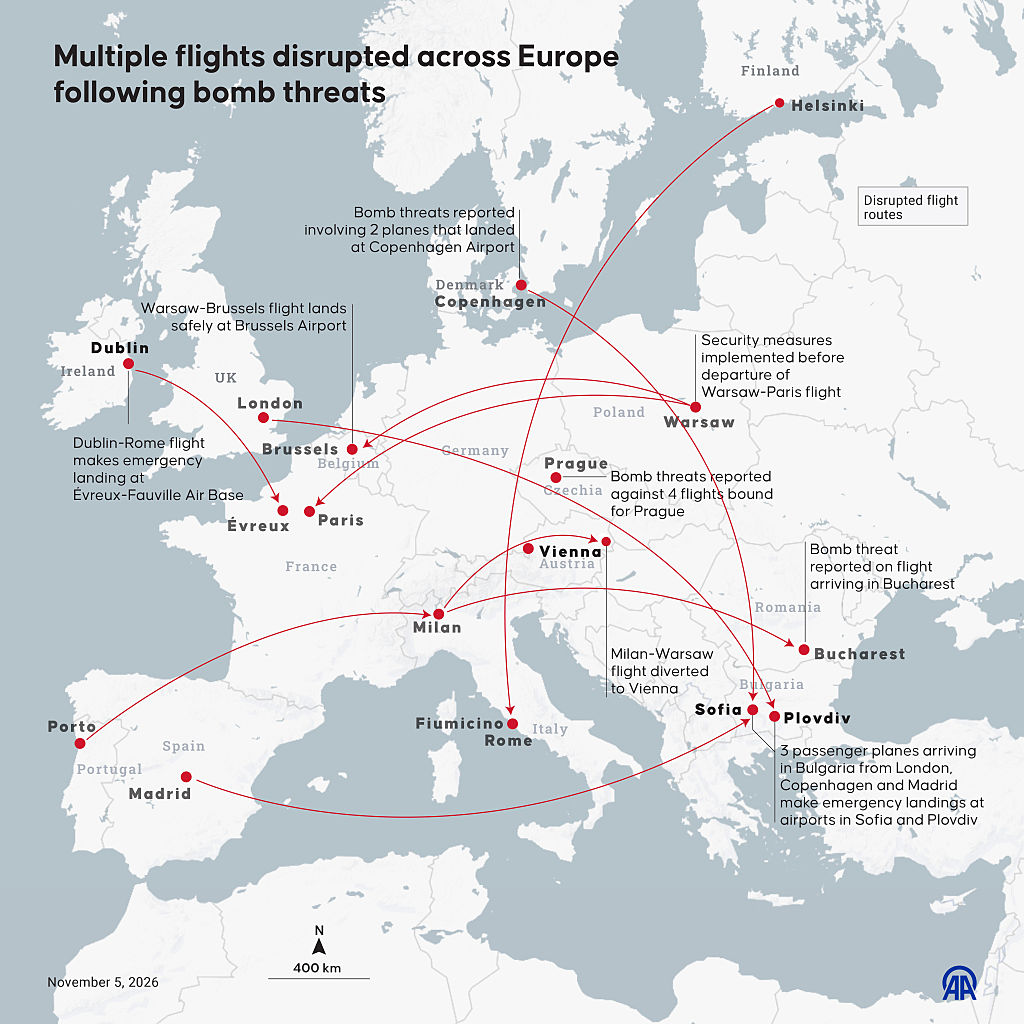
A series of bomb threats disrupted numerous flights across Europe this week. The threats, all identified as hoaxes, escalated from targeting flights to unsettling various newsrooms. Commencing on November 2, these anonymous threats were delivered through calls and emails almost daily.
On a recent Monday, a bomb threat forced a Wizz Air flight from London to Bulgaria to make an emergency landing in Budapest. Subsequently, at least seven passenger flights faced similar threats the next day, resulting in diversions and rigorous searches. This pattern intensified with more than two dozen flights receiving threats on Thursday, affecting routes between Italy, Ireland, Spain, Bulgaria, and several other countries.
“The bomb threats—though hoaxes—caused significant disruption, affecting thousands of travelers and the aviation sector,” noted the U.K. Transport Secretary.
The disruption extended further when broadcasters like Sky News and Bulgaria’s Nova TV received emails with warnings of planted bombs, prompting evacuations. A message warned, “What happened this week is just a small part of what awaits Europe in the near future.”
European Union Transport Commissioner Apostolos Tzitzikostas condemned these threats and activated security information sharing mechanisms across the EU. Despite speculations pointing towards possible coordination, it remains early to establish any concrete links between the threats.
Experts believe these threats could be part of a fear-driven campaign, rather than purely a hoax. Spanish Foreign Minister José Manuel Albares suggested it might represent hybrid aggression and psychological warfare. Elisabeth Braw from the Atlantic Council emphasizes the ambiguous nature of such threats, referring to them as conflicts situated between war and peace.
Braw explains that while threats against airliners are not new, the significant increase in scale is alarming. She highlights past incidents like cyberattacks on grocery stores and blood banks, believed to be an extension of similar disruptive efforts.
Allegations of Russian involvement in recent cyberattacks complicate the issue. Although two pro-Russian groups claimed responsibility for hacker activities, direct connections remain speculative. Kremlin spokesperson Dmitry Peskov dismissed such claims as baseless.
Robert Jordan at the Royal United Services Institute reflects on the possibility of states like Russia initiating these threats. However, he also entertains the idea of independent or non-state groups being responsible. The prevailing challenge is to pinpoint the origin of these threats, a task of rising priority for law enforcement and security personnel.
French authorities have initiated investigations into possible foreign connections related to the bomb threats. Some emails correspond with a radical group in Russia, though links remain unverified.
The broader dilemma faced by European nations highlights the complexity of responding to such threats. Elisabeth Braw stresses, “As a law-abiding democracy, responding militarily is not an option, yet allowing the threats to persist is untenable.”
With potential threats becoming more sophisticated, European authorities confront the urgent need to enhance security and response mechanisms.