Western States Face Severe Drought Conditions with Potential El Niño Impact
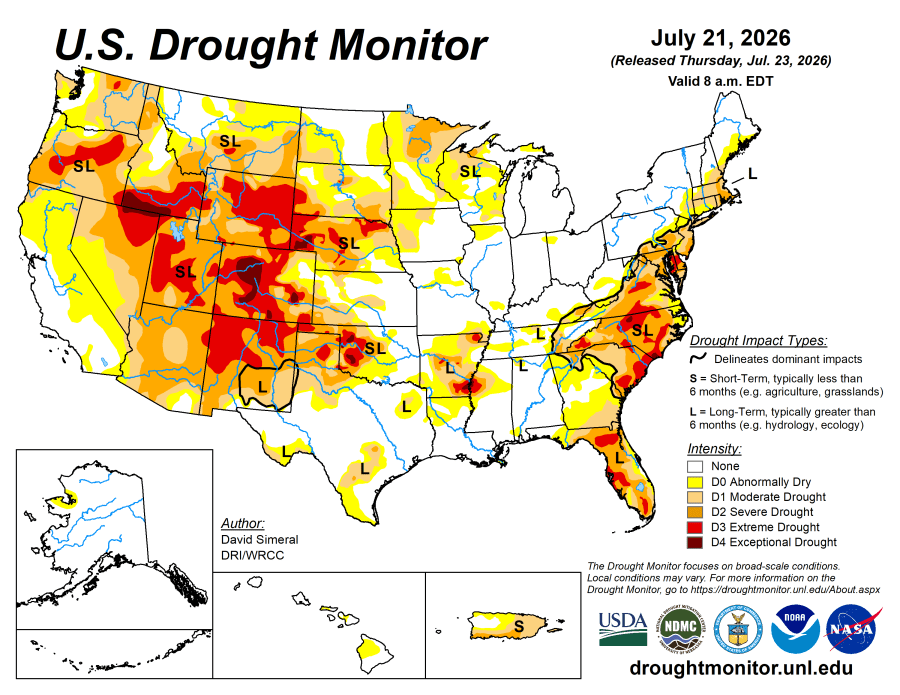
Currently, drought conditions are severe across Western states, with some areas described as exceptionally bad. States like Oregon, Idaho, Nevada, Wyoming, Utah, Colorado, New Mexico, Nebraska, Oklahoma, and the Texas Panhandle are experiencing large areas of extreme and exceptional drought conditions, as observed in mid-July.
Despite the already critical situation, the ongoing dry season in these areas is expected to persist. According to AccuWeather experts, the long-range forecast is troubling. Paul Pastelok, a long-range expert, notes that a powerful El Niño could pose long-term challenges for the Plains states, emphasizing the potential for a ‘mini Dust Bowl’ if drought conditions worsen.
Joel Myers, AccuWeather founder and executive chair, underscores that drought impacts more than the weather. It is also an economic concern. Crops like soybeans could see reduced yields due to stress, which may negatively affect food production and lead to inflation.
Potential El Niño Influence on Drought
El Niño’s impact on precipitation varies depending on location. Dillon Amaya, an assistant professor of marine, earth, and atmospheric sciences at North Carolina State University, explains that El Niño generally brings increased rainfall to the American Southwest and reduced rainfall to the Pacific Northwest. However, for the Plains states, El Niño’s effects are less predictable, with potential changes in rainfall being unclear.
In the Southern Plains, including Texas, Oklahoma, and Kansas, the existing drought problem is significant. Joel Lisonbee from the National Integrated Drought Information System cautions that overcoming years of water deficit requires more than a single wet year, even if faced with heavy rains or floods this winter. Reservoirs, streams, and aquifers may remain below capacity for some time.
While a historic El Niño event between 1957 and 1959 resulted in a reversal from catastrophic drought to severe flooding, past El Niños have shown varied impacts on drought conditions in the Plains, according to Lisonbee’s research.
This year’s El Niño is expected to be substantial. The Climate Prediction Center indicates there is an 81% likelihood of it becoming “very strong” or a “super” El Niño, with a 97% probability of continuing until spring 2027.