Science Funding: An American Legacy
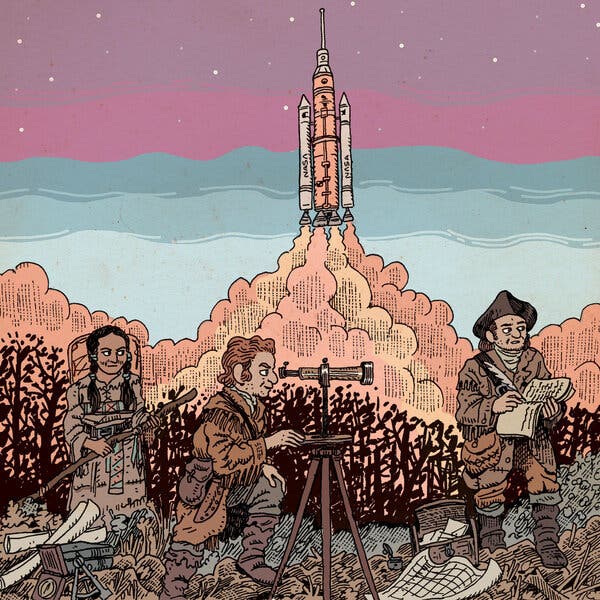
In recent years, significant changes have occurred in how research funding is managed in the United States. The Trump administration reduced or paused 7,840 research grants as per a report by the journal Nature. These cuts primarily affected scientists supported by the National Science Foundation and the National Institutes of Health.
Prospective budget cuts to agencies like the Forest Service and NASA continue to emerge. Such reductions in funding impact America’s progress and undermine its historical tradition of investment in public research.
The Lewis and Clark Expedition
A quintessential example of early American research funding is the Lewis and Clark Expedition. Initiated in 1804, Meriwether Lewis and William Clark embarked on a mission to establish a trade route through the Missouri River, Rocky Mountains, reaching the Pacific Ocean. Before the journey could begin, President Thomas Jefferson had to advocate for financial support from Congress, leading to contentious debates about research funding.
Jefferson requested $2,500, well aware the actual expedition cost would exceed this amount. When the expedition concluded in 1806, the War Department calculated the expenses at $38,722.25. Including all documented costs, the total might have exceeded $100,000. This represented a significant portion of the annual federal budget, much like current NASA funding.
Scientific Objectives and Contributions
Jefferson tasked Lewis with extensive data collection. The president sought comprehensive details, encompassing various scientific fields including botany, zoology, geology, and many others. Prior to departure, Lewis consulted leading scientific experts, as Jefferson doubted their ability to endure the challenging expedition.
Throughout the journey, all participants engaged in research activities. Clark was responsible for mapping and recording crucial geographical measurements. Sacajawea, a Shoshone woman, focused on botanical specimen collection. York, an enslaved Black man accompanying Clark, collected invertebrates. Lewis’s meticulous observations spanned topics such as fauna behavior and geological samples, exemplifying his detailed approach to research.
“Scientists…were used to the temperature and inactivity of their closet,” Jefferson remarked, underscoring the need for adaptable explorers.
Impacts of the Expedition
Lewis’s contributions offered pivotal insights and data to the scientific community, promoting American expansion. Enlightenment-era priorities merging science with imperial efforts meant that expedition data strengthened America’s territorial claims.
The expedition’s outcomes had wide-reaching implications, including a boost to the fur trade, with traders establishing posts based on Lewis’s guidance. While not all predicted advantages materialized, such as the trade route envisioned by Clark, the foundational work done by Lewis and Clark enabled subsequent exploration and discovery.
Understanding the historical context of research funding and its impact via examples like Lewis and Clark highlights the essential role public investments play in advancing scientific and national interests.