Rare Antarctic Dinosaur Fossil Discovered After Decades
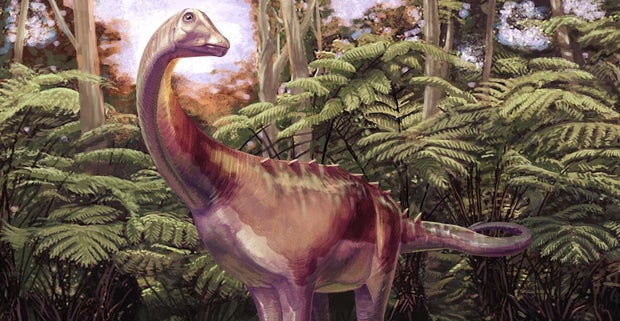
On June 30, 2026, scientists reported a rare find: a dinosaur fossil from Antarctica that had been hidden in a drawer for decades. The fossil belongs to the tail of a titanosaur, a long-necked plant-eater, though the exact species remains unidentified.
The fossil was initially discovered in 1985 during a geological expedition to James Ross Island, Antarctica. Geologist Mike Thomson, working with the British Antarctic Survey, collected it while mapping rock layers and gathering marine reptile fossils. He cataloged it as a large reptile find.
Years later, Mark Evans, a paleontologist, noticed the bone in the British Antarctic Survey’s collection. He realized its potential significance, which led to its re-examination. After comparing it with other dinosaur remains, researchers confirmed its identity as a dinosaur fossil. These findings were published in the journal Acta Palaeontologica Polonica.
Fossil discoveries in Antarctica are rare due to the harsh ice caps covering the continent. According to study co-author Paul Barrett from the Natural History Museum in London, when this dinosaur lived, the area was filled with lush forests, unlike the ice-covered landscape we see today. He stated that the discovery is only the second known sauropod body fossil from Antarctica, although it was the first dinosaur bone collected there.
Titanosaurs, which lived around 80 million years ago in Antarctica, were part of a group of four-legged herbivores with extensive necks and tails. This particular dinosaur measured about 23 feet long, making it small compared to others in its group. Scientists speculate it was young at the time of its death. They propose that its body likely drifted from the coast and sank in marine rock, leading to fossilization.
The BBC noted that more than 100 species of titanosaurs have been identified globally. The largest specimens reached over 115 feet in length and weighed approximately 60 tons.
Advancements in technology now allow researchers to examine fossil interiors, offering deeper insights into ancient life forms. Although Mike Thomson, who collected the fossil, passed away in 2020, study co-author Mark Evans expressed that Thomson would be pleased to learn about the significance of this finding.

This image, provided by the Natural History Museum, shows a fossil belonging to titanosaurs discovered in Antarctica.