New Federal Student Loan Limits Challenge Aspiring Healthcare Professionals
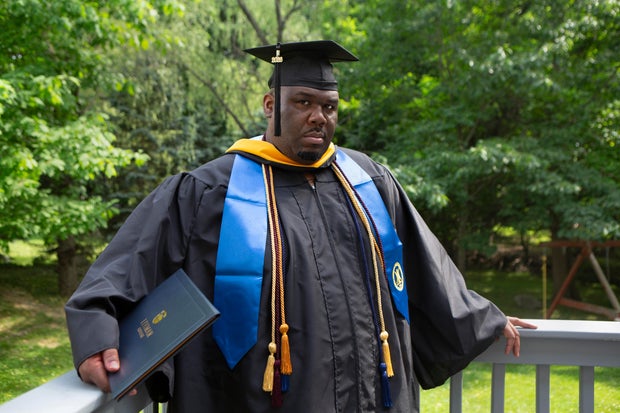
On June 30, 2026, Benjamin Pinckney, 46, shared his journey from being a gunshot victim to aspiring physician assistant. His encounter with a healthcare professional during hospitalization inspired his career goal. After completing a Bachelor of Science at Lehman College with honors, he planned to pursue a physician assistant program. However, recent changes in federal student loan rules may affect his plans.
Starting July 1, federal student loan caps for graduate students will be enforced. Known as the One Big Beautiful Bill Act, the legislation limits borrowing to $20,500 annually. Critics argue these limits are inadequate for covering tuition and living expenses in graduate programs, forcing students to rely on private loans with less favorable terms.
Experts express concerns about the impact on healthcare workforce diversity. The limits could deter students from minority and low-income backgrounds, exacerbating healthcare shortages. Todd Pickard, from the American Academy of Physician Associates, emphasized the mismatch between the solution and the problem.
“It’d be like if you had a hangnail and I cut your whole arm off instead of just taking care of your hangnail,” Pickard said, critiquing the approach.
Students pursuing “professional degrees” face borrowing caps of $200,000 in total and $50,000 annually. These limits fall short for covering the costs of medical education, which often exceeds $300,000 at public institutions. New guidance temporarily allows some students in healthcare fields to borrow up to the higher cap.
Despite adjustments, many worry about the adequacy of funding. Olivia Trull, a prospective student at Northwest University, faced financing challenges with a 28-month program costing $137,000. Anticipated private loan repayments might soar to $3,000 monthly, raising concerns about the feasibility of pursuing healthcare careers.
Betsy Mayotte, from the Institute for Student Loan Advisors, foresees adverse effects on enrollment and program completion rates. She predicts students will gravitate towards high-paying specialties, exacerbating rural healthcare shortages. Many programs may also struggle to recruit diverse classes.
Pinckney remains uncertain about the future. While considering alternatives in biomedical science, he hopes changes in loan policies will enable him to fulfill his dream of working directly with patients. He aspires to make a positive impact, inspired by the physician assistant who changed his life.
KFF Health News continues to report on significant health issues as part of its mission to provide in-depth journalism.