Fireworks Risks and Wildfires: A Growing Danger
On July 4, 2026, the United States will mark its 250th independence anniversary, celebrating with fireworks across the country. Many cities will host fireworks shows, but there’s a significant risk that needs attention: the potential for fireworks to ignite fires, including wildfires. In the U.S., fireworks such as bottle rockets and Roman candles are responsible for starting approximately 32,000 fires in 2023 alone. Each year, July 4 sees a noticeable increase in human-caused fires.
High Risk Conditions
In 2026, much of the U.S. is experiencing dry conditions and moderate to severe drought, creating a high risk for fires. Several communities have enacted fireworks bans due to increased fire danger. In certain extremely dry areas, professional fireworks shows have even been canceled or substituted with drone shows, including in parts of Colorado where active wildfires necessitated evacuations.
Dry Start to the Year
The first half of 2026 has seen more wildfires than any year in the past decade, including some of the worst in U.S. history. The southeastern U.S. experienced below-normal precipitation, leading to severe drought conditions that fueled spring wildfires. By the end of June, over 40% of this region remained in severe drought. A winter snow drought affected the West, depriving forests of typical moisture from snowpack.
“Residents on notice as fast-moving fire in Utah, the largest in the U.S., blackens more forestland.”
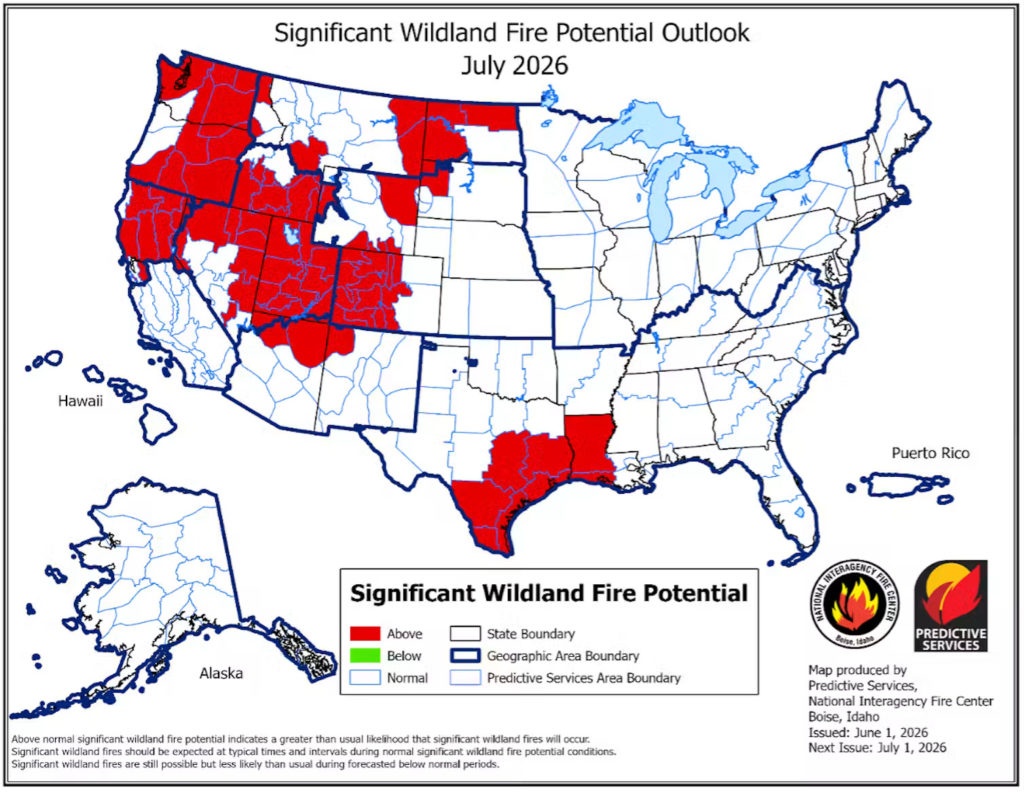
Large areas in the West and Great Plains, including parts of Oklahoma, Nebraska, and Utah, are undergoing extreme drought, forcing evacuations due to wildfires. The national wildfire forecast predicts above-normal fire risk in the U.S. West and Texas going into July.
Fire Risks in Hot and Dry Conditions
The Southwest and Southeast are predicted to experience higher-than-normal heat and dryness in early July. Heat waves greatly increase fire risk. A recent study found that 42% of burned land in the West from 2001 to 2024 was during or after heat waves. Dry vegetation like trees, shrubs, and grasses serves as fuel, and windy days elevate the risk of fires spreading. Fires often begin from human activities, including fireworks.
“How Americans are marking the country’s big 2-5-0”
Between 1992 and 2015, humans initiated 97% of fires threatening homes in wildland-urban interfaces, where cities overlap with wildlands. Independence Day, in particular, sees around 15,000 human-caused fires, even in eastern areas where July is off-peak for fires, adding about 400 more fires than other days that month.
Safety and Professional Advice
In response to drought and safety concerns, many states prohibit fireworks. In 2023, emergency rooms treated approximately 9,700 fireworks-related injuries, a third involving children. The National Fire Protection Association advises people to enjoy public fireworks displays. These are safer, managed by professionals, and often more impressive. A safe public display costs less and reduces personal risk.