WhaleSpotter Launches to Protect Whales in San Francisco Bay
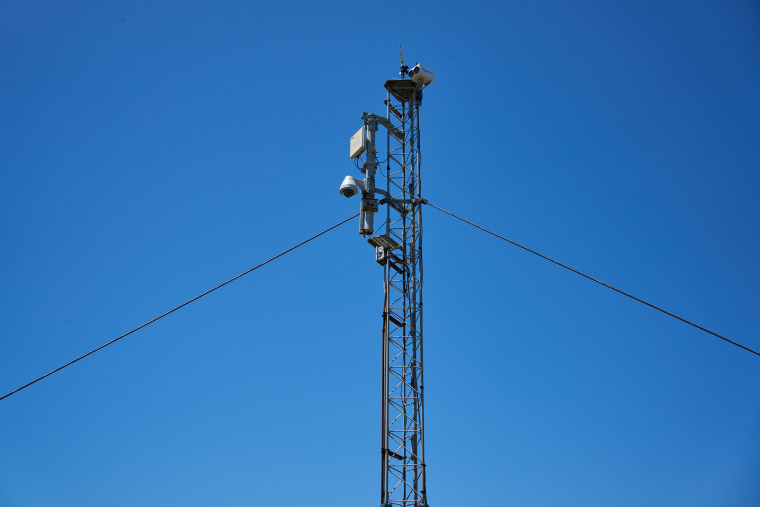
Ferries, cargo ships, and tankers navigated the choppy waters of San Francisco Bay on Tuesday, joined by a whale surfacing nearby. A new AI-powered detection network aims to track these whales, making them more noticeable to mariners. This system, called WhaleSpotter, continuously scans the bay for whale blows and heat signatures up to 2 nautical miles away, alerting mariners to adjust their routes or slow down. Thomas Hall, the director of operations for San Francisco Bay Ferry, noted that these alerts will allow for adjustments well before vessels get close to the whales. Over time, data gathered can help modify routes during whale season more effectively.
There has been a concerning rise in gray whale deaths in the bay, with 21 dead gray whales found in the wider Bay Area last year, according to The Marine Mammal Center. This represents the highest count in 25 years, with ship strikes accounting for at least 40% of these deaths. So far this year, at least 10 more whales have died in the Bay Area. Experts indicate that many carcasses remain unreported, either sinking or swept back to sea.
Gray whales traditionally migrate along the California coast, covering a 12,000-mile journey between Mexico and the Arctic. Yet, more of them are now diverting into San Francisco Bay, staying for days or weeks. Scientists increasingly connect this shift to climate change, as warming temperatures and changes in Arctic sea ice disrupt the gray whales’ summer feeding grounds. A 2023 study in Science outlines how these changes leave many whales malnourished during migration.
High concentrations of whales now gather in a corridor between Angel Island, Alcatraz, and Treasure Island, overlapping ferry routes and shipping lanes. Rachel Rhodes, a project scientist at the Benioff Ocean Science Laboratory, commented on how this is an unfortunate location due to heavy ship traffic. Collisions have been so frequent that teams responding to strandings have struggled to find places to handle the dead whales.
The eastern North Pacific gray whale population once recovered from commercial whaling, coming off the Endangered Species Act in 1994. However, numbers have halved in the past decade, with only 13,000 remaining, per the National Oceanic and Atmospheric Administration. Rhodes highlighted their poor condition at the start of migration due to inadequate food in the Arctic.
The WhaleSpotter technology provides real-time alerts to mariners. Artificial intelligence identifies potential whale sightings, verified by trained marine mammal observers, before sending alerts via radio to ferry operators and vessel traffic controllers. These alerts are also published on the Whale Safe website. Systems are in use across the United States, Canada, and Australia, but the San Francisco Bay network is the first to directly link land and vessel detections with official alerts.
Douglas McCauley, director at the Benioff lab, reported a surge of detections during initial testing. He emphasized using this data wisely to manage space shared with whales. A significant advantage of the system is its continuous monitoring. Thermal cameras can operate day and night, and through foggy conditions common in the bay.
Currently, the system includes a camera on Angel Island. Plans are in place to add another on a ferry between San Francisco and Vallejo, creating a dynamic data collection setup. More cameras on the Golden Gate Bridge and Alcatraz could widen bay coverage in the future.
Meanwhile, warming oceans are affecting humpback whales. A marine heat wave near California is reducing cold, nutrient-rich water vital for krill, anchovies, and sardines. Humpbacks now follow their prey closer to shore, where the Dungeness crab fishery operates. This creates entanglement risks, with vertical lines from traps posing hazards.
Recently, regulators again closed parts of the fishery off central California to conventional gear to reduce risks to whales. Gray whales face risks, but humpbacks are particularly vulnerable due to their behavior. Kathi George of The Marine Mammal Center noted humpbacks’ curiosity that leads to accidental entanglement. They may become trapped by fishing gear, impacting their ability to feed and survive.
Thirty-six whales were confirmed entangled off the West Coast in 2024, the highest since 2018, though many cases go undocumented. California approved a safer alternative with commercial ropeless pop-up crab fishing gear. This technology allows continued harvests while reducing risks to whales. The system uses stored ropes and buoys on the seafloor, activated by fishermen upon return. Caitlynn Birch of Oceana emphasized the need for adaptive, science-backed management in response to climate-induced changes. California’s model is pioneering in whale-safe fishing technologies, potentially guiding broader efforts.