Pullman Railroad Days: Celebrating a Century of Electrification
This weekend marks an important milestone in the history of the South Shore Line. The Pullman Railroad Days event celebrates the 100th anniversary of a decision that significantly increased ridership.
Electrification Anniversary
The South Shore Line takes part in an event at Pullman National Historical Park in Chicago, commemorating 100 years since the electrification of Illinois Central trains. This change, essential to regional rail history, stood as a catalyst for growth.
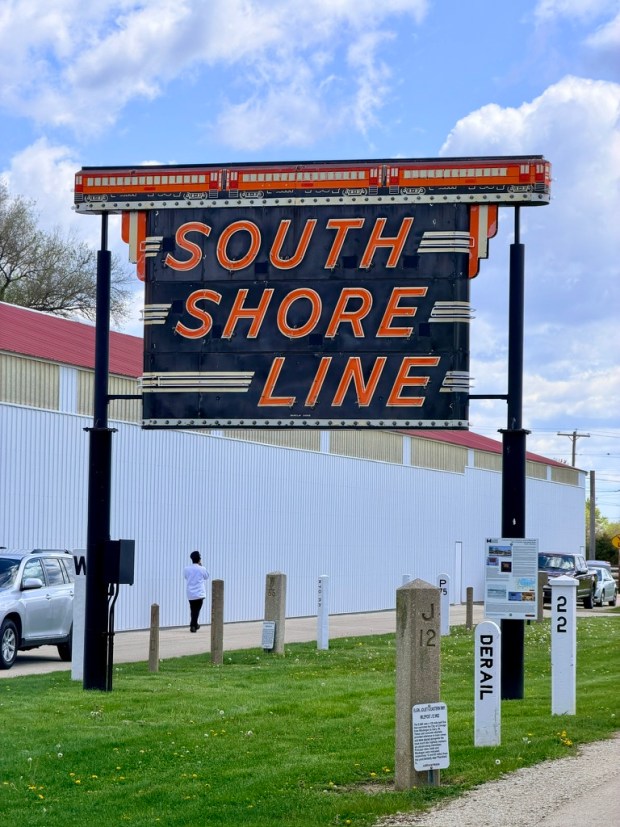
The Illinois Railway Museum now houses the historical South Shore Line sign that once marked its downtown Gary station (Doug Ross/for the Post-Tribune).
Passengers today are familiar with the shiny silver trains with orange stripes. These trains, built by Nippon Sharyo, came under the Northern Indiana Commuter Transportation District’s administration in 1977. Before then, riders traveled in orange cars, constructed due to the Illinois Central electrification. These early shifts laid the groundwork for modern railway operations.
The Role of Samuel Insull
Norman Carlson, president and managing editor of the Shore Line Interurban Historical Society, highlighted Samuel Insull’s influence. Insull was instrumental in transitioning the South Shore Line trains from AC to DC power, allowing them to travel to downtown Chicago via Illinois Central tracks, now Metra Electric.
The switch to DC power involved modifying the rail cars to operate on a 1,500-volt system, enabling seamless travel into Chicago’s city center.
This transition, costing about $3 million, marked a transformative era for rail travel (Nicole Barker, South Shore Line’s chief experience and engagement officer).
Historical Impact
Electrification arose partly due to environmental concerns, notably smoke. The Chicago City Council’s 1909 ordinance required all railroads to electrify by 1930. While the Illinois Central complied, the broader rail industry struggled.
This electrification shifted Chicago’s urban landscape. Land east of the Illinois Central tracks, including Millennium Station, was developed over fillings created by the railroad years earlier. The inaugural electrified Illinois Central cars began service in 1926, with the South Shore Line soon connecting passengers directly to downtown. This direct service significantly increased ridership.
Evolution of the South Shore Line
The South Shore Line introduced parlor and dining car services in 1927, offering travelers luxury. World War II brought unique challenges, leading to modifications for increased capacity. Dining and parlor cars were repurposed to meet wartime needs.
Restoration efforts continue today. One of the historic 1982 rail cars is displayed at the Pullman National Historical Park. Restored to its original look, this car, among others, represents a tangible connection to rich rail history.
“Bringing this vibrant piece of rolling history back to the historic Pullman neighborhood is the perfect way to celebrate our past while building toward our future,” Barker commented.
Future Prospects
Modernizing initiatives are underway. Plans include extending services to new regions and exploring new car models. The introduction of battery-powered locomotives signifies a new phase in rail advancements. The Northern Indiana Commuter Transportation District continues to refine its strategic vision.
This storied past underlines the railroad’s evolving narrative and its critical role in shaping regional development.