Betye Saar’s Legacy in Black Art and Liberation
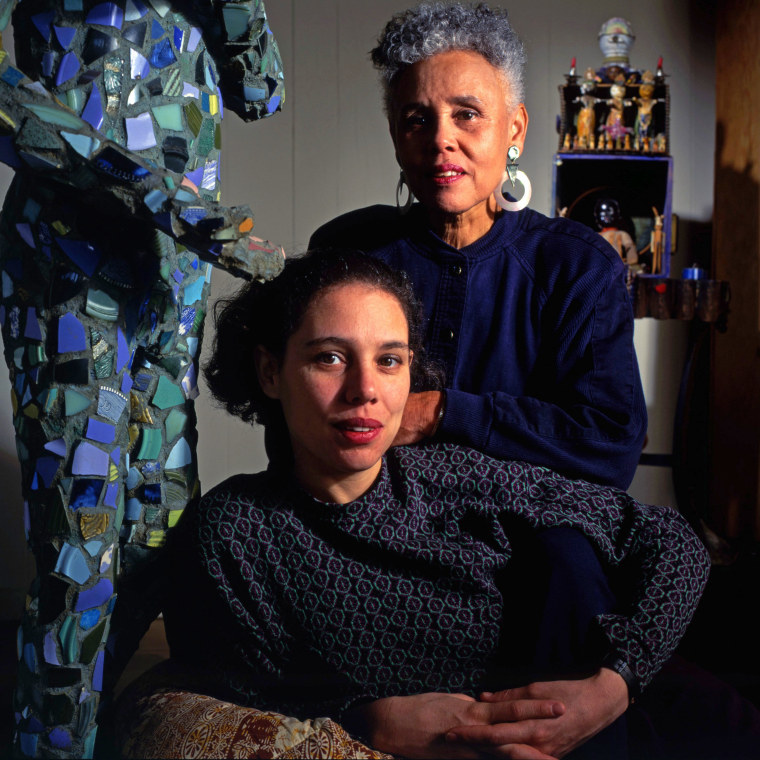
Artist Betye Saar passed away on a Sunday morning in Los Angeles at the age of 99. Her family confirmed her death the following day. Saar, an influential figure in the 1960s Black Art Movement, was weeks away from celebrating her 100th birthday.
Saar was known for her innovation in creating assemblage boxes, sculptures composed of found objects. Through her art, she reinterpreted Jim Crow-era memorabilia as symbols of Black empowerment. As the Los Angeles gallery Roberts Projects stated, her work exemplifies the environmental, cultural, political, racial, economic, and historical context in which it was created.
Initially starting her career in design, Saar transitioned to art at the age of 35 and continued to create until her 90s. Raised in Pasadena, she was part of a community of Black artists in Altadena, drawing inspiration from Simon Rodia’s Watts Towers. Saar’s artistic practice included painting, printmaking, sculpture, and the use of found objects like dolls, washboards, and antiques. Recurring motifs in her work included boats, clocks, cages, and altars, often incorporating symbols of the occult and cosmology. She frequently used the Leo symbol, reflecting her astrological sign.
Saar was quoted by the gallery as saying, “Her appropriation of Black collectibles, heirlooms, and utilitarian objects are transformed through subversion.” Among older Black American artists, Saar holds a distinguished position.
“Black Girl’s Window,” created in 1969, was a groundbreaking piece, though it gained widespread recognition only decades later when the Museum of Modern Art in New York acquired it in 2019. Saar once commented that at the time, few galleries in Los Angeles showcased Black artists.
In “The Liberation of Aunt Jemima,” created in 1972, Saar reclaimed derogatory memorabilia to create a powerful statement. The piece features an image of the “mammy,” a minstrel character, now depicted smiling with a rifle and a grenade. This work responded to the 1968 assassination of Rev. Martin Luther King Jr. Saar described feeling a “rage” that transformed her artistic expression from mystic to warrior.
Saar expressed hesitance in using negative images but ultimately redefined Aunt Jemima as a revolutionary symbol. This transformation resonated, especially as Quaker Oat decided in 2020 to retire the Aunt Jemima brand due to its racial stereotypes.
Throughout her life, Saar taught and inspired many Black artists, including Kerry James Marshall. Although her work was sporadically exhibited in major institutions, her influence reached a crescendo in 2019 with concurrent solo exhibitions at the Los Angeles County Museum of Art and MoMA. Saar was inducted into the American Academy of Arts and Letters in spring 2026.
Angela Robinson Witherspoon, who produced a documentary titled “Betye Saar: Ready to Be A Warrior” in 2023, noted Saar’s boundless energy for art. Robinson Witherspoon highlighted Saar’s desire to combat the dominance of white males in the art world and her involvement in the Civil Rights Movement while raising her daughters.
Current exhibitions include “Let’s Get It On: The Wearable Art of Betye Saar” in Los Angeles and a display of over 100 dolls at the New-York Historical Society in Manhattan.