Comey’s Legal Team Challenges Seashells-Based Case
Former FBI Director James Comey’s legal team argued before a federal judge in North Carolina that allowing the seashells-based case against Comey would undermine constitutional protections for free speech. They requested the judge dismiss the case, claiming it is part of a campaign led by the former President to target Comey for his protected speech and personal animosity.
The legal team stated the case contradicts two fundamental legal principles: it targets Comey’s protected speech, and it reflects selective prosecution. Historical precedent shows dismissals based on these grounds are rare, attributed to the independence of the Department of Justice, which traditionally protects against politically motivated prosecutions. The prosecution of Comey, they argued, diverges sharply from this tradition.
Alongside this motion, Comey’s lawyers requested access to grand jury records. They argued that while grand jury proceedings typically assume regularity, the circumstances in this case challenge that assumption. Earlier, the defense claimed the indictment should be dismissed since Comey’s Instagram post did not constitute a true threat, referencing “dictionaries, context, precedent, and common sense” to refute the claims about the numbers “8647.”
An unnamed Justice Department official criticized the case as baseless and a misuse of resources, predicting its eventual dismissal. They stated no rational person could believe Comey intended to threaten the President with seashells, expressing disappointment in the DOJ’s actions.
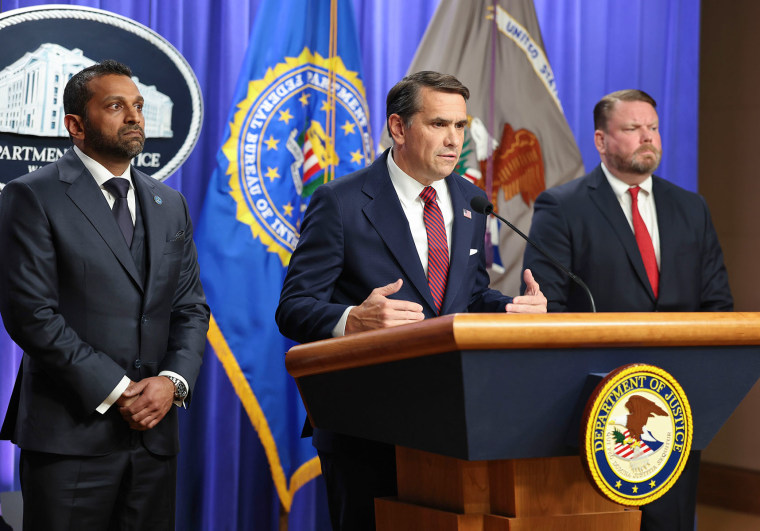
Acting Attorney General Todd Blanche, accompanied by FBI Director Kash Patel and U.S. Attorney W. Ellis Boyle for the Eastern District of North Carolina, announced charges against Comey on April 28. U.S. District Judge Louise Flanagan is currently presiding over the case. If it advances to trial, Comey will be arraigned on September 30, with a trial set for October 21 in New Bern, North Carolina.
The prosecution was initially led by Matthew Petracca, a new federal prosecutor who previously worked as a Republican official in New Jersey. However, due to his limited federal experience, Petracca withdrew in May. Now, Assistant U.S. Attorney Timothy Severo handles the prosecution. The defense highlighted Petracca’s transition and prior background in state Medicaid fraud, suggesting he was not suited to lead such a high-profile case.
Comey’s defense has also filed similar arguments of selective prosecution in a previous case initiated by ex-White House aide Lindsey Halligan, linked to testimony Comey provided in 2020. Although that case was dismissed, the court did not rule on these arguments since Halligan was determined to lack the legal standing for her position.