Montana Hiker Self-Rescues After Trekking Pole Injury
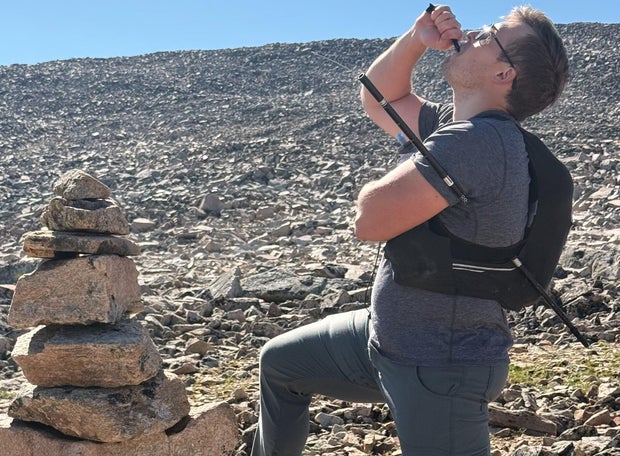
On July 30, 2026, David Cifaldi, along with two hiking companions, was crossing the Froze-to-Death Plateau in Montana. They were nearing the summit of the state’s highest peak when Cifaldi’s accident altered their adventure. Cifaldi slipped, impaling himself on his trekking pole during the fall.
The 44-inch pole penetrated under his left arm but missed vital organs. It protruded from his back. Faced with the high cost of a helicopter rescue, Cifaldi decided to save himself. ‘We’ve got to get off this mountain,’ he stated, noting the injury as ‘but a flesh wound.’
Cifaldi, a 32-year-old nurse specializing in wound care at a Billings hospital, assessed his condition. He experienced minimal pain, had little bleeding, and the pole remained stable. The group used a satellite device, a Garmin inReach, to reach local authorities and communicated their intention to self-rescue.
They carefully descended from the plateau, navigating boulders and snowfields. After more than six hours, covering about 10 miles and descending roughly 5,000 feet, they reached the trailhead. There, Jesse Ross, Cifaldi’s friend, had parked a vehicle.
‘His confidence made it all possible,’ Ross said. ‘He’s the medical expert. Our role was to support.’
Cifaldi had long wanted to climb Granite Peak, which stands at 12,800 feet. The mountain is notorious for unpredictable weather, including lightning storms and cold temperatures. Hundreds attempt its rocky summit each year, but many do not succeed. In 2019, a 65-year-old man died after a fall near the top.
While hiking out with the pole awkwardly extending from his body, Cifaldi remained under the observation of Stillwater County’s Search and Rescue team. Commanding officer Ty Williams followed their journey through calls from the group, beginning at 9:44 a.m. on July 20, immediately after the incident. By 1:30 p.m., they were nearing the trailhead.
‘There was no threat to others. He didn’t require our aid, so we respected his decision,’ Williams noted. The hikers reached Ross’ vehicle by 3:30 p.m. and drove to a nearby clinic.
Upon arriving, staff redirected them to Billings for more specialized treatment. They continued to St. Vincent Regional Hospital, where doctors removed the pole and treated Cifaldi. He returned to work within the week.
‘Nearly every time, I’d choose similarly,’ Cifaldi reflected from Ross’ backyard. ‘Search and rescue assistance is free, but the helicopter isn’t. That influenced my choice. Having two experienced friends and a communication device made the decision easier.’