Efforts to Identify an Unidentified WWII Soldier
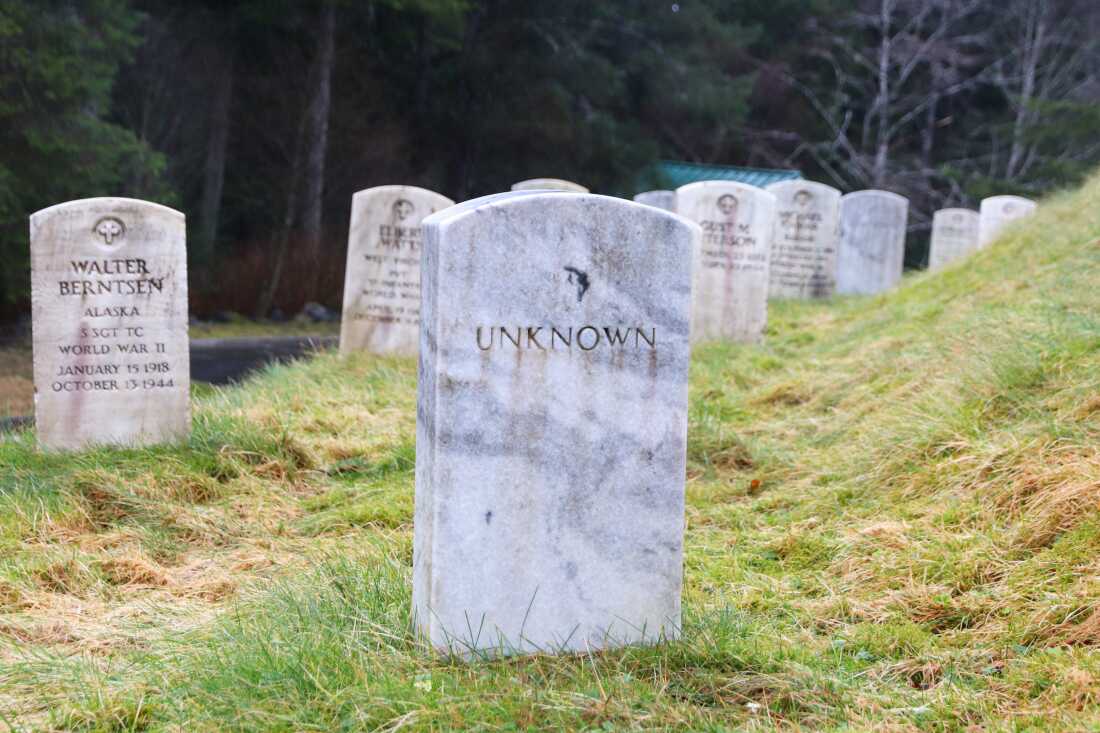
An unidentified soldier, known as “X-3,” lies at the Sitka National Cemetery in Alaska. Traditionally marked “Unknown,” the site has drawn renewed attention as movements are made to identify the soldier.
The Disinterment Ceremony
In June, a solemn ceremony unfolded in Sitka, Alaska. Service members, veterans, alongside police and fire personnel, attended as two U.S. Coast Guardsmen carried the remains of “X-3,” symbolizing a journey toward identification. X-3 is among over 81,000 U.S. service members whose remains remain unidentified or undiscovered. Most losses trace back to World War II, the Vietnam War, and the Korean War. The Department of Defense (DOD) oversees efforts to locate and identify these soldiers.
WWII’s Impact in Alaska
Most missing soldiers are not in the continental U.S., but regions like Alaska and Hawaii, where WWII battles occurred, show higher numbers. Alaska hosts about 120 unidentified soldiers, while Hawaii accounts for over 1,900. Recently, X-3’s remains were prepared for transport to a forensic laboratory in the Midwest.
The Story Behind “X-3”
On June 3, 1942, Japan bombed Unalaska, part of the Aleutian Islands. U.S. resources were mobilized in defense, but disaster struck when a C-53B plane crashed near Cold Bay, Alaska. Sixteen soldiers were onboard; only the remains of six were recovered locally by a fur trapper. These remains were initially buried, then later relocated. Yet, among them, X-3 remained unidentified.
Efforts for Identification
Michael Livingston, a WWII historian, has long sought to have X-3’s remains identified. Livingston’s calls to the DOD were initially met without success. In Texas, Chris Pfeiffer has spent years researching his family history, specifically his grandmother’s brother, 2nd Lt. Eugene Christensen, who vanished in the Aleutians. Pfeiffer suspects X-3 could be this lost relative.
We’ve known about the loss of a great uncle in the Aleutians,
explained Pfeiffer, now 71, as he processed the 83-year-old mystery.
Pfeiffer, who served in the military himself, holds extensive documentation about the crash. Both he and Livingston had sought the DOD’s intervention for X-3’s case. He holds hope yet acknowledges identification might go either way.
The Role of the DPAA
The process gained momentum with the involvement of the Defense POW/MIA Accounting Agency (DPAA), the DOD arm pursuing missing service members. DPAA senior planner Aaron Cummings noted the role of family interest in prioritizing missions. Slow progress initially attributed to limited resources, changed course with Pfeiffer’s engagement.
The Digging Effort
In late June, a DPAA team including archaeologists and forensic specialists focused their efforts on X-3. The grave, located on a challenging hill, presented concerns regarding potential subsurface movement. Prior unsuccessful excavation attempts contrasted with the completion of X-3’s disinterment at only three feet deep. The intact remains could now be cross-referenced with modern techniques including DNA testing.
Cummings praised the operation as successful and respectful. With X-3’s identity to be refined, potential connections to Christensen remain possible. If confirmed, Pfeiffer plans reburial in Nebraska, close to family. Regardless of the outcome, such investigations honor the longstanding vow to leave no soldier unrecovered.