ICE Plans Body Cameras for All Officers, But Public Access Uncertain
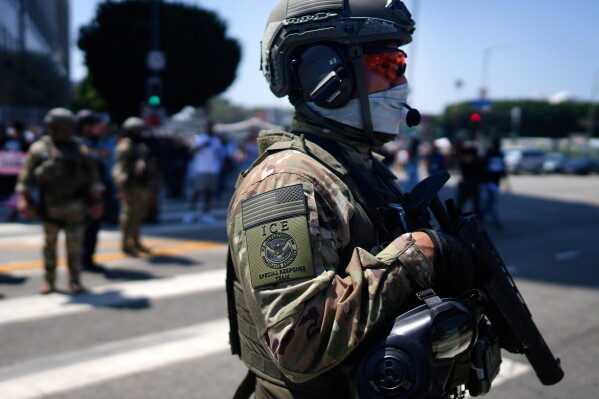
U.S. Immigration and Customs Enforcement (ICE) announced plans to equip every officer and agent with a body camera by the end of August. This expansion aims to create a visual record of immigration enforcement activities. The public’s access to this footage is yet to be determined and depends largely on ICE’s discretion.
ICE’s body camera policy has sparked discussions, particularly concerning the agency’s provisions allowing it to withhold or delay footage after serious injuries or deaths in custody. Acting Director David J. Venturella stated these measures are meant to protect ongoing investigations and privacy. He claimed the regulations align with federal laws and other agencies’ policies.
Venturella’s response followed an Associated Press (AP) report that scrutinized ICE’s policy, highlighting that footage release would depend on the “best interests of the agency.” He accused the AP of misrepresenting the policy by combining it with ICE’s broader authority to manage body-camera footage. Venturella emphasized that releasing footage could compromise investigations or personal privacy.
The AP article did not suggest that this provision governs all footage releases. It focused on ICE’s policy regarding significant encounters like serious injuries or deaths. The AP had contacted ICE for comments prior to the report, receiving partial responses without direct addressing of the policy’s “best interests” clause.
ICE has faced increased scrutiny lately, following incidents like the fatal July shooting of a young motorist in Maine by an ICE officer known for violent past behavior. Additionally, an officer in Houston shot a homebuilder en route to work. Neither incident involved body cameras.
Venturella assured that ICE prioritizes transparency and accountability and remains committed to outfitting officers with body cameras by August. He remarked that the AP “mischaracterized” ICE’s efforts and policies.
Sociology professor Christopher Schneider from Brandon University in Canada commented that while selective footage releases are typical for some agencies, ICE’s policy makes it explicit. He noted, “ICE is saying the quiet part out loud.” The article also mentioned that Customs and Border Protection (CBP), a related agency, hasn’t released footage of a January shooting involving Alex Pretti in Minneapolis, as CBP Commissioner Rodney Scott cited ongoing investigation concerns.