Shifting Dynamics in U.S.-Iran Relations
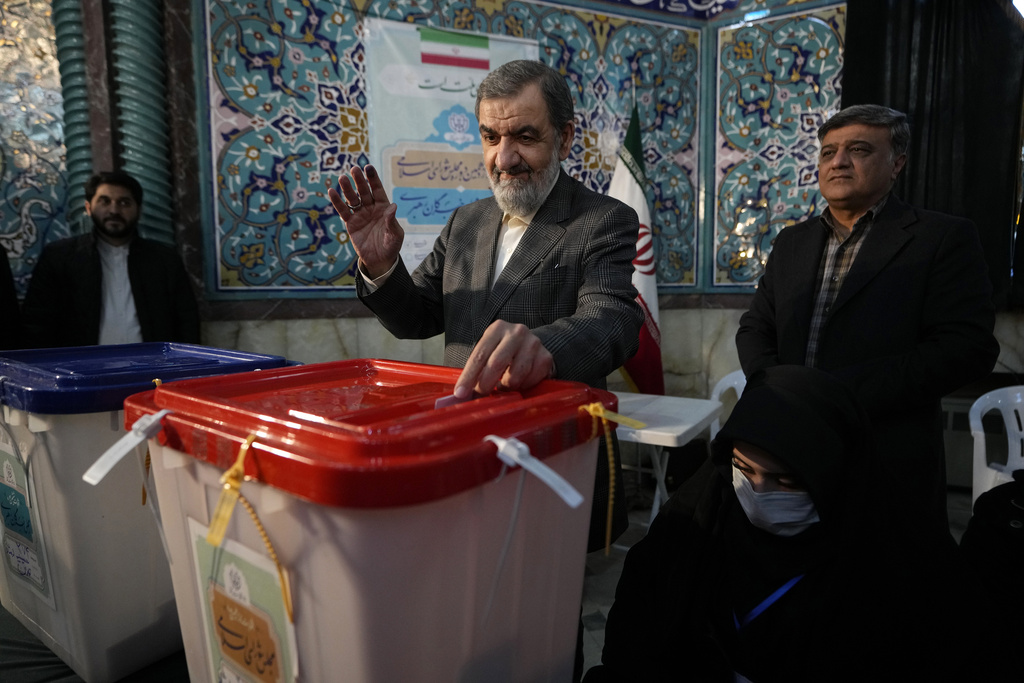
Mohsen Rezaei, former commander of the Revolutionary Guard, voted in the Iranian elections held in Tehran. This happened as tensions between the U.S. and Iran took a new turn. Previously, President Trump considered resuming major combat operations against Iran. He recently indicated a shift towards economic pressure instead of new strikes. In an interview, Trump mentioned, ‘We are low keying it,’ and discussed watching Iran struggle with high inflation and lack of funds.
Trump’s stance suggests patience with Iran, avoiding a fifth declaration of victory. This differs from measurable claims like reopening the Strait of Hormuz or setting military deadlines, which have failed in the past. His current assertions are open-ended and not bound by a specific timeline.
On the Iranian side, Mohammad Bagher Zolghadr outlined conditions the U.S. must fulfill before reopening the Strait of Hormuz. These include ending threats and attacks, lifting sanctions, and releasing Iran’s frozen assets. Meanwhile, the UAE accused Iran of missile attacks on a tanker, escalating tensions further. Oman, acting as a mediator, condemned the attacks and cautioned about their impact on ongoing discussions.
Iran’s Foreign Minister, Abbas Araghchi, contradicted claims of ongoing U.S.-Iran negotiations. He distinguished between technical talks with Oman and discussions about the strait. Amid these events, Iran underwent a leadership change, with Mohsen Rezaei appointed to two important security positions, replacing Zolghadr.
This reshuffle reflects possible struggles within Iran’s political factions. Rezaei, a close ally of Supreme Leader Mojtaba Khamenei, holds significant military experience from his tenure in the Iran-Iraq War. Reports also suggest a reduced role for Araghchi, highlighting a possible shift of negotiation responsibilities to the security sector.
The removal of Ali Larijani, killed in a strike, left Iran without a central figure uniting its leadership. Rezaei’s installation as a prominent security official indicates a strategic move but doesn’t resolve internal disputes. The situation showcases Iran’s attempt to negotiate from strength, placing hardliners in key positions.
As Washington relies on economic leverage, Tehran raises negotiation stakes by empowering a former Revolutionary Guard commander in its top security council. The focus now shifts to who in Tehran can agree to terms acceptable to Washington.
Charbel A. Antoun is a journalist focused on U.S. foreign policy in the Middle East and North Africa.