Federal Investigation Over Critical Email Sparks First Amendment Debate
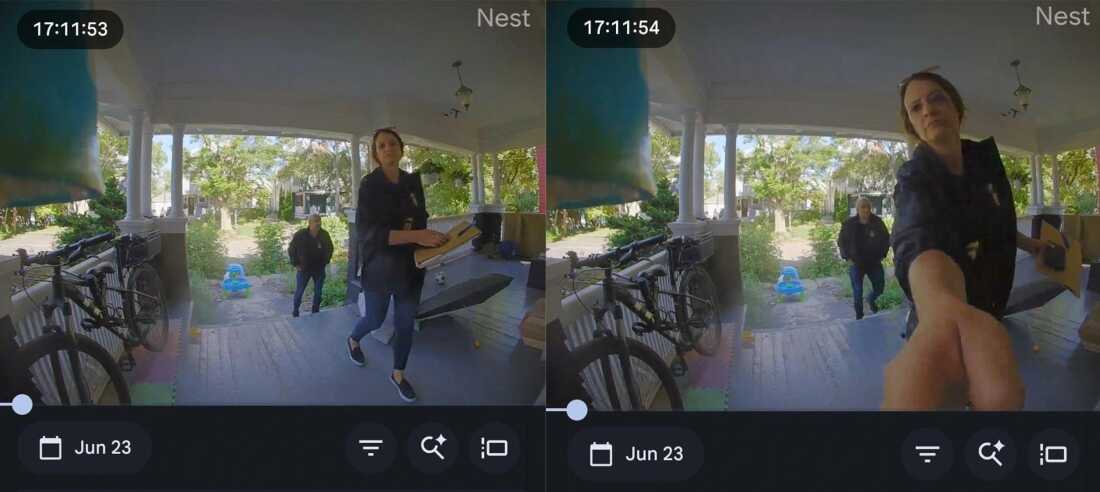
Two federal agents recently appeared at the doorstep of David Streever’s home in Rochester, N.Y., after U.S. Immigration and Customs Enforcement (ICE) pursued him at an airport and a hotel. Their aim was to question Streever about a critical email he had sent to the ex-head of ICE months earlier. This investigation has led to federal officials defending such actions in court filings.
The legal documents state that the investigation into Streever concluded at June’s end. In a lawsuit against the Department of Homeland Security (DHS) and ICE, NPR previously covered Streever’s situation and his allegations about government actions violating his First Amendment rights.
On June 23, two ICE agents sought Streever at his Rochester residence to discuss an email he sent to former ICE acting director Todd Lyons in January. The email criticized federal immigration authorities over the fatal shooting of two U.S. citizen observers in Minneapolis, comparing Lyons to a Nazi and warning him about his conscience.
The agents left Streever’s wife with a notice prompting Streever to sign and send back a warning. It stated, “YOU MAY BE IN VIOLATION OF FEDERAL LAW,” listing federal statutes that criminalize threats against officials. The notice warned that its receipt would be considered if he engaged in the described activities.
Streever sued, asserting his First Amendment rights were infringed upon, prompting self-censorship. Represented by attorneys from the free speech group Foundation for Individual Rights and Expression (FIRE), he requested that a judge prohibit DHS from further actions that could intimidate or retaliate against him for protected speech and halt any actions related to the warning notice.
Federal lawyers argue the case should be dismissed. Defense attorneys from the U.S. Attorney’s Office in Washington, D.C. claimed that granting Streever’s request would overly restrict government investigatory powers. They cited a rise in threats against public officials to justify investigations, stating that on-site visits and federal law warnings are crucial for prevention and investigation, declaring these do not breach the First Amendment.
Notably, the government filing did not claim Streever’s January email was a prosecutable threat or that he wrote anything else warranting investigation. Adam Steinbaugh, a FIRE attorney representing Streever, remarked that the government implicitly acknowledged the email as protected political speech, sparking alarm over their conduct.
They didn’t even come back and try to say, ‘Well, if you look at it in the right light, this could be a threat of violence that is not protected by the First Amendment,’
The agency’s filing described Streever’s email as critical speech rather than a threat. The email’s subject was “What’s next,” referring to Lyons as a “monstrous human being” and drawing parallels to Reinhard Heydrich, a prominent Nazi figure.
Brent Goodwin, assistant director for investigations at ICE’s Office of Professional Responsibility, stated the email was routed to his office due to perceived threatening undertones, posing possible safety concerns. Goodwin mentioned their absence of information on Streever when the email was received, prompting an ICE investigation.
According to the court declaration, agents from Jersey City made the 330-mile journey to Rochester attempting to question Streever. Learning he was in Europe, they tracked his return flight and tried to intercept him at JFK Airport on June 25.
After he bypassed customs and immigration without interception, agents checked the local hotel Streever registered with Customs and Border Protection. The hotel could not confirm his check-in, and Streever ignored agent phone inquiries.
Special Agent Abbi Henry’s closure report on June 30 documented the Jersey City office as “exhausted all investigative leads” per Goodwin’s account. By then, media coverage had already mentioned Streever’s situation.
Steinbaugh emphasized the case’s wider implications, questioning the government’s latitude in issuing warning notices for online criticism.
If the government is able to issue a warning notice here, what’s to stop them from issuing it to anyone who criticizes ICE online?