America First Global Health Strategy: Understanding the New Era
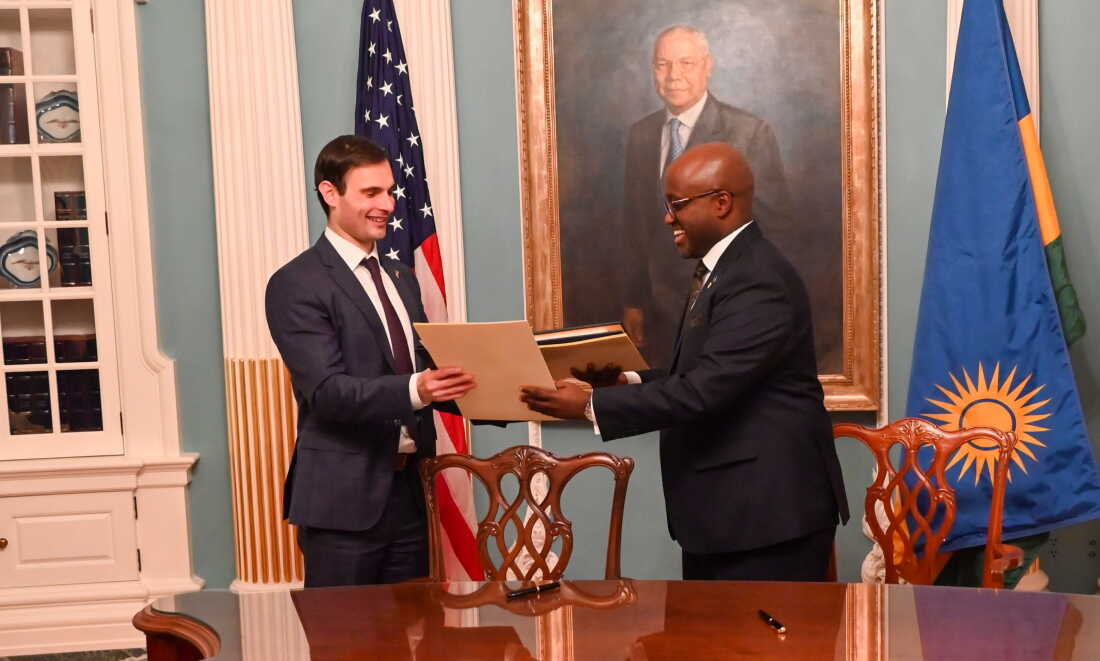
In December, Jeremy Lewin, a senior official from the State Department, welcomed Rwanda’s Foreign Minister Olivier J.P. Nduhungirehe to sign a multi-year Memorandum of Understanding (MOU) focused on global health cooperation. This marks the dawn of a new era named the ‘America First Global Health Strategy’ by the Trump administration starting October 1. This new strategy aims to rewrite funding rules for healthcare in low- and middle-income countries.
America First Strategy
The strategy is centered on the concept that the U.S. should not allocate billions for health and development programs without tangible benefits, like access to local minerals, and the commitment from governments to spend their own money. Countries need to sign a MOU specifying the U.S. investment and their own financial pledge to get U.S. funds. This approach is intended to make nations more self-reliant and less dependent on U.S. assistance. Jocilyn Estes, a policy analyst from the Center for Global Development, believes the idea has potential but questions the rapid rollout.
Mixed Reactions
Opinions are divided among the involved countries. The strategy’s transactional nature is notable, as described by Tom Bollyky, director of the global health program at the Council on Foreign Relations. It emphasizes protection from disease outbreaks, strengthening bilateral ties through co-investment agreements, and promoting American health innovation globally. This approach demands more transparent benefits like preferential access to minerals or patient data. The request for confidential records is considered controversial.
Participation and Exclusions
The U.S. signed MOUs with 35 countries, pledging approximately $14 billion over five years. Countries like Nigeria, Rwanda, and others are part of this strategy, while Ghana, Namibia, and Zimbabwe declined the agreement citing sovereignty concerns. Ghana’s President Mahama expressed discontent with the terms, especially the requirement to share patient data.
Potential Consequences
Countries hesitating to sign face serious repercussions. Zimbabwe, for example, will experience a halt in U.S. health funding which shifts to economic investments. Bollyky questions whether other countries will face similar cuts. The strategy’s rapid implementation didn’t offer much preparation time for affected countries.
Expert Opinions and Concerns
When it comes to public health, it does make sense to actually coordinate closely with governments, and countries should eventually run and pay for their own health systems.
Estes voices concerns about the unprecedented scale and pace of this policy pivot. The delayed October 1 start extension highlights risks if funds from the State Department don’t arrive on time. Morisson, from the Center for Strategic and International Studies, notes the significant reduction in baseline U.S. aid, impacting countries with large at-risk populations for diseases.
Rwanda’s Case
Rwanda’s planned reception of $157 million pales compared to last year’s $200 million. Economic strains from inflation and war-related ripple effects add pressure to increase local health spending. Bollyky observed that domestic budgets haven’t adjusted to expected shortfalls in U.S. aid.
The administration’s pace complicates the establishment of a stable environment necessary for assuming health burdens.
Despite criticisms, the State Department remains optimistic, stating that the strategy promotes long-term partnerships and locally-led health systems.