Florida Governor Race: Donalds vs. Jolly
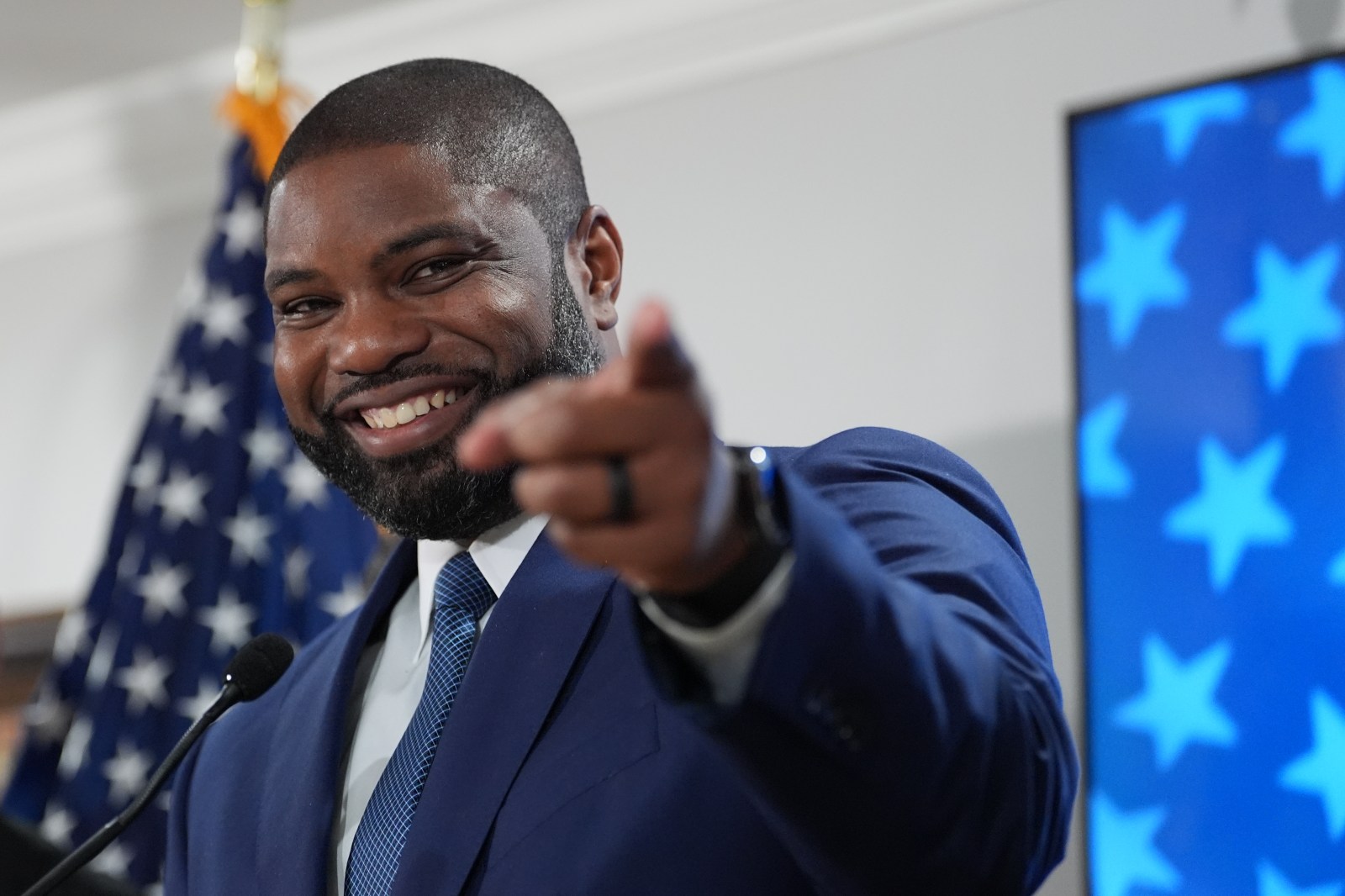
Republican Byron Donalds and Democrat David Jolly secured their parties’ nominations for Florida governor Tuesday night. This sets up a general election that Republicans usually expect to win easily. Florida has leaned more Republican recently, with Donald Trump winning the state by about 13 points in 2024 and Ron DeSantis getting reelected by nearly 20 points in 2022. Republicans also have a significant registration advantage and a new congressional map that benefits them. On paper, this makes Donalds a strong favorite. However, polling indicates Jolly might make the race closer than Florida’s recent political history suggests.
While no Democrat has held the Florida governorship in over 25 years, Democrats are hopeful for an upset this time. Donalds won his primary with about 49 percent of the vote, while Jolly received nearly 62 percent. The Associated Press called both races by 8 p.m. ET. Ahead of the results, Jolly told CNN that he believes, “if the election were tonight, we would win the general election in Florida as a Democratic candidate.” He sees himself as a strong contender, highlighting voters’ desire for change.
What Polls Show
A University of North Florida survey from last month shows Donalds leading Jolly by 46 percent to 41 percent, a five-point advantage. Notably, this margin is smaller than Republican margins in recent statewide contests. The survey indicates 5 percent prefer someone else, 2 percent won’t vote, and 6 percent are uncertain. Among non-party affiliated respondents, Donalds has just a one-point lead at 39 percent to 38 percent.
The poll surveyed 848 likely midterm voters in Florida from July 8 to July 17, 2026, with a margin of error of 3.8 percent. Other polls suggest a less competitive race. A Targoz Market Research poll for the James Madison Institute places Donalds ahead by 7 points, with 45 percent support compared to Jolly’s 38 percent. The survey included 1,026 likely voters from July 20 to July 26, 2026.
Additionally, a Stetson University survey reports Donalds leading by 7 points, with 47 percent to Jolly’s 40 percent and about 7 percent undecided. This poll involved 848 likely Florida voters from March 25 to April 13, 2026, and has a margin of error of 4.1 percent.
Expert Opinions
Craig Agranoff, a political science professor at Florida Atlantic University, commented before the primaries, “An upset in the general would be an uphill climb given Florida’s Republican edge and historical voting trends.” He noted, though, that midterms often see increased opposition turnout and local issues affecting outcomes. “Right now fundamentals favor Republicans, but a closer race is possible if independents shift significantly,” he added.
What Prediction Markets Show
Prediction markets favor Donalds strongly. They reflect Florida’s Republican lean and Donalds’ advantages in fundraising, recognition, and party support. On sites like Kalshi and Polymarket, Republicans are given an 83 percent chance of winning the general election, compared to 21 and 18 percent for Democrats, respectively.
Donalds also enters the election with Trump’s endorsement and a national profile. Jolly’s challenge is formidable as he attempts a statewide Democratic win where his party has struggled. This contrast between polling and prediction markets highlights the challenges facing Jolly. Although polls put him within single digits, defeating Donalds seems a long shot according to these markets.
The Cook Political Report categorizes the race as a Solid Republican pickup. Despite this, Democrats see potential in Florida. They have achieved notable wins in special elections, particularly in a state House district once strongly Republican. Although such victories don’t directly translate to a statewide race, they indicate that Republican strength isn’t absolute. Jolly, a former Republican congressman, holds a moderate profile that might appeal to independents and dissatisfied Republicans.
Still, for Jolly to win, he must overcome Florida’s Republican lean and Donalds’ polling advantage. This involves consolidating Democratic support, winning independents, and convincing some Republicans to switch sides. The five-point UNF margin shows it’s possible but challenging. Donalds stays the favored candidate. Yet, if Jolly gains a consistent polling lead, Florida’s 2026 governor’s race could become a significantly monitored contest.