Unitree Robotics’ Dramatic Stock Surge Amid AI Boom
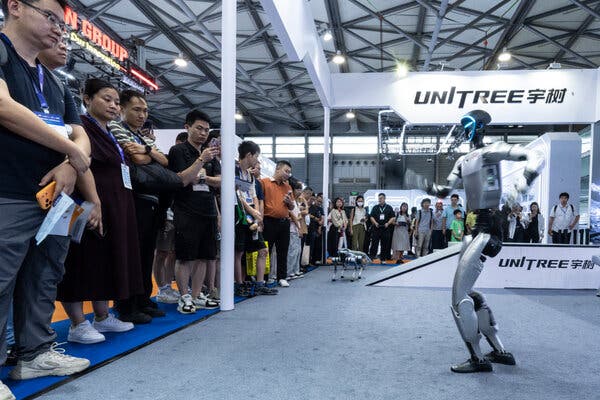
Unitree Robotics, a Chinese company specializing in humanoid robots, saw its shares soar during its Shanghai trading debut. The stock price climbed by nearly 500%, boosting the company’s valuation to approximately $53 billion. Initially, Unitree set its IPO price at about $22 per share, aiming to raise $900 million for a valuation near $9 billion. At one point during the trading day, shares increased by as much as 629%.
Lian Jye Su, a technology analyst with Omdia, highlighted the combination of strong company fundamentals and fueled speculative optimism among Chinese retail investors willing to invest at high levels.
Unitree is a company with strong fundamentals and very impressive technology, but we’re seeing a lot of speculative optimism in this first day of trading.
This dramatic stock surge follows the pattern of another technology company, ChangXin Memory Technologies (CXMT), which benefited from China’s AI expansion. CXMT experienced a 470% increase on its first trading day and has since passed Tencent as China’s most valuable public company.
Despite investor enthusiasm, Unitree faces an unclear market future for humanoid machines on a large scale. Many humanoid robots actively remain in pilot testing rather than widespread deployment in sectors like manufacturing.
Unitree, headquartered in Hangzhou, has gained attention online for its robots’ performances, showcasing their strength and agility in videos that have attracted millions of views.
Currently, Unitree operates on a modest scale, generating $250 million in revenue during 2025, with sales having quadrupled. The company has maintained profitability despite facing fierce competition from both local rivals and U.S.-based robotics startups. However, forecasts from CLSA suggest that the humanoid robotics sector might grow to a $69 billion global market by 2030, up from the current $2 billion.
Governments are increasingly considering humanoid robots as significant AI technologies. For instance, the Federal Communications Commission recently announced a potential ban on new foreign-made humanoid and quadruped robots over national security issues, something Unitree flagged as a potential risk in its IPO filing. While Unitree primarily sells in China, its U.S. clientele represented 13% of sales last year.
Reporter Steve Lohr covers technology and its effects on the economy, employment, and business landscapes. Xinyun Wu contributed additional reporting.