U.S. Struggles with Icebreaker Development as Arctic Importance Grows
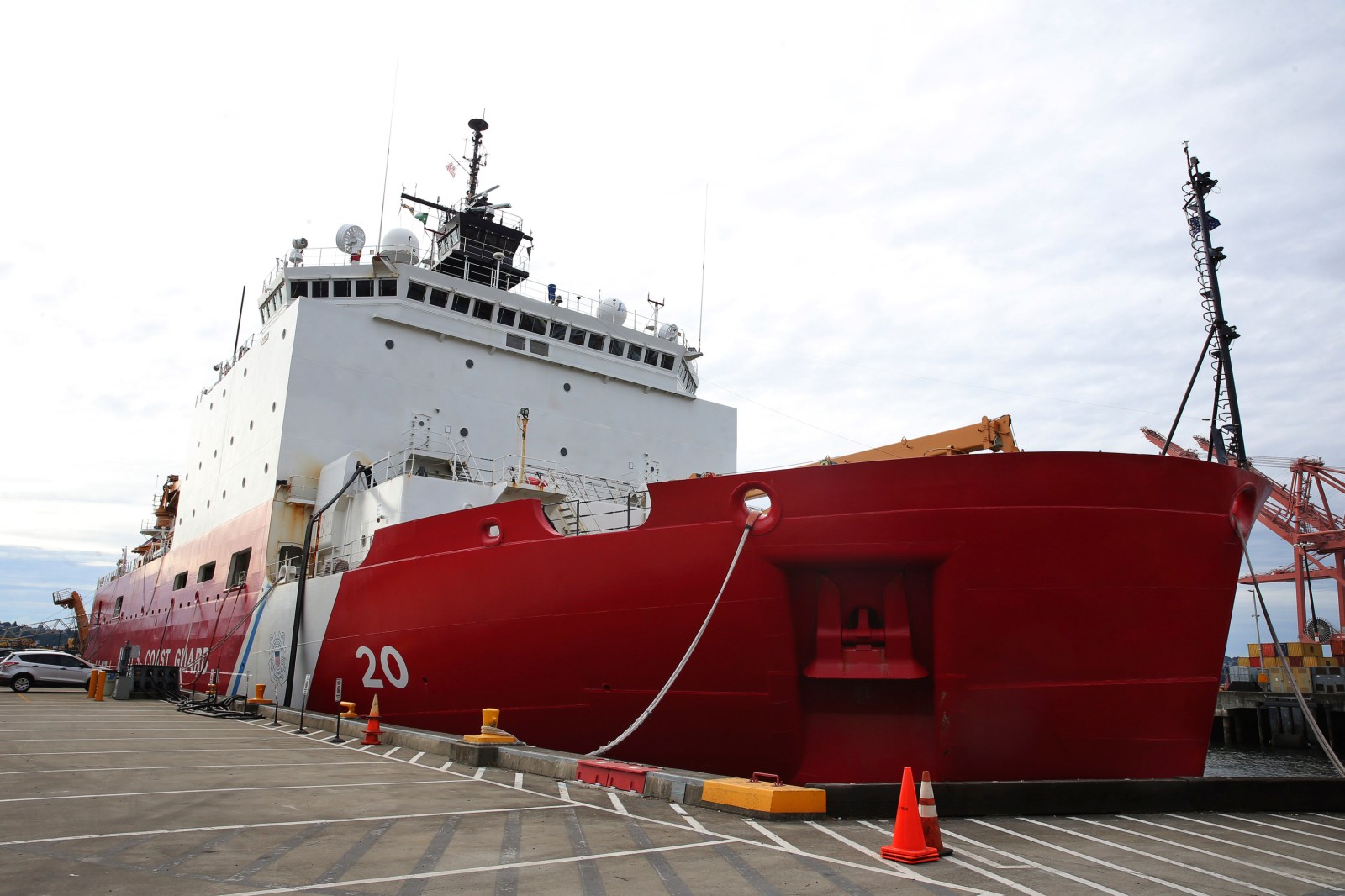
The United States faces significant challenges in the development of icebreakers, relying heavily on international assistance. Despite commissioning heavy icebreakers from American shipyards seven years ago, none are ready. The Government Accountability Office (GAO) reports potential delays, with the first of three planned icebreakers not expected until 2033.
Canada finds itself in a similar situation, recently launching an $11 billion program to build six icebreakers for the Canadian Coast Guard. Prime Minister Mark Carney announced the first ship would be ready by 2032, with the entire fleet completed by 2038.
The growing importance of the Arctic is undeniable, driven by factors such as climate change, research, security, economics, and new technologies. Consequently, the U.S. must look beyond traditional solutions. Finland has emerged as a capable ally, expected to deliver four Finnish-built icebreakers for the U.S. by 2028.
Robin Häggblom, a senior adviser at Risk Intelligence, highlights Finland’s expertise in icebreaker construction. About 60% of ice ships worldwide originate from Finland or follow Finnish designs. This expertise arises from necessity, as Finnish ports frequently freeze over during winter.
The U.S. seeks assistance from Finland to expand its presence in the Arctic. Following Russia’s actions in Ukraine, Finland joined NATO in 2023, further solidifying its partnership with the U.S.
“For these kinds of polar Arctic capable icebreakers, there really isn’t a know-how in the U.S.,” Häggblom explains. “If you build a vessel every 50 years, you just can’t keep the base of knowledgeable people both in research development and workforce.”
The White House’s plan to build 11 Arctic Security Cutters involves Finnish collaboration. These contracts are valued at $6.8 billion and primarily involve Bollinger Shipyards and Davie Defense working with Finnish shipyards.
Once the initial icebreakers are constructed in Finland, technology and skills will transfer to the U.S.
The urgency for Arctic Security Cutters crosses political ideologies. Häggblom notes their importance for climate change research and accessing raw materials in newly accessible areas due to melting ice. The Arctic’s strategic significance is underscored by its transpolar route, which connects the U.S. and Russian mainland efficiently.
Russia maintains a strong Arctic presence, boasting the longest coastline and numerous icebreakers, including some constructed by Finland. By contrast, the U.S. operates only a couple of polar-compatible icebreakers off Alaska’s substantial Arctic coastline.
Meanwhile, China actively participates in the Arctic realm through climate research and shipping ventures. They possess a handful of icebreakers and are exploring commercial cargo routes through Russia’s Northeastern Passage.
“Regardless of your worldview, you will find something that makes the Arctic more interesting today than it was a decade ago,” Häggblom observes.
At this pivotal moment, the U.S. struggles to maintain its Arctic capabilities. Bollinger Shipyards, tasked with constructing four icebreakers in Louisiana with Finnish assistance, didn’t provide comments to Newsweek.
Häggblom considers the Arctic Security Cutter program as particularly sensible compared to other costly and ambiguous initiatives like the Golden Dome Arctic defense program.
The primary concern remains the timely and budget-friendly construction of follow-up vessels in the U.S. Bollinger plans to build four more icebreakers and Davie three, with Finnish assistance being crucial for these projects.