President Trump Faces Legal Hurdles Over Mail-Ballot Regulations
President Donald Trump is confronted with legal ambiguity surrounding his administration’s ability to implement new federal mail-ballot rules ahead of the 2028 presidential election. Legal experts shared their insights with Fox News Digital.
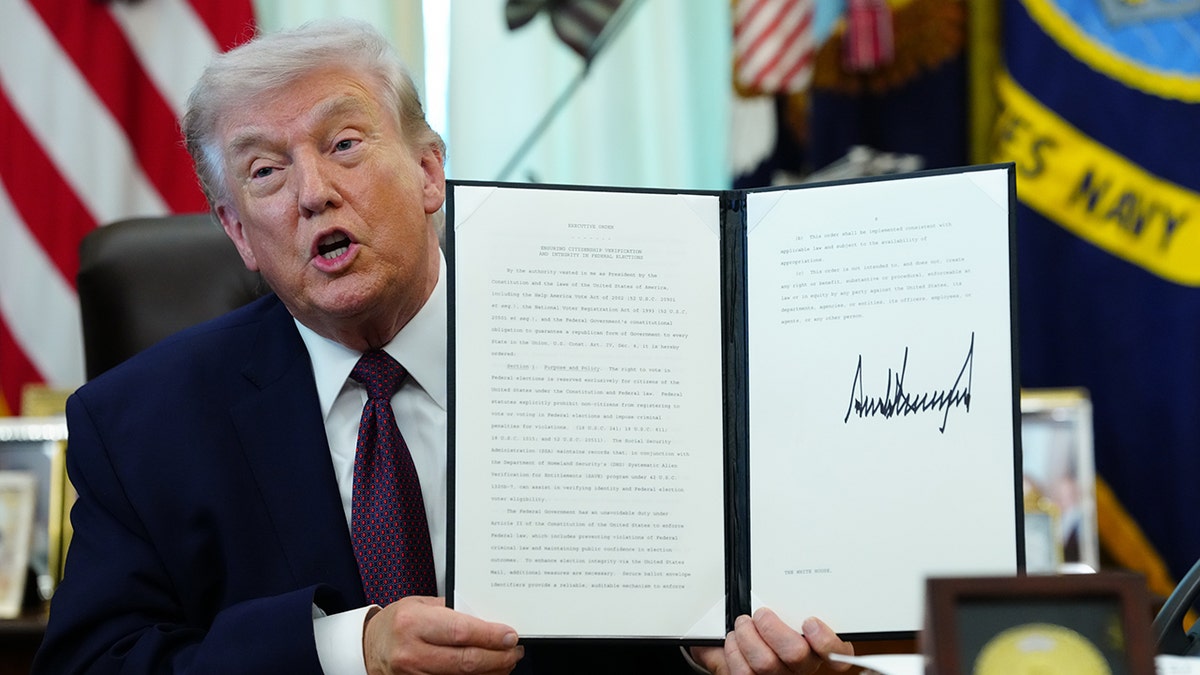
In March, Trump issued an executive order directing the Postal Service to establish new rules for federal mail ballots. These include standardized ballot envelopes marked as Official Election Mail and unique machine-readable barcodes. The Postal Service would gain the power to reject ballots failing to meet these standards or those from individuals not appearing on state-submitted lists of eligible mail voters.
On September 14, the Supreme Court refused to lift a preliminary injunction that prevents the rules from being applied before the upcoming midterm elections. The ability to implement these changes by the 2028 election has become a significant point of debate in Washington.
The Supreme Court’s decision on this matter will depend on how it interprets competing claims between the executive branch’s authority to regulate mail and the states’ rights to manage elections.
Michael Morley, a law professor at Florida State University, told Fox News Digital, “If the Court views this primarily as an attempt by the President to regulate federal elections, the Court is likely to invalidate it.” He explained that the President lacks constitutional authority over federal elections, and Congress did not grant him broad statutory authority in this domain.
However, Morley suggested another perspective: If the rules are seen as administrative requirements to enhance postal operations and safeguard mail integrity, the Court might uphold the regulations. He added that it would be unusual for the Court to conclude that the Postal Service lacks the authority to regulate the handling of election-related mail.
Despite the injunction ruling by a 7-2 margin, blocking Trump’s executive order before the midterms, some experts analyzed the decision to forecast how the Court might ultimately rule on whether the Postal Service can regulate election-related mail.
Stephen Richer, a legal fellow at the Cato Institute, remarked, “At least six justices seem to think that the administration will lose on the merits. The Constitution doesn’t vest authority to regulate elections to the president, and I think that they would say this effectively dictates how elections can be run.” Richer believes the Constitution delegates authority to Congress and the states, thus posing an additional requirement for administering mail-voting elections.
Others believe that the ruling primarily concerns procedural issues rather than directly opposing the administration’s efforts to regulate mail voting. Chad Mizelle, from the America First Policy Institute, noted, “Justice Kavanaugh concluded there wasn’t enough time left before the midterms to implement the rule responsibly.” He explained this as a timing question, not a decision on the actual law.
President Trump views the injunction against his rule for the 2026 elections as a significant setback. He expressed his frustration on Truth Social, highlighting the decision as a loss for Republicans and the country.
While individual cases of election and mail-ballot fraud exist, they do not signify widespread fraud within US mail voting.
Ilya Shapiro, a senior fellow at the Manhattan Institute, commented, “It’s an interesting issue. It’s not a slam dunk. It’s about who gets to set the rule for it, whether it’s the state, Congress, or a federal agency acting under general postal statutes that are quite broad.”