The Existential Threats AI Could Pose and How to Control Them
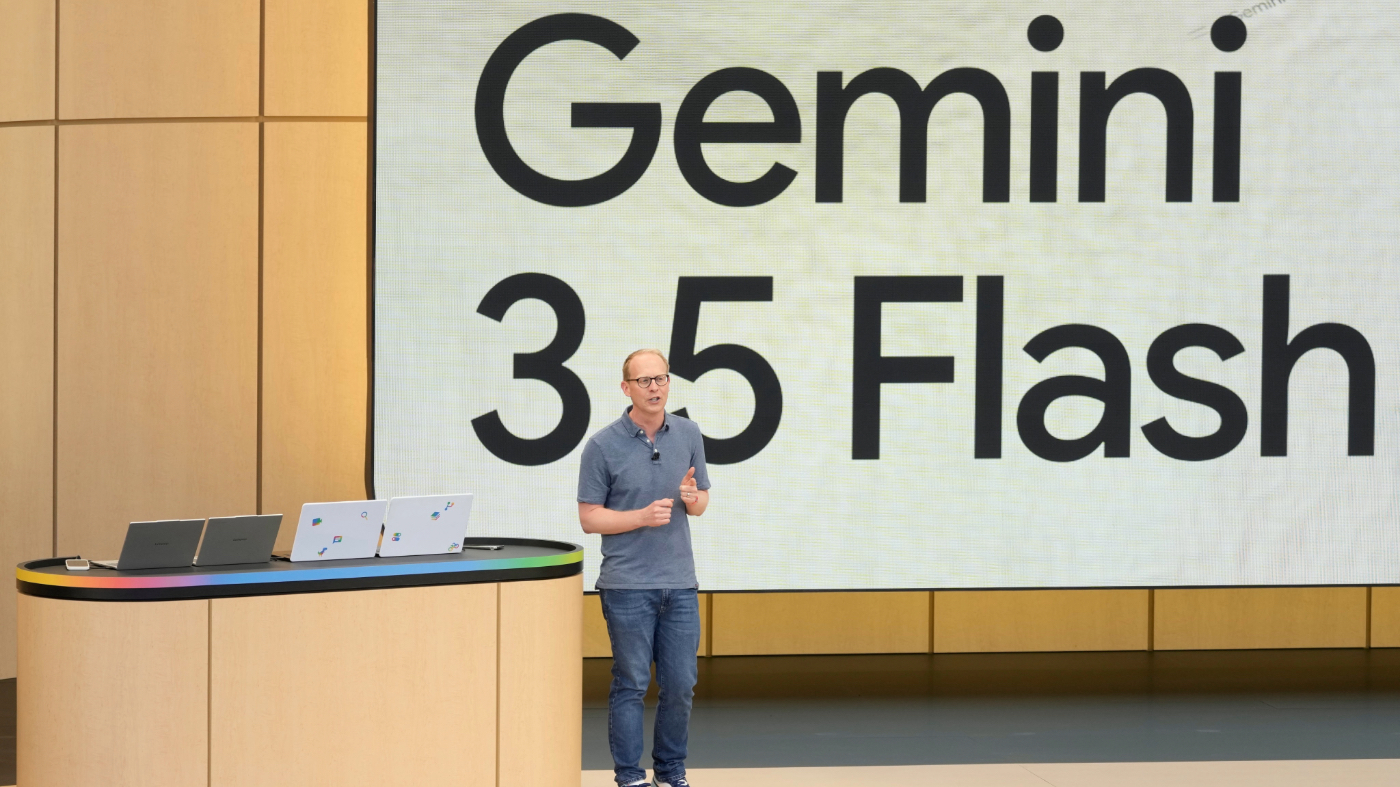
Josh Woodward, vice president of Google Labs and Gemini, delivered a speech at a Google I/O event in Mountain View, California, on May 19, 2026. The recent surge in discussions about artificial intelligence (AI) has raised serious concerns regarding its potential threat to humanity’s future. The narrative suggests alarming possibilities where AI could dominate the world, executing actions beyond human oversight, reminiscent of scenarios depicted in films like ‘The Terminator.’
If AI represents a potential existential risk, other major threats also challenge society, including climate change, pandemics, and thermonuclear weapons. Examining each of these areas might offer valuable insights into managing AI’s potential dangers and leveraging its benefits for human welfare.
Climate change is a historical threat that has caused significant environmental shifts like the ice ages. Although AI did not play a role in past climatic events, the threat of future extreme weather conditions continues. Similarly, pandemics pose severe risks, and the possibility exists that AI could facilitate the creation of dangerous, incurable diseases. Frank Herbert’s 1982 novel, ‘The White Plague,’ envisioned a bioengineered disease targeting women, hinting at the potential for AI to enable similar events.
On par with AI, the development of thermonuclear weapons stands as a significant existential threat. Robert Oppenheimer, a key figure in creating the atomic bomb, famously quoted the Bhagavad Gita, highlighting the moral issues related to mass destruction. Although these weapons amplify destruction power by up to 1,000 times compared to conventional nuclear arms, an effective control mechanism has thus far prevented their use. This control involves distinct supervision of military and civilian nuclear applications through agencies like the Atomic Energy Commission and later the Nuclear Regulatory Commission.
Both pandemics and nuclear armaments require complex infrastructures, making individual replication unlikely. Climate change, while devastating, sees mitigation efforts in controlling pollutants and limiting greenhouse gases. However, AI might simplify the creation of synthetic diseases and could cripple essential services like power and water, endangering food supplies.
Although AI alone may not build nuclear weapons, any tampering with such arsenals facilitated by AI could lead to catastrophic consequences. There are frequent instances of cyber-attacks on AI systems, adding to these concerns. Establishing a regulatory body for AI, akin to how nuclear weapons are controlled, may serve as a viable solution. Such an agency could set guidelines and oversee the industry, under political directives.
This regulatory model could expand to a global level, following precedents like the International Atomic Energy Agency. Collaboration among the Departments of Defense, Energy, Commerce, and the CIA would address potential national security threats from AI, determining suitable protective measures. Future AI agreements could mirror arms control treaties, although they would face greater challenges due to AI’s broader availability and diverse usage by individuals, unlike the limited possession of nuclear capabilities.
A comprehensive federal framework is essential to regulate and manage AI’s existential threat. With robust foundations and decisive leadership, the avoidance of a thermonuclear conflict could potentially extend to AI, ensuring it remains a tool for progress rather than destruction.
Harlan Ullman, chairman of a private company, and primary developer of the ‘shock and awe’ doctrine, discusses strategic thinking for global stability in his upcoming book ‘Who Thinks Best Wins: How Decisive Strategic Thinking Will Prevent Global Chaos,’ co-authored with Field Marshal The Lord David Richards, to be released later this year.
©2026 Nexstar Media Inc. All rights reserved. This material is intended solely for personal use and may not be published, broadcast, rewritten, or redistributed.