U.S. Expands Military Role in Greenland with New Agreement
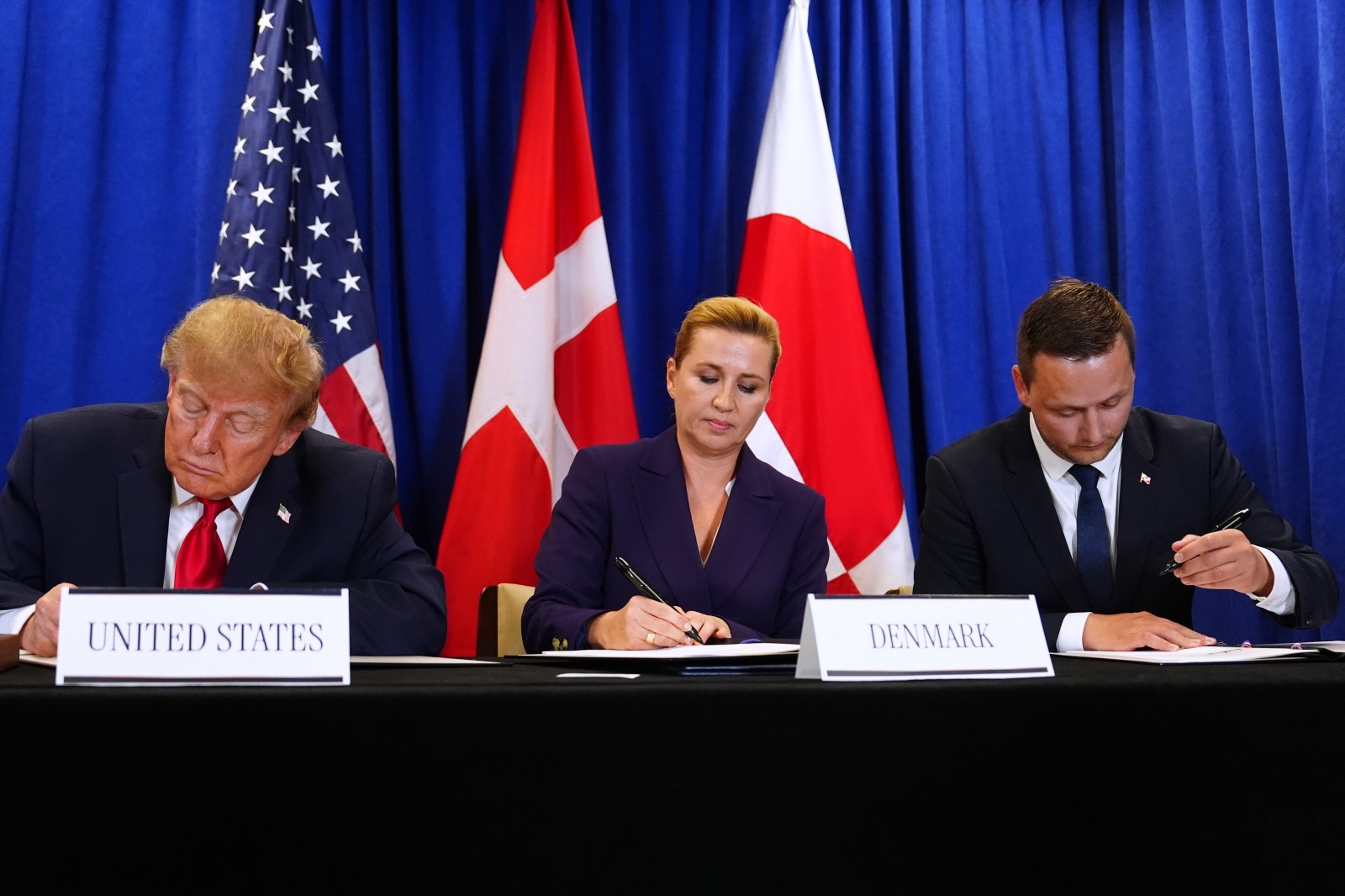
President Donald Trump has signed a security pact with Denmark and Greenland, enhancing the U.S. military presence on the Arctic island. This agreement builds on a defense treaty that has allowed American military access for 75 years. Signed during the United Nations General Assembly in New York, this deal establishes new American defense sites, allowing Washington a long-term security role in Greenland.
This new pact, unlike the 1951 U.S.-Danish Defense Agreement, also includes Greenland and gives the U.S. veto power over certain foreign investments. It follows tensions from Trump’s demand that the U.S. acquire the territory. Trump stated the agreement provides the United States with “permanent control over security and other needs” in Greenland. He declared no U.S. adversary would be permitted military presence or sensitive investments without U.S. approval. The President announced plans for two significant military bases on the island, still under Danish control.
Denmark maintains the deal respects its sovereignty and Greenlandic self-determination while enhancing Washington’s military role.
What Did the 1951 Treaty Say?
The 1951 U.S.-Danish Defense Agreement formed part of the NATO security framework. It permitted the U.S. to establish defense areas in Greenland, granting extensive rights for military facilities, stationing personnel, and conducting activities. The treaty respected Danish sovereignty over Greenland.
During the Cold War, the U.S. operated several installations. At its peak, the American presence included 17 installations and over 10,000 personnel. Presently, the U.S. presence focuses on the Pituffik Space Base in northwestern Greenland, with about 150 military personnel. An amendment in 2004 incorporated Greenland’s Home Rule government into the defense arrangement.
How Does the New Security Agreement Differ?
The United States plans significant military infrastructure expansion. This includes reopening a former base at Narsarsuaq and establishing a presence at Mestersvig. Trump told the U.N. that the U.S. would promptly develop a larger military presence, including “two very major military bases.” The agreement allows expanding operations at Pituffik and establishing a Golden Dome missile-defense system.
The agreement blocks non-NATO countries from establishing a military presence in Greenland, significant due to growing Arctic competition involving Russia and China. Trump’s U.N. address outlined the agreement as a countermeasure to these threats, creating a framework to prevent rival powers from gaining military footholds in Greenland.
How the 1951 and 2026 Agreements Compare
What Will It Cost American Taxpayers?
Trump claimed the agreement incurs “NO COST to the United States.” However, the expansion’s expenses, including construction, personnel, and operations, likely fall on American taxpayers unless shifted to other NATO partners. No public cost figure is available for the new bases or broader expansion.
Denmark Says Deal Could Last Forever
Danish Prime Minister Mette Frederiksen presented the agreement as a security measure, not altering Greenland’s sovereignty. She stated the deal could “last forever” while emphasizing NATO’s Arctic security role. The agreement respects Greenland’s self-determination and requires parliamentary approval before enactment. Frederiksen highlighted the agreement’s importance for security policy across Greenland, Denmark, the U.S., NATO, and Europe.
Greenland Calls Agreement a ‘Win-Win-Win’
Greenlandic Prime Minister Jens-Frederik Nielsen emphasized NATO over U.S. ownership. He advocated for a strong NATO presence in the Arctic. Greenland’s government views the agreement as acknowledging the island’s interests in international cooperation. Nielsen labeled the arrangement a “win-win-win” for all parties: the U.S. gains a military presence, Denmark retains sovereignty, and Greenland engages in security arrangements affecting its territory.
Addressing a question absent from the 1951 treaty, the agreement should remain effective even if Greenland gains independence, remaining within NATO.
Agreement Eases Tensions Over Greenland
This agreement resolves tensions post-Trump’s threats to control Greenland with or without its consent. In January, Trump indicated U.S. action on Greenland “whether they like it or not,” contemplating economic or military pressure. Greenland’s government rejected U.S. control, affirming the island’s determination of its own future. Denmark insisted that sovereignty was not transferable, complicating NATO relations.
NATO Secretary General Mark Rutte acknowledged Arctic security concerns, particularly Russian and Chinese activities, channeling the issue into an alliance framework. With the new agreement, focus shifted from U.S. control of Greenland to strengthening defenses amongst the U.S., Denmark, and Greenland. NATO now has a stronger security framework for the Arctic that avoids ceding Greenland to U.S. control.