Durham’s HEART Program: A Model for Community Response
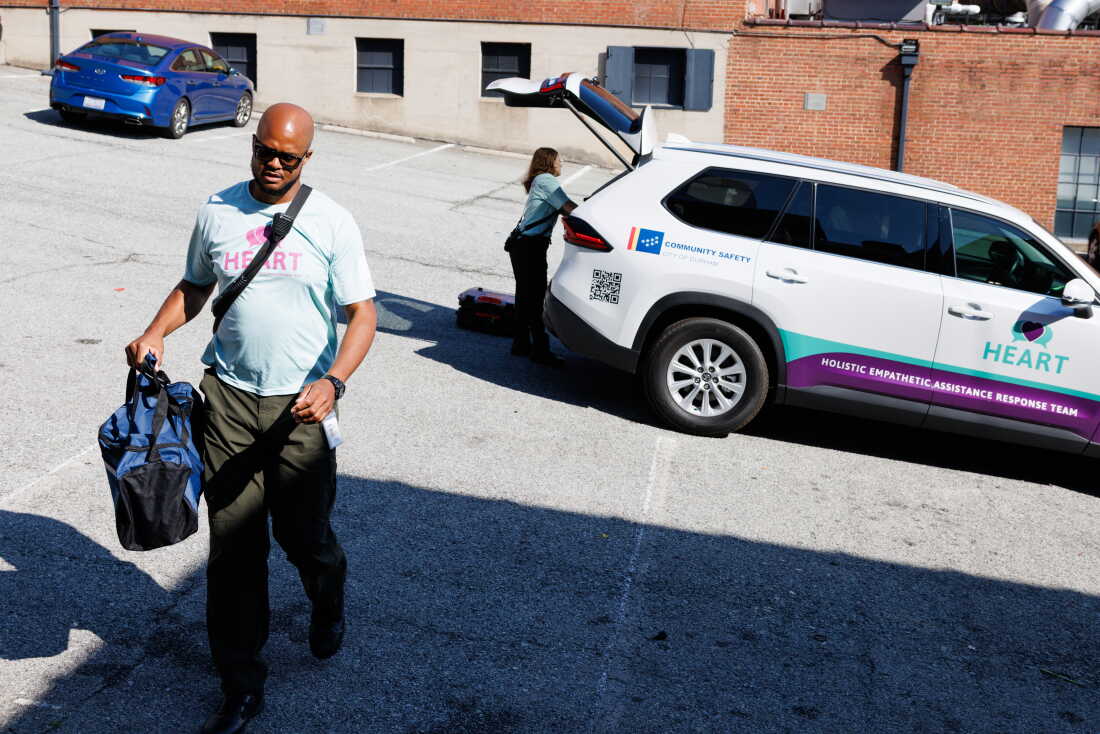
Rob Crisp, a specialist with the Holistic Empathetic Assistance Response Team (HEART), answered a wellness check call in Durham, N.C. on September 14. Alongside Allie Craft, they ventured into a parking lot armed with snacks, water, and hygiene kits. They were part of Durham’s unarmed community response team, addressing a call about a man refusing to leave business property. Crisp approached the man, engaged him in conversation, and offered supplies. His empathetic approach calmed the man and resolved the immediate situation by relocating him to a nearby vacant lot.
Five years ago, police might have handled a similar call. However, following the 2020 killing of George Floyd, many U.S. cities reconsidered the need for armed police in such situations. In 2020, the U.S. had six programs sending unarmed responders to certain 911 calls. Now, nearly 100 cities have adopted these models.
Expansion and Success
Durham’s HEART program launched in 2022 and has since responded to over 25,000 calls. The program operates citywide, including a co-response team pairing mental health clinicians with police. A mental health expert is also embedded in the city’s 911 call center. Ryan Smith, director of the Durham Community Safety Department, emphasizes the program’s success when social workers achieve similar outcomes to police on calls.
Research from Duke University and the Research Triangle Institute supports this success. Studies have shown increased 911 calls, a sign of public trust, and fewer arrests linked with the program. Police rarely need to intervene as backup.
National Impact
Community response programs in other cities have shown similar promise. A Stanford University study highlighted a program in Denver reducing crime reports by a third. In Eugene, Ore., an alternative response program reduced arrests and improved access to medical care. However, not all programs are well-studied or easily implemented.
Durham’s former police chief, Patrice Andrews, helped launch HEART despite initial concerns from law enforcement. Over time, police accepted the program as a vital part of the city’s safety resources. This integration into the public safety network was facilitated by shared communication channels during dispatch.
Room for Growth
Recent incidents in cities like New York and Baltimore expose the limitations of these emerging programs. They often struggle with funding and limited access to mental health crises beyond the obvious. Programs must consider how many calls they can handle effectively.
Durham’s solution is not static. Analysis of 911 data identified call types suitable for unarmed responders, including trespassing, panhandling, intoxication, indecency, and welfare checks. The aim is to ensure dispatchers confidently assign these calls to community responders rather than police.
Addressing Systemic Issues
Rob Crisp and Allie Craft recently managed a dispute between a mother and daughter, revealing housing challenges. The reliance on homeless shelters rather than comprehensive housing options highlights systemic issues these programs face. Challenges in effectively addressing homelessness relate back to the call to action following George Floyd’s death: avoiding police violence.
Programs face a decision: focus solely on crisis intervention or tackle root causes like poverty. Durham is pursuing the latter approach. As a result, a new division called Stabilization Services aims to connect individuals with lasting support resources. These include housing, medical care, behavioral health care, and food—elements essential for stability post-crisis.
Although too early to conclusively judge success, the program’s broader ambition is to reduce the need for interventions like HEART.