Key Supreme Court Cases in the Upcoming Term
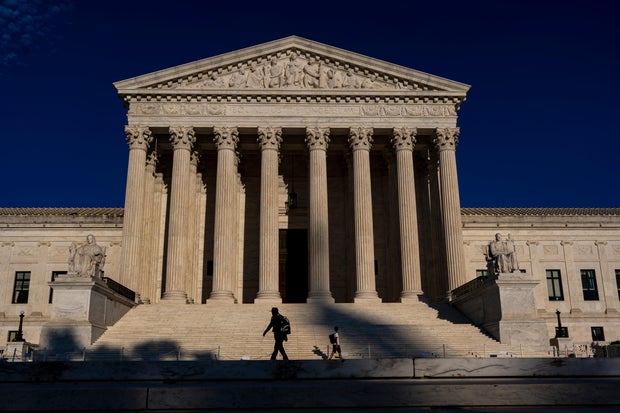
Washington — The Supreme Court is approaching the start of a new term with notable cases involving climate change, immigration policies from President Trump, and the Second Amendment set to be heard by the justices. Additional legal battles linked to Trump’s second-term agenda will be reviewed in closed-door conferences and, if taken, decided by the summer of 2027.
Climate Change Cases
The term begins on October 5 with arguments in Suncor Energy v. County Commissioners of Boulder County, a lawsuit filed by Boulder County in Colorado against energy companies Suncor Energy and ExxonMobil. The case questions whether federal law prevents these companies from being sued in state court over claims that their sale and marketing of fossil fuels violates state law.
The outcome could impact numerous similar lawsuits targeting fossil-fuel producers’ accountability for climate change effects. Exxon and Suncor warn these suits might impose a carbon tax on producers, potentially bankrupting the industry. They argue that climate change results from global greenhouse gas emissions, making it difficult to trace emissions to individual sources. Boulder County contends the Constitution permits states to address local harms, a decision Congress should make.
Justice Samuel Alito will not participate due to stock holdings in other energy companies. His letter of recusal did not state the reason.
Religious Liberty Case
On November 3, the court will hear arguments in St. Mary Catholic Parish v. Roy, involving a Catholic preschool in Colorado excluded from the state’s universal preschool program. This program funds preschool education for 4-year-olds. Colorado’s law includes a nondiscrimination provision, preventing discrimination based on religious affiliation, race, ethnicity, sexual orientation, and more.
The Archdiocese of Denver, overseeing over 30 Catholic preschools, requested an exemption to admit only families adhering to Catholic teachings, which was denied by the state. The Archdiocese and related plaintiffs argue for an exemption under the First Amendment’s Free Exercise Clause, contending the program’s rule is not neutral or generally applicable.
The U.S. Court of Appeals for the 10th Circuit upheld a federal district court decision finding the rule harmonious with the First Amendment.
Second Amendment Disputes
On December 2, the Supreme Court will consider two cases, Viramontes v. Cook County and Grant v. Higgins, involving state laws banning AR-15s and similar weapons. The cases focus on laws from Illinois and Connecticut, both upheld by lower courts. The appeals courts applied a new standard for determining gun law constitutionality, requiring consistency with historical firearm regulation.
The 2022 Supreme Court decision acknowledged the Second Amendment’s protection of carrying firearms outside the home, leading to numerous challenges against federal and state gun laws.
Parental Rights Case
On December 7, International Partners for Ethical Care v. Ferguson involves Washington state laws affecting notifications to parents of runaway teenagers. If a child receives medical treatments for gender dysphoria at a shelter, parents are not notified. Instead, the Department of Children, Youth and Families must be informed.
The question is whether parents have standing to challenge laws perceived to violate their constitutional rights to direct childcare. The U.S. Court of Appeals for the 9th Circuit upheld a dismissal of the case due to lack of standing.
Arizona’s Voting Rules
Arguments on December 8 revolve around Republican National Committee v. Mi Familia Vota, which challenges Arizona’s rule requiring proof of citizenship for voter registration using state forms. The case also examines procedures for maintaining voter rolls. A federal district court decision, upheld by the 9th Circuit, found Arizona’s voter registration requirements violated federal law.
Third-Country Deportations
The December 9 case, Department of Homeland Security v. D.V.D., examines a policy enabling quick removals to third countries. Migrants argue for sufficient notice and opportunity to challenge deportations under due-process rights. A Boston-based federal judge required the Department of Homeland Security to provide notice and a chance to assert fear of removal.
The Supreme Court granted an emergency appeal allowing DHS to proceed with deportations for now while assessing legal merits.
Immigration Detentions Case
Rhoney v. Barbosa da Cunha challenges the Trump administration’s policy of detaining immigrants without bond hearings during removal proceedings. The policy was rejected by many federal judges, but approved by others.
The case also involves Brazilian immigrant Ricardo Aparecido Barbosa da Cunha, detained last year and denied a bond hearing. A federal judge sided with him, and the 2nd Circuit upheld the decision. A hearing is expected early next year.
Several potential Supreme Court cases linked to Trump’s policies, including military bans and appointments, are awaiting consideration.