Supreme Court to Decide on Veterans’ Right to Direct Constitutional Challenges
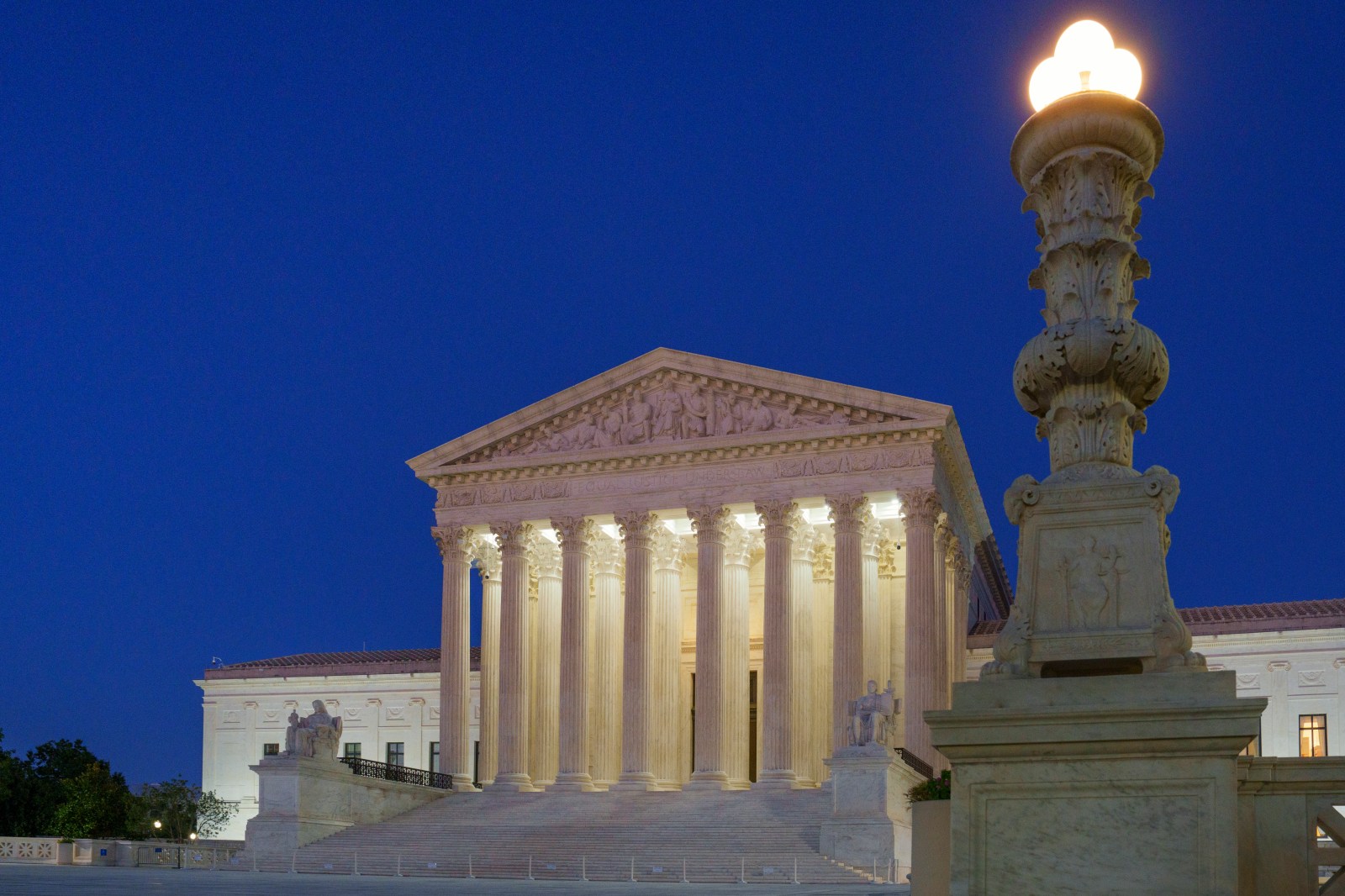
The United States Supreme Court will soon hear a pivotal case affecting veterans’ rights. The case may decide if veterans, who view federal benefits laws as unconstitutional, can sue directly in federal district court or must first go through the Veterans Affairs (VA) specialized review system.
The case, Johnson v. United States Congress, originates from a Florida veteran’s challenge to a federal law that reduces disability benefits for incarcerated veterans. This decision carries broader implications, potentially affecting all veterans with similar grievances about payment reductions. The government argues there is an existing system for contesting decisions, which the plaintiff failed to use.
Although this case seems very technical and a little wonky, it is important because it speaks to veterans’ fundamental right to challenge the constitutionality of the law—a process that can only happen through the federal courts,
said Alison Weir, executive director of Connecticut Veterans Legal Center and a U.S. Air Force veteran. She hopes the ruling will affirm veterans’ rights as upheld in the 1974 Johnson v. Robison case.
Background of ‘Johnson v. United States Congress’
Floyd D. Johnson, who served in the U.S. Army from 1983 to 1985, was convicted in 2013 for several state felonies in Florida. He received a 40-year prison sentence. In prison, Johnson was diagnosed with post-traumatic stress disorder linked to his military service and applied for disability benefits through the VA. Though initially receiving a 70% rate, later increased to 80%, the VA reduced his benefits to 10% under a cap for incarcerated veterans.
Johnson filed a lawsuit arguing the cap violates the Constitution. However, a magistrate recommended dismissal, and the court did so in 2022. In August 2025, the 11th Circuit Court of Appeals rejected his arguments, citing that he targeted Congress rather than the VA, and noted the VA’s system as the proper channel for challenges.
Johnson’s stance derives support from a 1974 Supreme Court ruling, Johnson v. Robison, where the court ruled 8-1 that constitutional challenges to veterans’ benefits laws could not be dismissed through procedural constraints. Kristin E. Hickman, a law professor, stated this reflects reluctance by the court to allow Congress to limit judicial reviews of constitutional issues. Similar interpretations were made in other cases, such as Webster v. Doe, concerning CIA employment decisions.
In December 2025, Johnson petitioned the Supreme Court using the Robison decision as a foundation, and the justices accepted the case in April.
Reasons for Supreme Court’s Review
The Supreme Court agreed to the appeal but did not provide explicit reasons. Kristin Hickman highlighted the inconsistency in lower courts’ interpretations regarding the VJRA’s constraints and the 1974 decision’s currency.
Johnson argues that the 1974 ruling granted district courts the authority to hear constitutional challenges, a power Congress did not clearly remove with the VJRA’s enactment. Conversely, the government stresses that the VJRA establishes an exclusive review process for veterans to follow through specialized avenues.
Implications for Veterans Challenging Benefits Laws
The Supreme Court’s decision could dictate if veterans directly access federal courts when challenging the constitutionality of benefits laws. A verdict in favor of Johnson could allow veterans to file constitutional challenges in federal district courts, protecting them against potentially unconstitutional laws enacted by Congress.
Advocacy groups assert this is a crucial safeguard, with briefs supporting Johnson arguing the VJRA’s intent was to broaden judicial review capabilities. Military-Veterans Advocacy stated in an amicus brief that the VJRA aimed to extend, not restrain, avenues for judicial review.
A government win would mean veterans must continue using the VA’s review system, delaying access to federal courts until administrative appeals conclude.
The Supreme Court is set for oral arguments on Monday, with a decision anticipated later in the 2026/2027 term.