MWRD’s $400 Million Investment in Skokie’s Water Reclamation
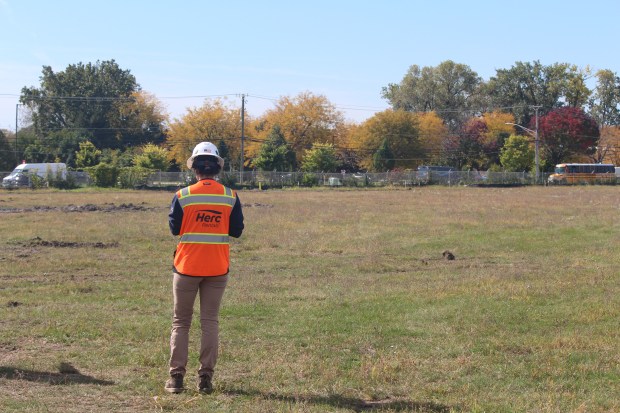
The Metropolitan Water Reclamation District of Greater Chicago (MWRD) is making a significant investment at its Terrence J. O’Brien Water Reclamation Plant in Skokie. As the plant approaches a century of operation, a new water treatment system, Battery E, is being constructed to ensure cleaner water and meet future regulatory standards. This initiative also aims to extend the plant’s service for another hundred years, benefiting over a million residents across 143 square miles.
Battery E represents the fifth set of treatment tanks and infrastructure at the site. The construction, which started on October 8, marks a nearly $400 million investment, one of the largest in MWRD’s 137-year history. According to Aruch Poonsapaya, a managing engineer at the plant, the existing infrastructure, opened in 1928, requires maintenance and upgrading. An important objective of Battery E is the removal of nutrients like phosphorus.
Poonsapaya explains that while phosphorus is vital for life, excessive amounts can lead to algae overgrowth, reduce oxygen levels, and harm aquatic environments. MWRD Board of Commissioners President Kari K. Steele emphasized the importance of controlling phosphorus levels in a speech to officials from Skokie, Evanston, and the U.S. Environmental Protection Agency during the project’s groundbreaking.
“This project reminds us that we are all tied together by water,” Steele said, noting that the water quality impacts extend to the North Shore Channel and beyond, reaching the Mississippi River.
The O’Brien Plant processes water from about 5.19 million people, representing roughly 90% of Cook County. The plant uses a complex mechanical process known as primary treatment to remove 60-70% of water contaminants. Battery E will provide additional support, aiding the secondary treatment to clean water to a 97-99% purity level, ensuring it is safe for human contact.
An above-ground air main at the plant is a critical component, distributing compressed air to biological treatment systems. As environmental standards become stricter, Battery E will help comply with upcoming phosphorus discharge limits set for 2027 and 2030. Steele emphasized the need for infrastructure to adapt to changing conditions, including unpredictable water flows and new pollutants.
Skokie Mayor Ann Tennes acknowledged the project’s significance in her public address, stating that it underscores a commitment to maintaining water quality and preparing infrastructure for future challenges. Skokie has collaborated with MWRD on sustainability initiatives, reducing community-wide water usage by 7.5%, or nearly 200 million gallons annually, by 2030.
“Wastewater infrastructure may not be glamorous or something that most of us think about every day, unless you live near it… but it’s absolutely essential,” Tennes remarked during the ceremony.
The construction of Battery E is expected to take around four years and employ hundreds of tradespeople over its course, reflecting MWRD’s commitment to sustainable water management and regional collaboration.